

The State Railway of Thailand (SRT) has approved a revised budget of 122.72 billion baht for its southern double-track railway expansion, a significant increase driven by escalating construction expenses and heightened concerns over flood risks. The updated financial plan represents an increase of 15.82 billion baht from the initial estimate of 106.90 billion baht.
Revised Budget Reflects Evolving Challenges
The SRT board greenlit the revised budget during a meeting on Monday. The increased funding is specifically allocated to the second phase of the southern double-track railway projects, encompassing three crucial sections: Surat Thani-Chumphon, Nakhon Si Thammarat-Chumphon, and Hat Yai Junction-Sungai Kolok. Additionally, a smaller section connecting Padang Besar to Hat Yai is also included in the revised financial framework.
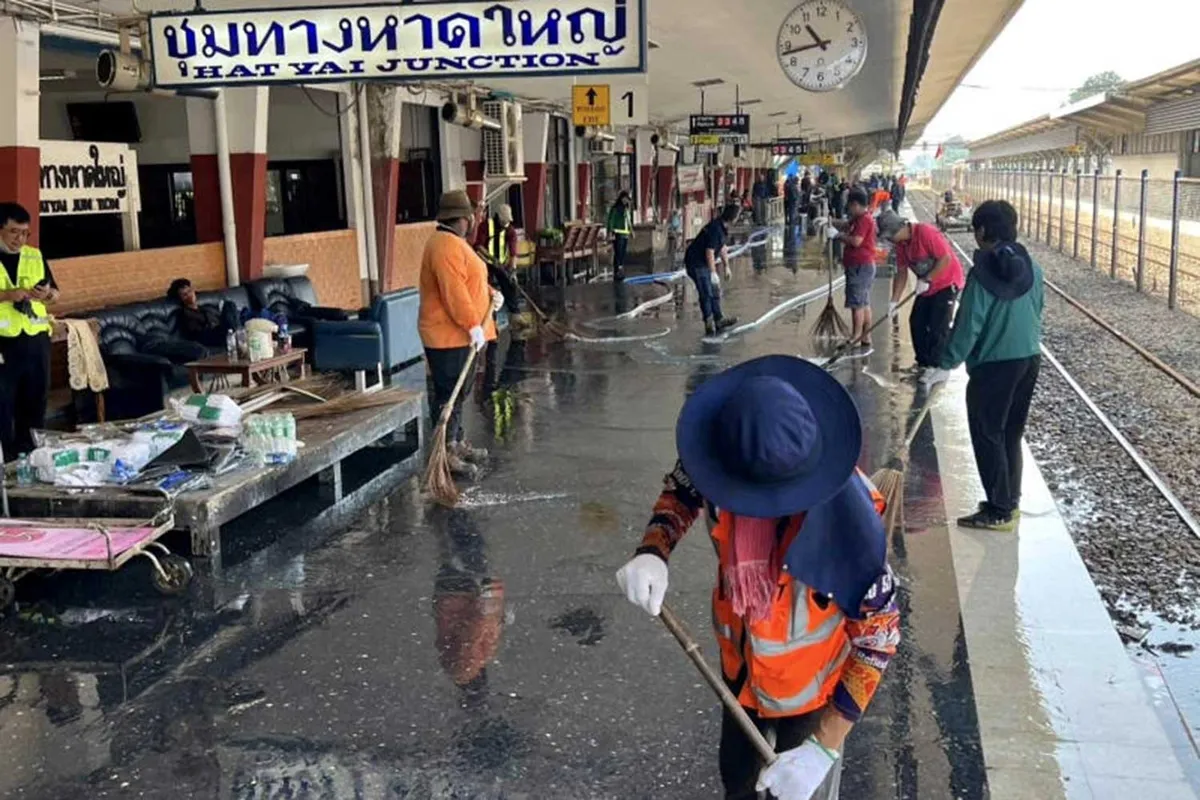
Anan Phrommachart, the SRT Governor, explained that the budget revision was necessary to account for changes in local conditions and to implement measures addressing recurrent flooding around the town of YaI Hat, a border town in Malaysia’s Kelantan state. The design for the affected areas will be modified, shifting from ground-level tracks to elevated structures spanning approximately 3 kilometers, with an additional 2 kilometers of embankments. These adjustments are intended to mitigate future flood risks.
Construction Costs and Project Timelines
Beyond flood mitigation, the construction costs have also been updated to reflect higher prices for fuel and materials, influenced by the ongoing Middle East conflict. These economic factors necessitated a reassessment of the project’s financial requirements.
The project timelines have also seen adjustments:
- Surat Thani-Chumphon Section: This 192-kilometer stretch, costing 16.15 billion baht, is expected to be developed first, with construction anticipated from July 2027 to June 2033, spanning 72 months.
- Nakhon Si Thammarat-Chumphon Section: The budget for this 123-kilometer segment has been raised from 66.24 billion baht to 77.64 billion baht. Construction is projected to take approximately 60 months, from July 2027 to November 2032.
- Surat Thani-Padang Besar Junction Section: This 45-kilometer segment will see its budget increase from 7.77 billion baht to 8.73 billion baht. Construction is expected to take 48 months, from July 2027 to June 2031.
- Hat Yai Junction-Sungai Kolok Section: The budget for this 30-kilometer section is estimated at 15.29 billion baht. This part will be considered later due to its proximity to dense residential areas and existing alternative transport links.
The SRT plans to divide the construction work into four civil work contracts. Following approval, the SRT will prepare the necessary terms for reference. The revised proposal is slated for submission to the Ministry of Transport this week, with potential Cabinet approval expected by late August.
Strategic Importance of the Southern Railway Project
The southern double-track railway project is a critical infrastructure initiative aimed at enhancing transportation efficiency and connectivity across Thailand’s southern provinces and with neighboring Malaysia. The expansion is designed to increase train capacity, reduce travel times, and improve the safety and reliability of rail transport. By upgrading the existing single-track lines to double tracks, the project aims to alleviate congestion and facilitate greater freight and passenger movement.
The inclusion of flood mitigation measures underscores the strategic importance of ensuring the long-term viability and operational continuity of the railway, particularly in regions prone to seasonal flooding. The elevated sections and embankments are crucial for maintaining service during periods of heavy rainfall, which have historically disrupted transportation networks in the south.
Furthermore, the project aligns with broader national development goals, including boosting economic activity in the southern region, promoting tourism, and strengthening regional trade links. The improved rail infrastructure is expected to support industrial growth and provide a more sustainable and cost-effective alternative to road transport.
Addressing Future Needs
The SRT’s proactive approach in revising the budget and design reflects a commitment to building resilient infrastructure capable of withstanding environmental challenges. The increased investment, while substantial, is viewed as necessary to ensure the successful completion and long-term functionality of this vital transportation artery. The project’s phased approach and the consideration of community impacts demonstrate a comprehensive planning strategy.
The successful implementation of the southern double-track railway is anticipated to yield significant economic and social benefits, improving the quality of life for residents and fostering greater integration within the ASEAN economic community. The project’s progression through the approval stages signifies a major step towards realizing these objectives.
