

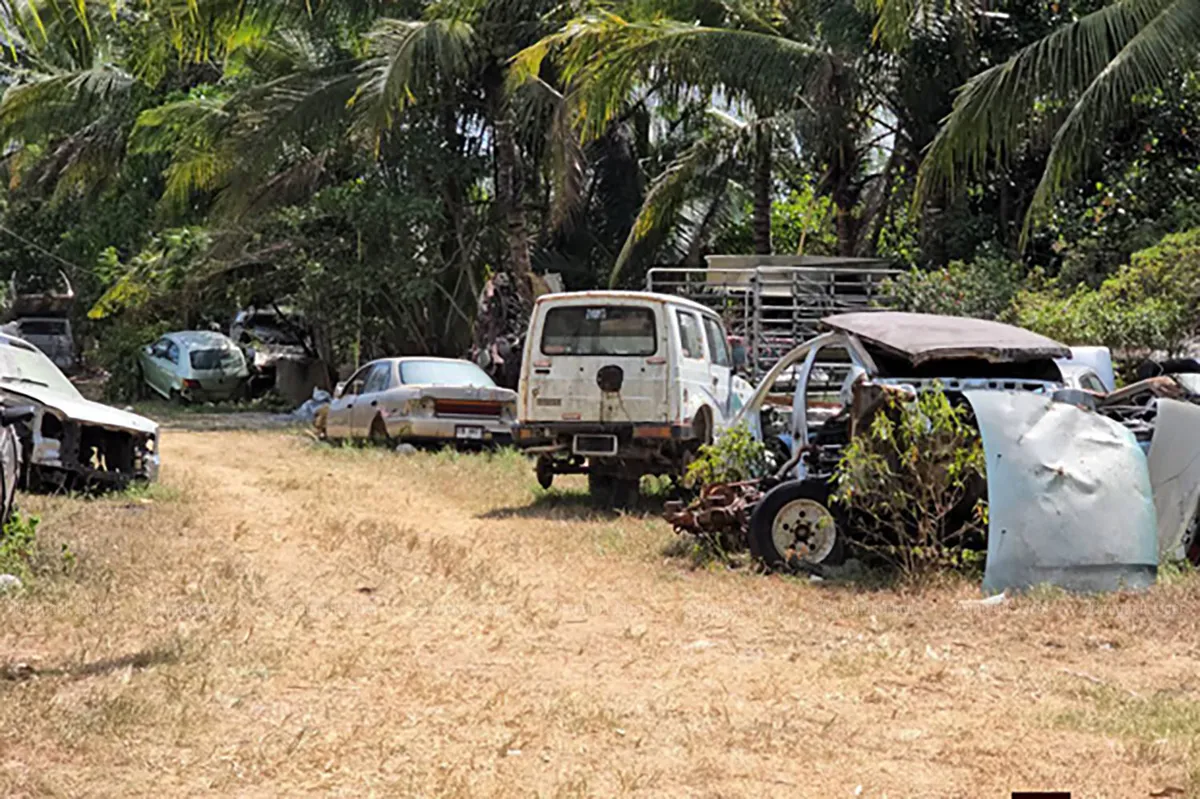
A vehicle repair garage owner in Tak Bai district, Narathiwat, has been sentenced to 10 years in prison for his role in dismantling a pickup truck used in an assassination attempt on a prominent MP. The Narathiwat Provincial Court handed down the initial sentence on Friday. However, the court halved the prison term to five years after the owner, Sunthorn Phrompakdee, confessed to the charges and provided valuable testimony. The sentence was not suspended.
Background of the Case
Sunthorn Phrompakdee was accused of disassembling an Isoc (Internal Security Operations Command) pickup truck that was reportedly used in the March 20 attack on Kamonsak Leewamoh. Mr. Kamonsak is a Member of Parliament (MP) and a well-known human rights lawyer. Lawyers representing the Muslim Attorney Centre attended the court hearing as observers.
A sum of 200,000 baht was initially deposited with the court as compensation related to the dismantling of the vehicle. It was anticipated that the defendant would seek bail and file an appeal against the ruling, according to legal observers.
The Attack on MP Kamonsak
Police allege that on March 20, gunmen traveling in an Isoc pickup truck opened fire on a vehicle carrying MP Kamonsak. The incident occurred in Bacho district of Narathiwat as the MP was returning to his home from Hat Yai airport. Fortunately, Mr. Kamonsak escaped the attack unharmed. However, his driver and a police escort accompanying him sustained serious injuries.
Investigators later discovered dismantled parts of the Isoc pickup truck at a junkyard in Tak Bai district. This discovery led to allegations that the vehicle had been deliberately taken apart to obscure its ownership and origin, thereby hindering the investigation into who was behind the attack.
Confessions and Conflicting Accounts
In the wake of the investigation, a former naval reconnaissance officer was arrested in April. According to police statements, this individual subsequently admitted to being the gunman responsible for firing the shots during the assassination attempt. He, along with four other individuals who also confessed to involvement in the incident, reportedly provided conflicting accounts regarding who had ordered the attack, according to investigators.
Motives and Public Concern
MP Kamonsak is widely recognized for his work representing individuals affected by the ongoing insurgency in Thailand’s southern border provinces. He has also been a vocal advocate for those who have experienced unfair treatment by authorities. This profile raised immediate suspicions about potential motives for silencing him, given his work challenging established powers and addressing sensitive issues.
The involvement of an Isoc-owned vehicle in the attack, coupled with the fact that three of the five suspects arrested had military backgrounds, further heightened public concern and scrutiny. The Isoc is a significant governmental entity with a substantial presence in southern Thailand, comprising an estimated 60,000 personnel, many of whom are seconded from the armed forces and police. The connection to an Isoc vehicle and military personnel in an attack on a human rights lawyer and MP underscored the complex and sensitive nature of the situation in the region.
Legal Proceedings and Future Steps
The sentencing of Sunthorn Phrompakdee marks a significant development in the ongoing investigation into the attack. His confession and cooperation with authorities have led to a reduced sentence, reflecting a common practice in the legal system where admissions of guilt and assistance in investigations are taken into account. The 200,000 baht compensation deposited with the court signifies an initial step towards acknowledging the damage caused, though the full extent of reparations and legal consequences for all parties involved remains to be seen.
The anticipated bail request and appeal indicate that the legal process is far from over. The conflicting testimonies from those who have confessed suggest that the investigation into the masterminds behind the attack is likely ongoing. The case highlights the challenges faced by authorities in the southern border provinces, particularly concerning politically motivated violence and the complexities of attributing responsibility in such incidents. The outcome of any appeal and further investigations will be closely watched, given the prominence of the victim and the sensitive political context.
