

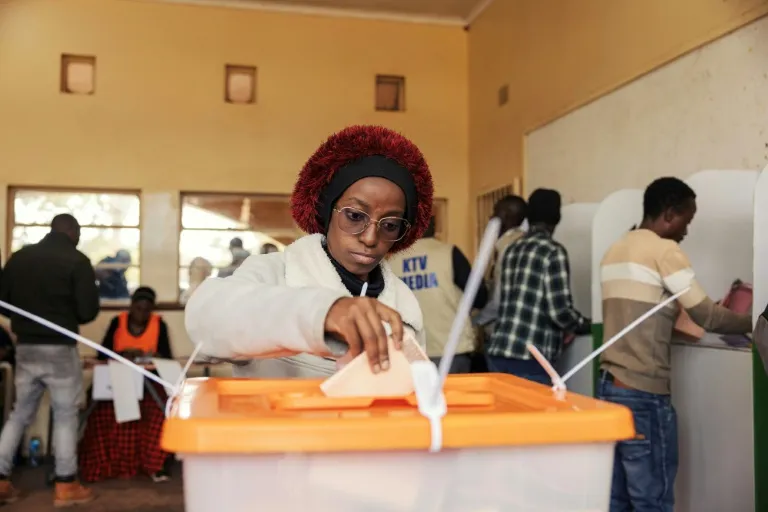
Zambia has temporarily suspended the counting of votes in its general election due to widespread violence, electoral officials announced. The decision affects both the presidential and parliamentary tallies, with the Electoral Commission of Zambia (ECZ) stating it will reassess the situation within 24 hours. The violence has reportedly targeted poll staff and led to the theft of ballot papers.
Election Amidst Economic Hardship
The southern African nation, rich in copper, held its general election on Thursday, with economic hardship serving as a central theme for voters. Incumbent President Hakainde Hichilema, who assumed office in 2021, is seeking a second term against a field of 14 contenders. His primary challenger is Brian Mundubile, a 55-year-old former minister under the previous Patriotic Front (PF) administration.
Claims of Victory and Concerns Over Delays
On Friday, Mundubile declared victory in both the presidential race and for a majority of parliamentary seats. He expressed significant concern over the ongoing delays in announcing and verifying the presidential results transparently. Meanwhile, President Hichilema indicated that his campaign was receiving “encouraging results” and urged citizens via social media to remain peaceful and patient while awaiting the official outcome.
Official presidential results were initially anticipated by Monday. The election saw approximately 8.7 million registered voters casting ballots for the president and 226 parliamentary seats. The suspension of vote counting extends to the parliamentary elections as well.
Background on the Candidates and Political Landscape
President Hichilema, a 64-year-old business tycoon, won the presidency on his sixth attempt, campaigning on promises of job creation and an ambitious infrastructure development plan. Mundubile, representing the newly formed NRPUP party, which draws support from the former ruling party, entered the race in May, adding an element of uncertainty to an election that many had expected to be a straightforward win for Hichilema.
Zambia’s Democratic Tradition and Rights Concerns
Zambia has a notable history of peaceful power transitions through elections, with every change of president since the reintroduction of multiparty politics in 1991 occurring via the ballot box. However, the current administration under President Hichilema has faced scrutiny regarding concerns that the space for dissent has been curtailed, despite promises of economic revitalization.
On the eve of the election, Zambia’s Human Rights Commission stated it was closely monitoring arrests and detentions involving political figures, supporters, and journalists. This follows earlier reports from the interior ministry regarding the arrest of several individuals accused of plotting to disrupt the electoral system. While the exact number of arrests was not disclosed, the ministry confirmed that three former senior government officials were among those detained, accused of providing technical support for electoral interference. A Kenyan national was also apprehended, along with three others found with a significant sum of local currency, who were summoned to aid the investigation.
Economic Challenges and Government Efforts
Despite possessing substantial mineral wealth, including cobalt, nickel, and manganese, Zambia continues to grapple with persistent poverty, high unemployment, and escalating food prices. According to World Bank data, over 70 percent of the country’s 22 million inhabitants live on less than three U.S. dollars per day. The previous government, led by former president Edgar Lungu, left Zambia in sovereign default due to extensive borrowing.
President Hichilema’s administration has since achieved a significant debt restructuring agreement, re-established an International Monetary Fund (IMF) program, and steered the economy toward growth, earning commendation from international financial institutions and investors. The current election’s outcome, however, remains uncertain amidst the unfolding electoral disruptions.
