

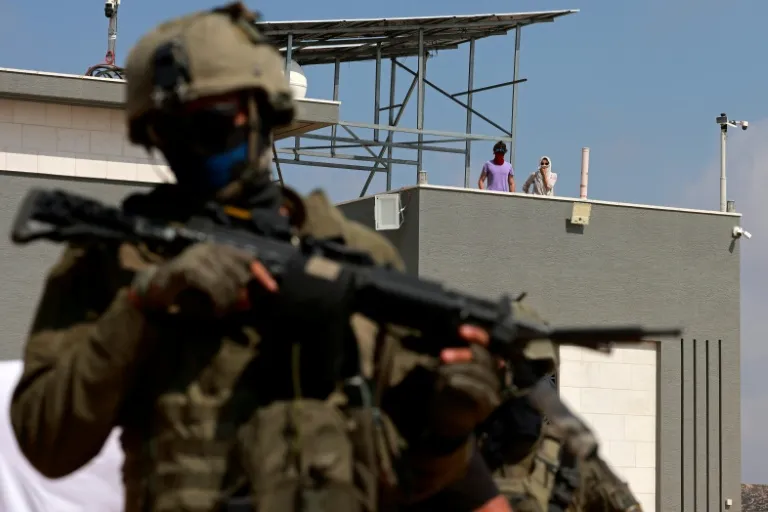
Israel’s Defense Minister Israel Katz has initiated a plan to shift civilian enforcement responsibilities in West Bank settlements from the military to the Israel Police. This proposed change, if enacted, could represent a significant step towards the eventual annexation of the occupied Palestinian territory, a goal openly espoused by some ministers within Prime Minister Benjamin Netanyahu’s government.
Context: Settler Blockade and Shifting Responsibilities
The announcement follows a week-long blockade imposed by Israeli settlers on Palestinian residents in the northern West Bank village of Qusra, near Nablus. For days, inhabitants of three homes have reported being cut off from essential supplies like food and medicine, with repeated attempts by the military to dislodge the settlers proving temporarily effective at best. The settlers have returned to maintain the blockade, effectively trapping the Palestinian families inside their homes.
Against this backdrop of escalating settler actions, Defense Minister Katz’s office stated that he had “instructed the IDF to prepare a plan to transfer all enforcement powers regarding civil matters among Israeli communities and population in Judea and Samaria to the Israel Police.” The term “Judea and Samaria” is a biblical reference commonly used by Israel to denote the West Bank. Under this proposal, the military would retain its authority over Palestinian residents but would relinquish its role in managing civilian affairs within Israeli settlements.
Defense Minister’s Rationale
Katz articulated his reasoning for the proposed shift, stating, “The IDF’s role is to fight Palestinian terrorism, focus on defending borders and communities against threats… and not chase boys on the hilltops.” This comment appears to reference the “Hilltop Youth,” a segment of the settler movement frequently accused of perpetrating violence against Palestinians. The defense minister indicated that the police would be tasked with establishing a dedicated force, equipped with the necessary powers and budget, to manage these civilian matters within the settlements.
Potential Political Hurdles and International Law
However, reports from Israeli media suggest that such a transfer of authority might face significant political obstacles, potentially delaying or preventing its implementation before national elections scheduled for October 27. Current polling indicates a close contest, adding a layer of political uncertainty to the proposal.
The West Bank, occupied by Israel since 1967, is home to over 500,000 Israeli settlers living in communities considered illegal under international law, alongside approximately three million Palestinians. The Netanyahu government has overseen a notable increase in settlement expansion and construction, coinciding with a rise in settler violence against Palestinians, particularly since the Hamas attack on Israel on October 7, 2023.
Criticism of Settler Actions and Support Efforts
The settler blockade in Qusra has drawn rare and sharp criticism from the United States. On Friday, a group of activists managed to deliver essential supplies to the besieged families. They left donations outside the homes for inspection by the Israeli military before they could reach the residents.
Ofer Cassif, a lawmaker from the left-wing Hadash party, confirmed the successful delivery of water, food, and medicine. An observer noted the presence of settlers at the site early Friday, though they appeared to have dispersed later in the day. Activists marching towards the blockaded homes carried Palestinian flags and signs advocating for justice and an end to settler violence.
Naomi Granot, a 72-year-old retired prosecutor present at the scene, expressed deep remorse. “I’m so ashamed of what my people do here to the Palestinians,” she stated, emphasizing a desire for peaceful coexistence. “I would like us both people to get together, to get an agreement… What my people are doing here is just awful. It’s unlawful.”
Earlier, settlers had erected a temporary tent near the blockaded houses, which was later removed. Anton Goodman, acting director of the NGO Rabbis for Human Rights, criticized the military’s perceived inaction, alleging that “settler terrorists” had been allowed to operate with impunity, occupying homes, injuring individuals, and restricting movement.
The Israeli military had stated on Thursday that troops were deployed in Qusra to ensure the safety and security of residents. In a notable instance of criticism, the US ambassador to Israel, Mike Huckabee, condemned the settler actions. “There was no excuse for such thuggish behaviour,” Huckabee wrote on X, describing the acts as “disgusting” and intended to intimidate and harass the families, one of which includes a US citizen.
Conclusion
The proposed transfer of civilian enforcement powers from the Israeli military to the police in West Bank settlements marks a significant policy consideration, potentially altering the administrative landscape of the occupied territory. While the defense minister cites a need for the military to focus on security threats, the move occurs amidst heightened tensions, ongoing settler activity, and international scrutiny of Israel’s policies in the West Bank.
