

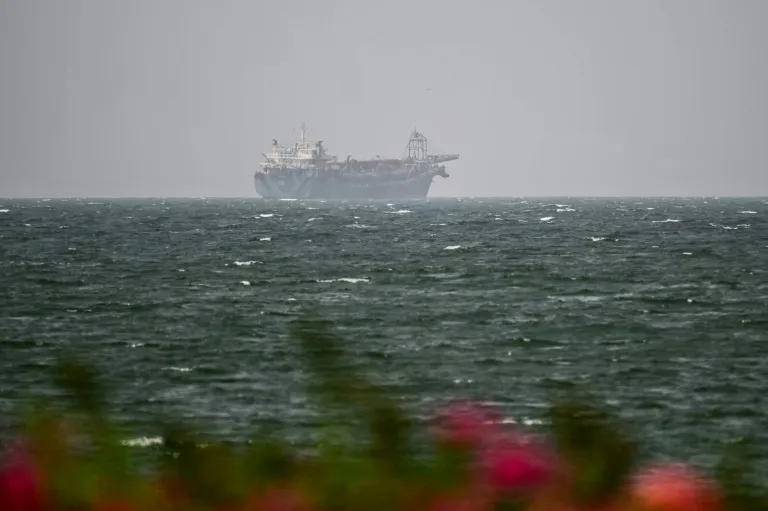
Iran has issued a stern warning to its Gulf neighbors, stating that any assistance or facilitation provided to the United States military will be considered direct participation in U.S. military actions. This declaration comes amidst heightened regional tensions and ongoing hostilities, with the strategically vital Strait of Hormuz remaining a significant flashpoint.
Iran’s Warning to Gulf Nations
According to reports from the Mehr news agency, Iran’s armed forces chief of staff, Ali Abdollahi, emphasized that countries aiding the U.S. military would be seen as complicit in American operations. This statement underscores Iran’s assertive stance in the face of perceived foreign military presence and potential support for U.S. actions within the region.
Abdollahi also expressed skepticism regarding the assurances given by several Middle Eastern nations that they would not permit the United States to use their territories as staging grounds for attacks against Iran. He suggested that the presence of numerous military aircraft, particularly refueling planes, at regional bases would be impossible without the host countries’ knowledge. “Gulf countries ‘should know that we are fully aware of the situation’,” Abdollahi stated, implying that Iran possesses intelligence regarding military activities in neighboring states.
Regional Tensions and Military Installations
The Gulf region hosts numerous U.S. military installations, including facilities in the United Arab Emirates (UAE). These installations are often points of contention in the broader geopolitical landscape. The UAE recently reported that Iran had fired two ballistic missiles toward vessels off its coast, an incident that further inflamed regional anxieties.
Despite a recent period of reduced direct confrontation between the U.S. and Iran, the Strait of Hormuz, a critical chokepoint for global oil trade, continues to be a source of instability. Attacks on commercial shipping in and around this vital waterway have persisted, contributing to the volatile atmosphere.
Diplomatic Stalemate and Economic Sanctions
Efforts to de-escalate the conflict through diplomatic channels appear to have stalled. While U.S. President Donald Trump’s envoy and son-in-law, Jared Kushner, had previously indicated that “very positive and active conversations” were occurring between the U.S. and Iran, Trump himself publicly denied these claims. He reiterated that no talks were underway or scheduled, asserting that the U.S. naval blockade of Iranian ports remained in full effect.
Adding to the diplomatic friction, Trump posted a social media message depicting the Strait of Hormuz as a “NEW U.S. Territory,” echoing previous rhetoric about potentially controlling the vital shipping lane. This statement, coupled with the ongoing U.S. naval blockade, highlights the persistent tensions surrounding maritime passage.
In response to escalating regional tensions, the UAE announced on Tuesday the suspension of all economic dealings with Iran. “In light of regional escalations… all trade, commercial exchanges, and financial transactions with Iran have been halted until further notice,” stated Afra Al Hameli, communications director at the UAE’s foreign ministry. The UAE, a significant trading partner for Iran prior to the imposition of U.S. sanctions and the recent conflict, has taken several measures, including recalling its ambassador to Tehran and closing Iran-linked institutions.
Past Incidents and Retaliation
The current conflict reportedly originated on February 28, following alleged U.S.-Israeli attacks on Iran. Tehran is said to have retaliated with missile and drone strikes across the region. Reports have suggested that Saudi Arabia, the UAE, Kuwait, and Bahrain may have been involved in striking targets within Iran in retaliation for Tehran’s actions, though these countries have largely denied such involvement.
The UAE’s state-owned oil company, Adnoc, has reported that tankers belonging to it have been repeatedly targeted in recent weeks, further exacerbating the strained relationship between the two Gulf neighbors. These incidents underscore the precarious security situation for maritime commerce in the region.
U.S. Military Readiness and Iranian Defiance
While the U.S. has reportedly paused some military operations, with U.S. media suggesting the conflict has strained munitions stockpiles, officials, including President Trump and the Pentagon, have publicly denied these claims. The protracted nature of the U.S. military involvement, which has apparently failed to achieve a decisive outcome after months of operations, has been met with a defiant tone from Iranian officials.
In a move signaling a desire to strengthen regional alliances independent of foreign interference, Iran’s parliament speaker and chief negotiator, Mohammad Bagher Ghalibaf, visited Iraq. He stated that the trip aimed at “strengthening the new order in the region” and fostering cooperation. Ghalibaf also referenced “Resistance in Iraq” as a source of the country’s strength, seemingly alluding to pro-Iran armed groups operating within Iraq.
The ongoing exchange of warnings, military posturing, and diplomatic denials paints a complex picture of the regional security environment. Iran’s direct warning to its Gulf neighbors highlights its determination to counter perceived external threats and solidify its regional influence, while the U.S. maintains its military presence and economic pressure.
