

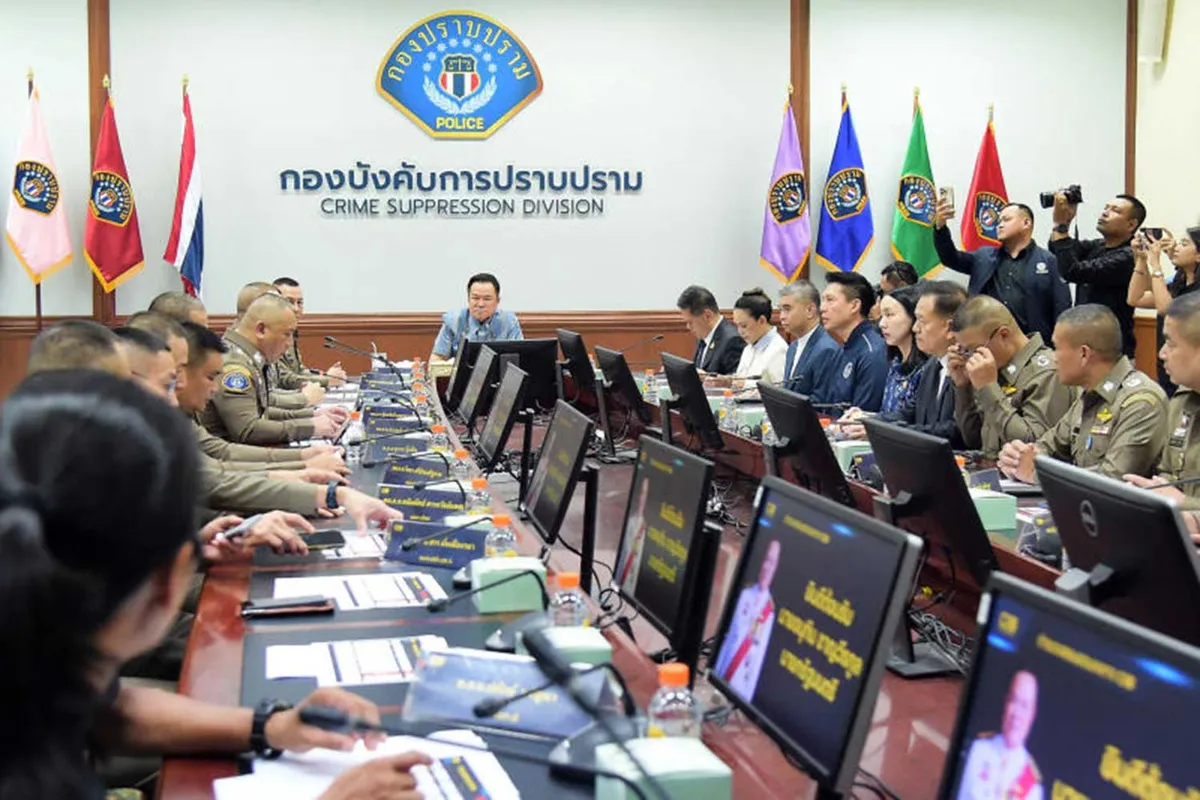
The Ministry of Interior has mandated that provincial authorities conclude their investigations into alleged fraud within local government recruitment examinations by the close of the current month. Concurrently, the Anti-Money Laundering Office (Amlo) is scrutinizing financial transactions linked to these examinations, exploring avenues for potential asset seizures.
Comprehensive Investigation into Exam Irregularities
The directive from the Ministry of Interior signals a significant push to address and resolve suspected fraudulent activities that may have compromised the integrity of recent local government examinations. Provincial governors and their respective departments have been tasked with compiling detailed reports on any irregularities identified. The urgency of the situation is underscored by the strict deadline, emphasizing the government’s commitment to ensuring fairness and transparency in public service recruitment.
Sources within the ministry indicated that the investigation aims to uncover the full extent of any malpractices, identify all individuals involved, and implement measures to prevent future occurrences. This includes examining the examination process from question paper distribution to result tabulation, looking for any signs of tampering or undue influence.
Amlo’s Role in Financial Forensics
Parallel to the administrative investigation, the Anti-Money Laundering Office (Amlo) has been brought in to conduct a thorough financial audit. This move suggests that authorities suspect financial motives behind the alleged exam fraud, potentially involving bribery, kickbacks, or illicit gains derived from manipulating the examination outcomes. Amlo’s expertise in tracing financial flows is crucial in identifying the perpetrators and understanding the financial networks that may have facilitated the fraud.
The agency’s involvement is critical for determining whether any assets acquired through these illicit means can be traced and subsequently seized. This aspect of the investigation aims not only to punish those responsible but also to recover any ill-gotten gains, thereby deterring similar criminal activities in the future. The focus is on uncovering any suspicious financial transactions, such as unexplained wealth accumulation by examination officials or candidates, or the flow of funds to individuals involved in organizing or administering the tests.
Key Areas of Amlo’s Scrutiny:
- Tracing financial transactions of individuals suspected of involvement.
- Identifying any unexplained increases in wealth among officials or candidates.
- Investigating the flow of money related to the procurement of examination materials.
- Determining the possibility of asset forfeiture if financial crimes are proven.
Ensuring Public Trust in Recruitment Processes
The Ministry of Interior’s decisive action is intended to restore public confidence in the fairness and credibility of government examinations. These recruitment processes are vital for selecting qualified individuals to serve in local administrations, and any perception of corruption can significantly erode public trust. By setting a firm deadline and involving specialized agencies like Amlo, the government is signaling its zero-tolerance policy towards fraud and its determination to uphold meritocracy in public employment.
Officials have stressed that the investigation will be conducted impartially, and all findings will be based on concrete evidence. Those found guilty of fraudulent activities will face stringent legal consequences, including potential dismissal from service and criminal prosecution. The ministry also plans to review and strengthen the existing protocols for conducting government examinations to plug any loopholes that could be exploited in the future.
Looking Ahead: Reforms and Prevention
Beyond the immediate investigation, the Ministry of Interior is reportedly considering broader reforms to enhance the security and transparency of all future government examinations. This might include implementing advanced technological solutions for exam administration, stricter background checks for examination personnel, and more robust oversight mechanisms. The goal is to create a foolproof system that guarantees a level playing field for all aspiring candidates.
The outcome of this investigation is expected to set a precedent for handling cases of alleged fraud in public recruitment. The Ministry’s commitment to a swift and thorough resolution, coupled with Amlo’s financial investigation, demonstrates a multi-pronged approach to tackling corruption and ensuring that public service positions are awarded based on merit and integrity alone. The findings and subsequent actions will be closely watched by the public and prospective applicants alike.
Conclusion
With the end of the month rapidly approaching, provincial authorities are working diligently to complete their reports on the suspected fraud in local government examinations. The parallel investigation by Amlo into financial trails is expected to shed light on the economic dimensions of the alleged corruption and pave the way for potential asset seizures. This concerted effort by the Ministry of Interior and Amlo underscores a strong governmental resolve to safeguard the integrity of public recruitment processes and uphold the principles of fairness and accountability.
