

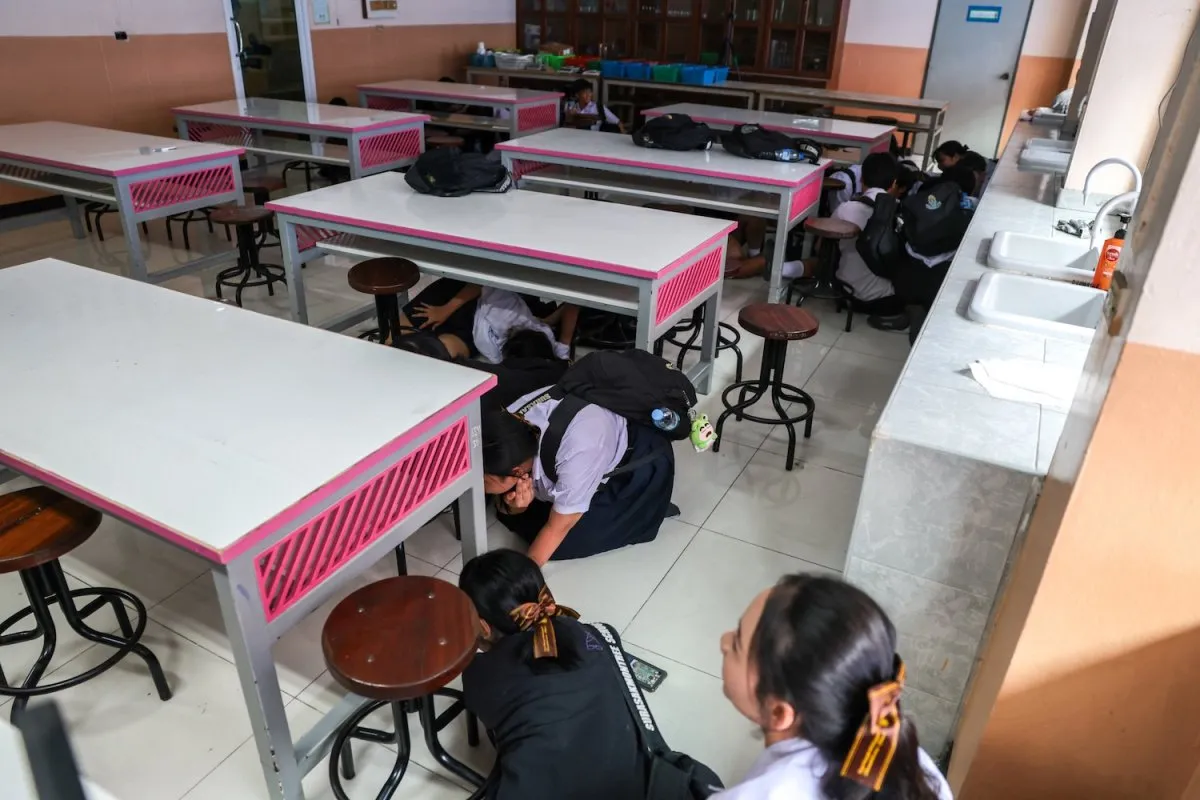
A former student expelled from a school in Hat Yai, Thailand, has issued an apology after posting alarming threats of a school shooting online. The incident, which caused significant distress among students and faculty, prompted a swift police investigation. The teenager, who had already been removed from the school, shared images of himself holding what appeared to be a firearm, accompanied by explicit threats directed at the institution and specific teachers.
Online Threats Spark Fear and Police Action
The alarming messages, posted on social media, stated intentions to carry out a shooting at the school, specifically mentioning a teacher identified as Kru Ubol. The posts declared, “I’m going to carry out a shooting at T.3, especially Kru (teacher) Ubol. I’ll shoot every one of them,” and “See you at Tor Shor Tor 3. School shooting. I’ll shoot everyone at the school.” These pronouncements immediately raised concerns among students and staff, who feared a potential copycat incident following a recent tragedy at another school. The matter was promptly reported to the police on a Friday.
In response to the credible threat, Pol Lt Col Macha Kaewthong, the Hat Yai police chief, mobilized investigators to locate the teenager. Law enforcement officers successfully apprehended the boy and brought him in for questioning, accompanied by his parents. During the investigation, authorities seized the object that appeared to be a gun, which was later confirmed to be a replica.
Teenager Claims Impulsive Action, Denies Malice
During police questioning, the student asserted that he posted the threatening messages on impulse and had no genuine intention of acting upon them. He also addressed the specific mention of his former homeroom teacher, Ms. Ubol, denying any personal animosity towards her. The boy explained that her name was included in the post because another user had requested he identify a teacher in response to his threat.
The teenager expressed his sincere apologies to Ms. Ubol for the fear and anxiety his online posts had caused. He acknowledged the distress his actions had inflicted upon her and the wider school community.
Teacher’s Perspective and Precautionary Measures
Ms. Ubol recounted her shock upon discovering her name featured in the threatening online messages. She provided context regarding the student’s academic performance, noting that he had failed several subjects during his time in Matthayom 2 (Grade 8). She explained her efforts to support his academic progress, including contacting him to attend remedial classes and examinations necessary for promotion to Matthayom 3 (Grade 9).
“It is normal for teachers to ask students to sit remedial exams so they can move on to the next level,” Ms. Ubol stated, emphasizing that her actions were standard pedagogical practice aimed at helping students succeed. She speculated that the student might have perceived her insistence on remedial work as overly strict.
Despite the student’s claims of impulse, Ms. Ubol felt compelled to file a police complaint. She cited the severity of the threat—an explicit intention to shoot everyone at the school—as the primary reason for her decision. She viewed reporting the incident as a necessary precautionary measure to ensure the safety of herself and the entire school population, given the potential for real-world violence.
Broader Context and School Safety Concerns
The incident in Hat Yai highlights the growing concern over online threats and their potential to incite fear and real-world violence, particularly within educational settings. The mention of a possible copycat threat underscores the psychological impact that high-profile violent events can have on vulnerable individuals. Schools and law enforcement agencies are increasingly tasked with monitoring online spaces for potential threats and responding effectively to ensure student and staff safety.
Educational institutions often grapple with balancing disciplinary actions against students with the need to provide support and understanding. In this case, the teacher’s attempts to help the student academically were, from her perspective, standard procedure. However, the student’s reaction and subsequent online threats demonstrate a critical disconnect and a failure in communication or emotional regulation.
The swift response from the Hat Yai police, involving the apprehension of the student and the seizure of the replica weapon, serves as a deterrent and a reassurance to the community. It also emphasizes the importance of reporting suspicious activity and the collaborative effort required between schools, parents, and law enforcement to maintain a secure environment. The investigation into the student’s motives and the circumstances leading to the online threats will likely continue, aiming to understand the underlying issues and prevent future occurrences.
Conclusion: Apology and Ongoing Vigilance
While the student has apologized and the immediate threat was neutralized with the discovery of a replica weapon, the incident serves as a stark reminder of the pervasive nature of online threats and the importance of responsible digital citizenship. The case underscores the need for continued vigilance, open communication channels within schools, and robust support systems for students who may be struggling with academic or emotional challenges. The teacher’s decision to report the threat, despite the student’s apology, reflects a commitment to safety and a recognition of the potential consequences of such actions.
