

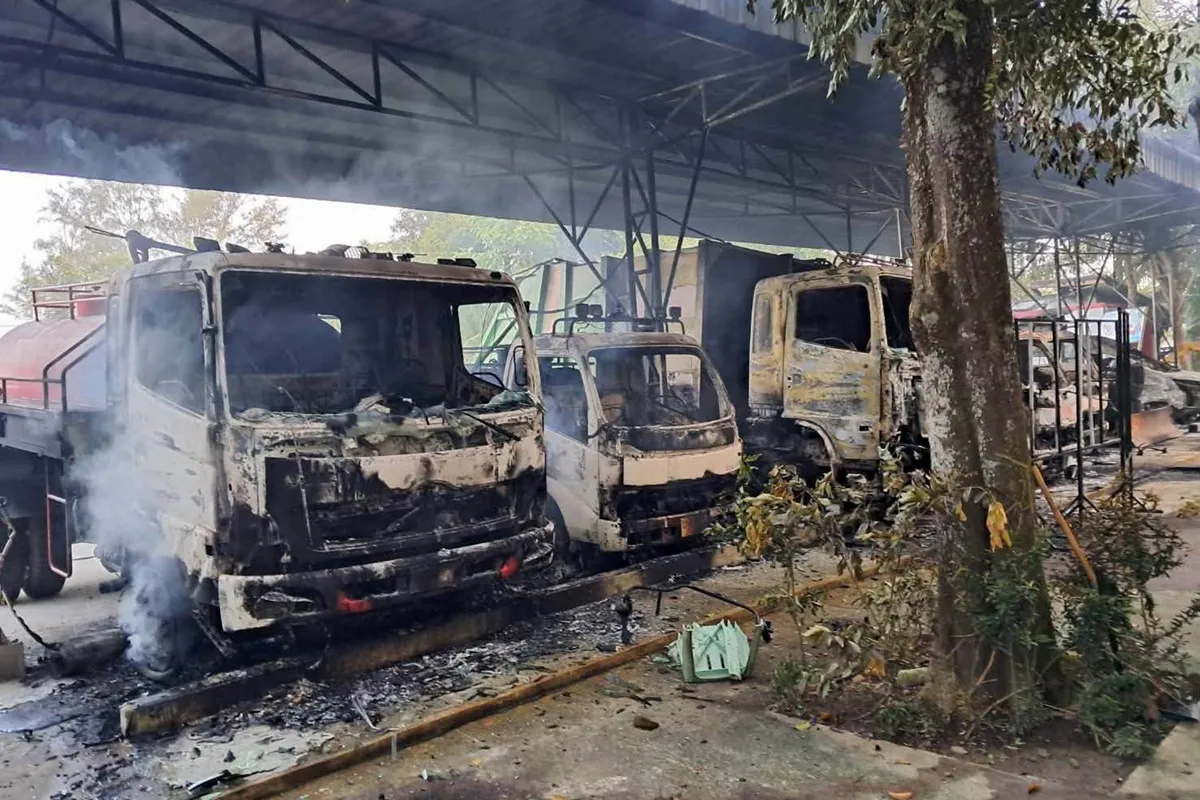
A series of 51 coordinated attacks that swept across Thailand’s southern provinces of Narathiwat, Pattani, and Yala on August 23, 2026, are being assessed by military officials as potentially aimed at discrediting state authorities and retaliating against recent crackdowns on illegal trade activities. Lieutenant General Norathip Phoynok, commander of the Fourth Army Area, indicated that the widespread nature of the violence suggests a strategic effort to undermine the government’s presence and operations in the region.
Assessing the Motives Behind the Attacks
The synchronized assaults, which targeted various locations including security checkpoints, government facilities, and commercial establishments, have raised concerns about the escalating security situation in the deep South. Lt. Gen. Norathip Phoynok stated that while the attacks were significant in number and coordination, the military is working to de-escalate tensions and prevent further escalation. He suggested that the perpetrators might be seeking to sow chaos and distrust in local administration, possibly in response to intensified efforts to curb smuggling, human trafficking, and other illicit businesses that have historically thrived in the border areas.
Crackdown on Illegal Activities
Recent weeks have seen an increase in operations by state security forces aimed at dismantling networks involved in illegal trade. These operations have reportedly disrupted established smuggling routes and led to the seizure of contraband, impacting the financial interests of various groups operating in the region. Military intelligence suggests that these crackdowns may have provoked a retaliatory response, with the coordinated attacks serving as a direct challenge to the government’s authority and its anti-crime initiatives.
Military Response and Public Safety
In the immediate aftermath of the attacks, security forces were deployed to reinforce vulnerable areas and restore order. Lt. Gen. Norathip Phoynok assured the public that all necessary measures are being taken to ensure safety and to apprehend those responsible for the violence. He emphasized the importance of community cooperation in gathering intelligence and maintaining peace. The military is also reviewing its security protocols to enhance preparedness against future coordinated assaults.
Historical Context of Insurgency
The southern border provinces have a long history of insurgency, with various separatist groups active for decades. While the exact perpetrators of the August 23 attacks have not been definitively identified, the tactics employed—widespread, coordinated, and seemingly aimed at disrupting daily life and government functions—bear similarities to previous insurgent activities. The military acknowledges the complex nature of the conflict, which involves deep-rooted historical grievances alongside criminal elements.
Economic and Social Impact
The wave of attacks has inevitably impacted the local economy and the daily lives of residents. Businesses in affected areas reported temporary closures, and transportation routes faced disruptions. The government is committed to supporting the recovery of affected communities and ensuring that economic activities can resume without fear of further violence. Efforts are underway to provide assistance to those whose livelihoods have been negatively affected.
Diplomatic and Community Engagement
Beyond security operations, authorities are also focusing on broader strategies to address the root causes of conflict and instability. This includes ongoing dialogue with community leaders, religious figures, and local representatives to foster trust and build a shared vision for peace. Lt. Gen. Norathip Phoynok highlighted that sustainable peace requires not only a strong security presence but also inclusive development and respect for local culture and traditions.
Looking Ahead: Maintaining Stability
The military remains vigilant and committed to maintaining stability in the southern provinces. While downplaying the immediate threat posed by the coordinated attacks in terms of their capacity to overthrow state control, officials recognize the need for a robust and multifaceted approach. This involves continued law enforcement, intelligence gathering, community engagement, and addressing socio-economic factors that contribute to unrest. The goal is to create an environment where all residents can live safely and prosper, free from violence and intimidation. The investigation into the August 23 attacks is ongoing, with authorities determined to bring all perpetrators to justice and prevent future occurrences.
