

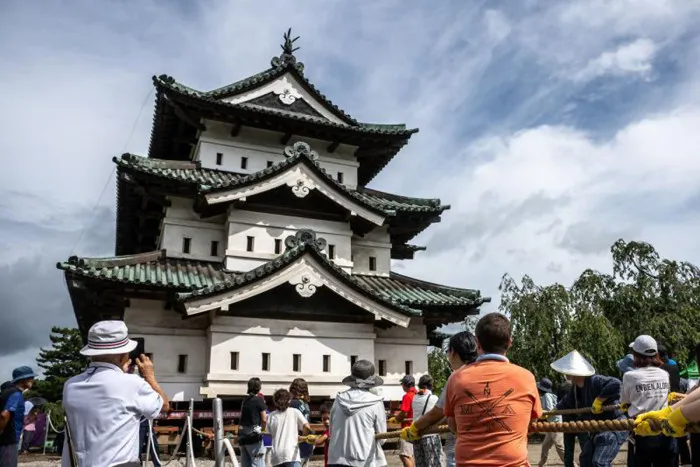
In a remarkable feat of engineering and community spirit, approximately 1,800 people recently participated in the manual relocation of a significant portion of Hirosaki Castle in northern Japan. This historic structure is being moved back to its original foundation after an 11-year absence, following its temporary displacement for essential earthquake reinforcement work. The weekend’s operation, employing a traditional method known as hikiya, saw the castle moved several meters using a combination of ropes, rollers, and sheer human power.
A Monumental Undertaking: The Hirosaki Castle Relocation
The intricate process of moving Hirosaki Castle is a testament to both historical techniques and modern logistical planning. The castle, a significant cultural landmark, was initially moved from its original site in 2015 to allow for extensive repairs to its stone walls, which were strengthened to withstand seismic activity. The recent operation marked a crucial phase in returning the castle to its ancestral location.
The Hikiya Technique: A Centuries-Old Method
The hikiya technique, which translates to “pulling house,” is an ancient method used in Japan for centuries to relocate entire buildings without dismantling them. This traditional approach involves placing the structure on rollers and then using a large number of people to pull it along predetermined paths using ropes. The weekend’s effort saw volunteers meticulously guiding the massive structure, demonstrating a deep connection to their heritage and a shared commitment to preserving the castle.
Community Involvement and Symbolic Significance
The participation of 1,800 individuals, many of whom are volunteers from the local community, underscores the symbolic importance of this relocation. This is not merely a construction project; it is a community-building endeavor that fosters a sense of shared ownership and pride in preserving Japan’s rich history. The collective effort highlights the power of collaboration in achieving monumental tasks and reinforces the cultural significance of Hirosaki Castle.
Phased Relocation: Combining Tradition and Technology
The relocation of Hirosaki Castle is being executed in carefully planned phases. The recent manual movement, covering several meters, was a significant milestone. This initial phase, driven by the hikiya method and volunteer efforts, is designed to be symbolic and engaging for the community. The total planned movement for the castle is approximately 78 meters (256 feet) from its temporary location back to its original foundation.
The Road Ahead: Completing the Journey
While the weekend’s operation was a visually striking display of human power, it represents only a fraction of the total distance the castle needs to travel. The remaining distance, approximately 73 meters (240 feet), will be completed using modern machinery. This strategic combination of traditional techniques and contemporary engineering ensures both the preservation of cultural heritage and the efficient execution of the project. The entire relocation is expected to be finalized by the end of the year.
Structural Integrity and Preservation Efforts
Throughout the relocation process, the utmost care is being taken to ensure the structural integrity of the castle. The reinforcement work undertaken 11 years ago was crucial in preparing the structure for this complex move. Modern surveying and engineering techniques are being employed alongside the traditional methods to monitor the castle’s condition and ensure a safe and successful transition back to its original site. This meticulous approach guarantees that the historic edifice will be preserved for future generations.
Hirosaki Castle: A Glimpse into Japan’s Feudal Past
Hirosaki Castle, located in Aomori Prefecture, is one of Japan’s most celebrated original castles, meaning it has survived centuries without being destroyed and rebuilt. Its construction dates back to the early Edo period, around 1611. The castle complex, including its impressive stone walls, moats, and the main keep (tenshu), offers a valuable window into Japan’s feudal era. The relocation project is not only about moving a building but also about reconnecting a vital piece of Japanese history with its intended historical landscape.
The Importance of Original Sites
Moving historical structures back to their original foundations is a practice that holds significant cultural and historical importance in Japan. It allows for a more accurate understanding of the site’s original layout and context, enhancing the visitor experience and the educational value of the landmark. For Hirosaki Castle, returning to its original spot completes a narrative that was interrupted by the necessity of seismic reinforcement.
Conclusion: A Symbol of Resilience and Heritage
The relocation of Hirosaki Castle is a remarkable event that blends ancient traditions with modern capabilities. The sight of 1,800 people working together, using the hikiya method, to move a castle is a powerful symbol of community resilience, dedication to heritage, and the enduring strength of Japanese culture. As the castle makes its final journey back to its original site, it stands as a testament to the meticulous planning, collaborative spirit, and deep respect for history that defines this extraordinary undertaking.
