

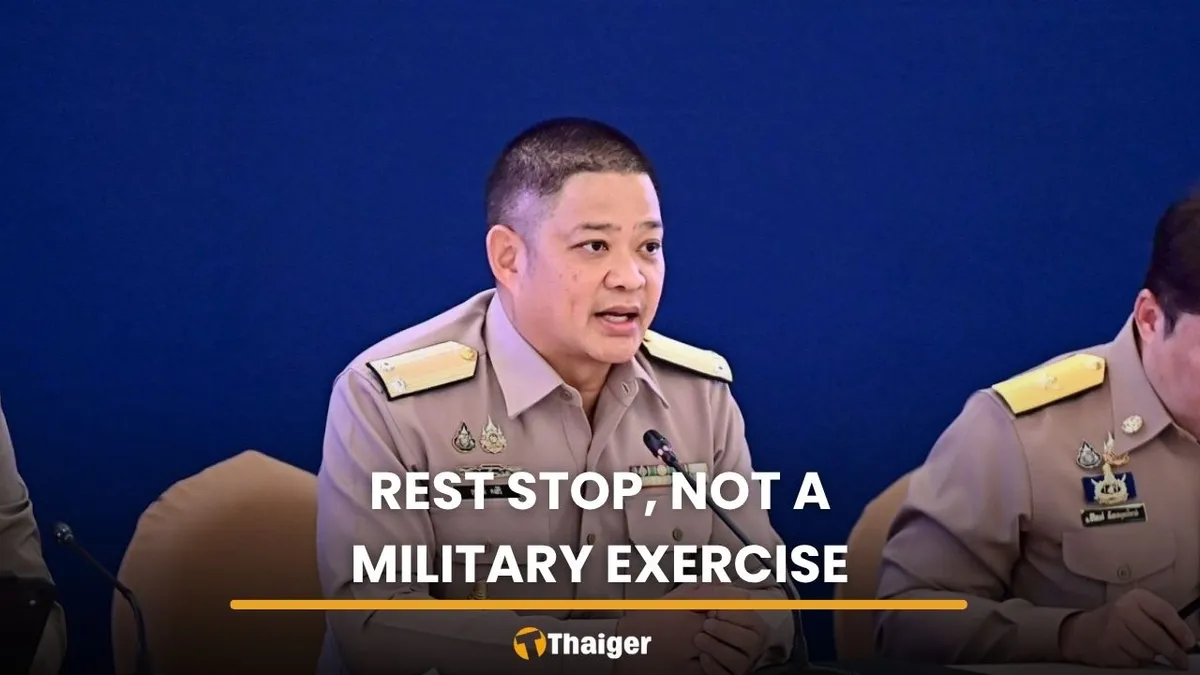
The aircraft carrier USS Abraham Lincoln and its escort vessels will make a port call in Thailand next week, but the visit is strictly for crew rest and recuperation, according to Thailand’s Ministry of Defence. The vessel and two accompanying ships are scheduled to dock at the Sattahip naval base in Chonburi province from September 2nd to September 6th.
Purpose of the Visit: Crew Well-being and Shore Leave
Ministry Spokesperson Rear Admiral Surasant Kongsiri clarified that the primary objective of the USS Abraham Lincoln’s presence in Thailand is to provide a much-needed respite for its personnel. “The visit was meant to restore the wellbeing of personnel who had spent an extended period at sea in the Middle East,” Surasant stated. During their stay, crew members will be granted shore leave, allowing them to experience Thailand and relax before continuing their deployment.
This clarification comes in response to online speculation that the port call might signify an expansion of joint military exercises or operations between Thailand and the United States. Rear Admiral Surasant firmly dismissed these notions, emphasizing that the visit is purely a routine personnel-recovery stop and will not involve any joint training, drills, or collaborative activities with Thai forces.
Security and Conduct: Adherence to Thai Law
Regarding security arrangements, Rear Admiral Surasant indicated that Thailand would adopt a general approach similar to that employed during international events like the annual Cobra Gold exercise. Visiting sailors and marines will receive comprehensive briefings on Thai laws and expected conduct. Supervision will be a joint effort, with Thai police and military police working alongside US military police assigned to oversee their own personnel.
US authorities have reportedly assured their Thai counterparts that they will instruct all personnel to strictly adhere to Thai laws and local regulations during their shore leave. This commitment aims to ensure a smooth and respectful visit for both the visiting crew and the host nation.
No Complications with International Relations
The Ministry of Defence also addressed concerns that the USS Abraham Lincoln’s previous deployment in operations supporting the US against Iran could potentially complicate Thailand’s diplomatic relations with Tehran. Rear Admiral Surasant asserted that this is not the case. He explained that the port call is being conducted under existing, long-standing Thai-US agreements and is entirely separate from the carrier’s Middle East mission. The visit’s nature as a routine logistical stop for crew welfare is seen as distinct from any operational deployments.
Royal Thai Armed Forces Reiterate Limited Scope
Echoing the Ministry of Defence’s statements, Major General Vithai Laithomya, spokesperson for the Royal Thai Armed Forces, separately confirmed the limited scope of the visit. He explicitly stated that Thailand will not be supplying any ammunition or other hazardous materials to the USS Abraham Lincoln. The sole purpose, he reiterated, is crew recovery and rest.
Major General Vithai also highlighted Thailand’s neutral stance in international military relations. He noted that the Royal Thai Navy evaluates port-call requests from all nations, including the United States, China, and Russia, on an equal footing. This policy ensures that no single country receives preferential treatment, reflecting Thailand’s commitment to maintaining balanced relationships with global powers.
A Routine Respite Amidst Global Naval Activity
The visit of the USS Abraham Lincoln underscores the strategic importance of Thailand as a logistical hub in Southeast Asia. While naval vessels from various nations frequently transit through or make port calls in the region, this particular visit is characterized by its specific focus on personnel welfare. The confirmation from high-ranking officials in both the Ministry of Defence and the Royal Thai Armed Forces serves to preempt and correct any misinterpretations regarding the nature and intent of the USS Abraham Lincoln’s brief stay in Thai waters. The emphasis remains squarely on providing a necessary period of rest for the sailors and Marines after an extended operational deployment.
