

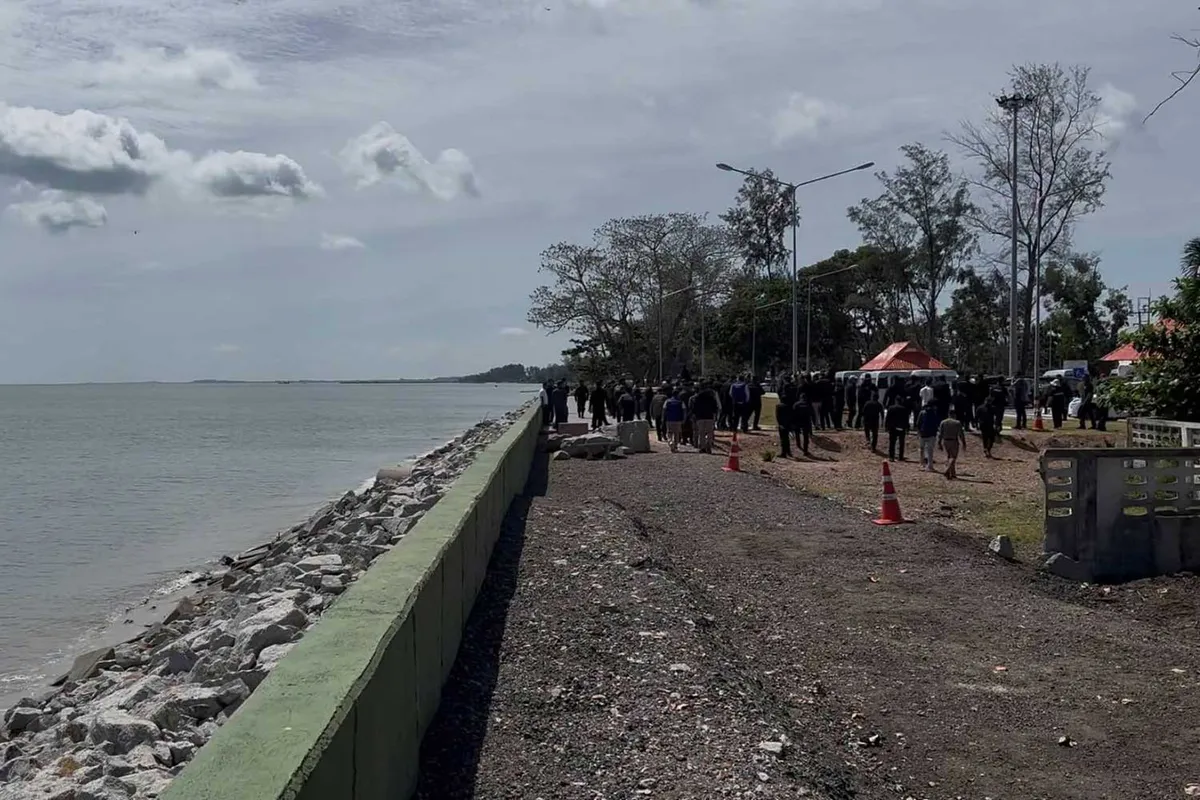
A critical warning has been issued regarding accelerating coastal erosion in Thepha district, Songkhla province, with the Transport Minister, Phiphat Ratchakitprakarn, directing state agencies to expedite mitigation efforts. The erosion poses a significant threat to Highway 43, a vital transportation artery connecting Thailand to its southern border provinces, potentially disrupting trade and travel.
Understanding the Threat of Coastal Erosion
Coastal erosion is a natural process where shorelines are worn away by the action of waves, tides, and currents. However, accelerated erosion, such as that observed in Thepha, can be exacerbated by factors including rising sea levels, increased storm intensity, and human activities like coastal development and sand extraction. The consequences can be severe, leading to loss of land, damage to infrastructure, and ecological disruption.
In Thepha district, the encroaching sea has reached a critical point, directly endangering Highway 43. This road is not merely a local thoroughfare; it serves as a crucial link for commerce and connectivity, facilitating the movement of goods and people between the southern provinces and the rest of Thailand, as well as to neighboring countries. The potential impact of its damage extends far beyond the immediate locality, affecting regional economic stability and national security.
Government Response and Agency Directives
Following an assessment of the situation, Minister Phiphat has mandated that relevant state agencies prioritize and accelerate their actions to combat the erosion. This directive underscores the urgency of the problem and the government’s commitment to safeguarding critical infrastructure. The specific agencies involved are expected to collaborate closely, pooling resources and expertise to implement effective, long-term solutions.
The minister’s call for accelerated measures implies a need for swift deployment of protective structures, such as seawalls or breakwaters, and potentially nature-based solutions like mangrove restoration, which can help stabilize shorelines. The focus is not just on immediate containment but also on developing strategies that offer lasting protection against the persistent forces of the sea.
Key Agencies Involved
- Department of Highways: Responsible for the maintenance and protection of Highway 43.
- Department of Coastal and Marine Resources: Provides expertise on coastal processes and ecological solutions.
- Local Administration: Works on the ground to implement and monitor protective measures.
- Environmental Agencies: Assess environmental impacts and ensure sustainable solutions.
The Strategic Importance of Highway 43
Highway 43 is a cornerstone of Thailand’s southern infrastructure. Its strategic importance cannot be overstated:
- Economic Corridor: It is a primary route for transporting agricultural products, manufactured goods, and raw materials to and from the southern provinces, including those bordering Malaysia.
- Tourism Facilitation: The highway supports the movement of tourists to and from popular southern destinations, contributing significantly to the local and national economy.
- Logistics and Supply Chains: It plays a vital role in the regional logistics network, ensuring the smooth flow of goods and services.
- National Connectivity: It ensures robust connectivity between the southern regions and the rest of the country, vital for national integration and emergency response.
The potential disruption to Highway 43 due to coastal erosion could lead to increased transportation costs, delays in delivery, and a negative impact on businesses reliant on this route. In a worst-case scenario, significant damage could necessitate costly repairs or even the rerouting of traffic, causing prolonged economic hardship.
Potential Solutions and Mitigation Strategies
Addressing coastal erosion requires a multi-faceted approach, combining engineering solutions with ecological considerations. Some of the strategies likely to be considered and implemented include:
- Hard Engineering Structures: Construction of robust seawalls, groynes, and breakwaters to physically block or reduce wave energy reaching the shore. These are often effective but can be costly and may have unintended consequences on adjacent coastlines.
- Soft Engineering and Nature-Based Solutions: Beach nourishment (adding sand to widen beaches), dune restoration, and the planting of coastal vegetation like mangroves. These methods work with natural processes to stabilize shorelines and can provide ecological benefits, such as habitat creation.
- Integrated Coastal Zone Management (ICZM): A holistic approach that considers all aspects of coastal use and development, aiming to balance economic, social, and environmental needs. This includes land-use planning, regulation of coastal activities, and monitoring of environmental changes.
- Early Warning Systems: Implementing systems to monitor erosion rates and predict potential threats, allowing for timely interventions.
The effectiveness of any solution will depend on a thorough understanding of the local geomorphology, wave patterns, and sediment dynamics, as well as the projected impacts of climate change, particularly sea-level rise.
Conclusion: A Call for Sustained Effort
The directive from the Transport Minister highlights a pressing environmental and infrastructural challenge facing Thepha district and, by extension, southern Thailand. The accelerated coastal erosion is not merely an environmental concern but an economic and logistical imperative that demands immediate and sustained attention. By prioritizing and accelerating mitigation efforts, state agencies aim to protect Highway 43, ensuring the continued flow of commerce and connectivity that is vital to the region’s prosperity and the nation’s integrity. The success of these measures will rely on robust planning, inter-agency cooperation, and the implementation of scientifically sound and environmentally conscious solutions.
