

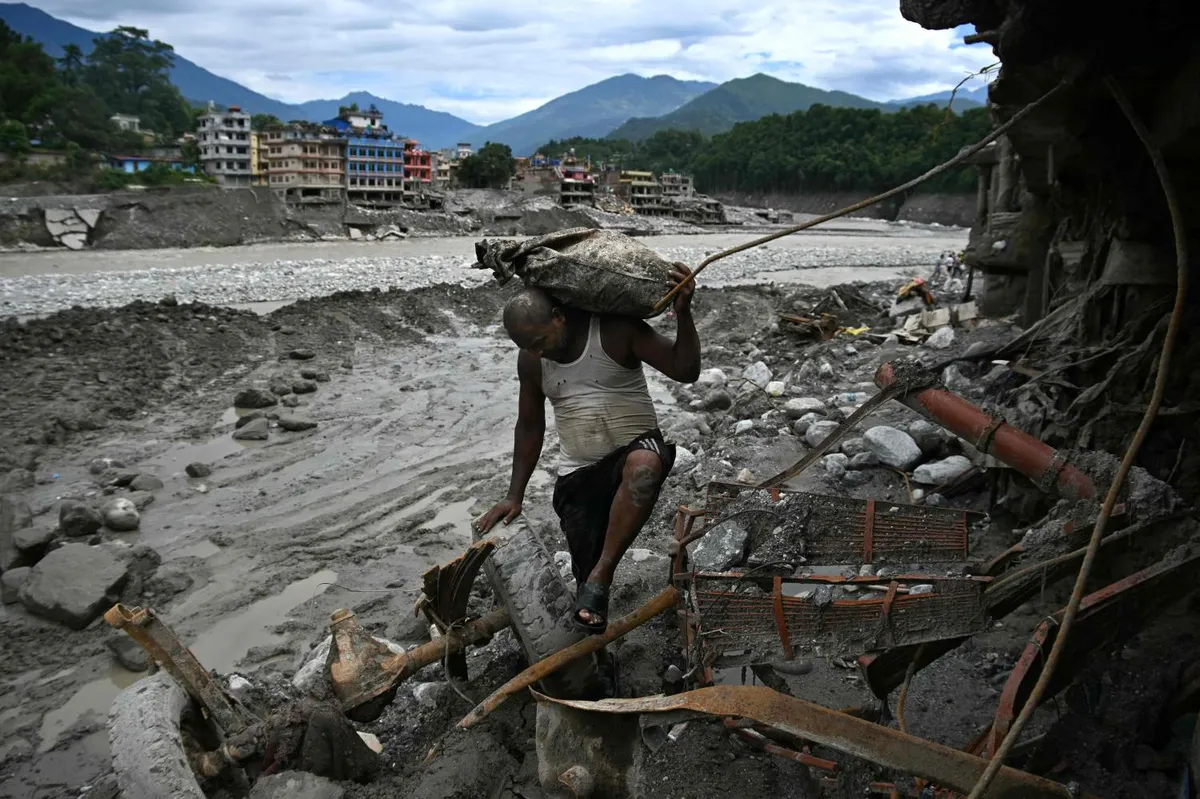
Weeks after devastating floods swept through Nepal’s Rasuwa district, near the border with China’s Tibet Autonomous Region, efforts to restore critical infrastructure and provide aid continue to face significant obstacles. The natural disaster, which struck over a week ago, has resulted in a tragic loss of life, with the death toll exceeding 1,300 individuals. Compounding the tragedy, over 4,800 people remain unaccounted for, a number that includes citizens from various nations.
Rasuwa District: A Vital Economic Artery
The Rasuwa district holds immense strategic importance for Nepal’s economy, primarily serving as a crucial transit point for trade with China. The Rasuwa-Kerung border crossing is one of the most significant gateways for goods entering and leaving the landlocked nation, facilitating a substantial portion of its international commerce. The recent floods, however, have severely disrupted this vital economic artery, cutting off supply lines and jeopardizing the flow of essential commodities.
Impact on Trade and Economy
The immediate aftermath of the floods has seen a complete halt in trade activities through the affected border crossing. This cessation has far-reaching implications:
- Supply Chain Disruptions: Essential goods, including fuel, food, and construction materials, are unable to reach Nepal, leading to potential shortages and price hikes.
- Export Losses: Nepali products, such as agricultural goods and handicrafts, are stranded, unable to reach their intended markets in China.
- Economic Downturn: The prolonged closure of the trade route is expected to negatively impact Nepal’s overall economic growth, particularly in sectors reliant on cross-border trade.
- Loss of Revenue: Government revenue generated from customs duties and trade taxes at this border point has ceased, adding financial strain to relief and reconstruction efforts.
Challenges in Rescue and Relief Operations
Rescue and relief operations in the flood-affected areas are proving to be exceptionally challenging. The rugged terrain of the Rasuwa district, combined with the extensive damage to roads and bridges, has hampered the movement of rescue teams and the delivery of essential supplies. Landslides, triggered by the heavy rainfall, have further complicated access to remote villages.
Aid organizations and government agencies are working tirelessly to reach stranded populations, provide medical assistance, and distribute food and shelter. However, the scale of the disaster and the logistical hurdles mean that reaching everyone in need is a slow and arduous process. International assistance has been mobilized, with various countries offering support in terms of personnel, equipment, and financial aid.
Reconstruction Efforts and Long-Term Outlook
The focus is now shifting towards the long-term challenge of rebuilding Nepal’s trade lifeline. This involves not only repairing the damaged infrastructure but also exploring ways to enhance resilience against future natural disasters. Key areas for reconstruction include:
- Road and Bridge Repair: Prioritizing the reconstruction of major roads and bridges connecting the Rasuwa district to the border crossing.
- Infrastructure Development: Investing in more robust and disaster-resilient infrastructure to withstand extreme weather events.
- Trade Facilitation: Streamlining customs procedures and exploring alternative trade routes to mitigate risks associated with single-point dependency.
- Community Support: Providing long-term support to the affected communities, including housing, livelihoods, and essential services.
The rebuilding process is expected to be a lengthy and resource-intensive undertaking. It will require sustained commitment from the Nepali government, international partners, and the private sector. The resilience and determination of the Nepali people will be crucial in overcoming this significant challenge and restoring the vital trade link with China.
International Cooperation
The disaster has underscored the importance of international cooperation in disaster response and recovery. Nepal, being a landlocked country prone to natural calamities, relies heavily on the support of its neighbors and the global community. The response from China, in particular, will be critical given the proximity and the shared border. Efforts to coordinate relief and reconstruction activities between Nepal and the Tibet Autonomous Region are underway, aiming for a swift and effective restoration of the trade route.
Conclusion
The catastrophic floods in Nepal’s Rasuwa district have inflicted immense suffering and severely impacted the nation’s economic lifeline. While rescue and relief operations continue amidst considerable difficulties, the path to recovery and the rebuilding of the crucial trade route with China presents a formidable challenge. A concerted and sustained effort, bolstered by international collaboration and a focus on building resilient infrastructure, will be essential for Nepal to overcome this crisis and re-establish its vital economic connections.
