

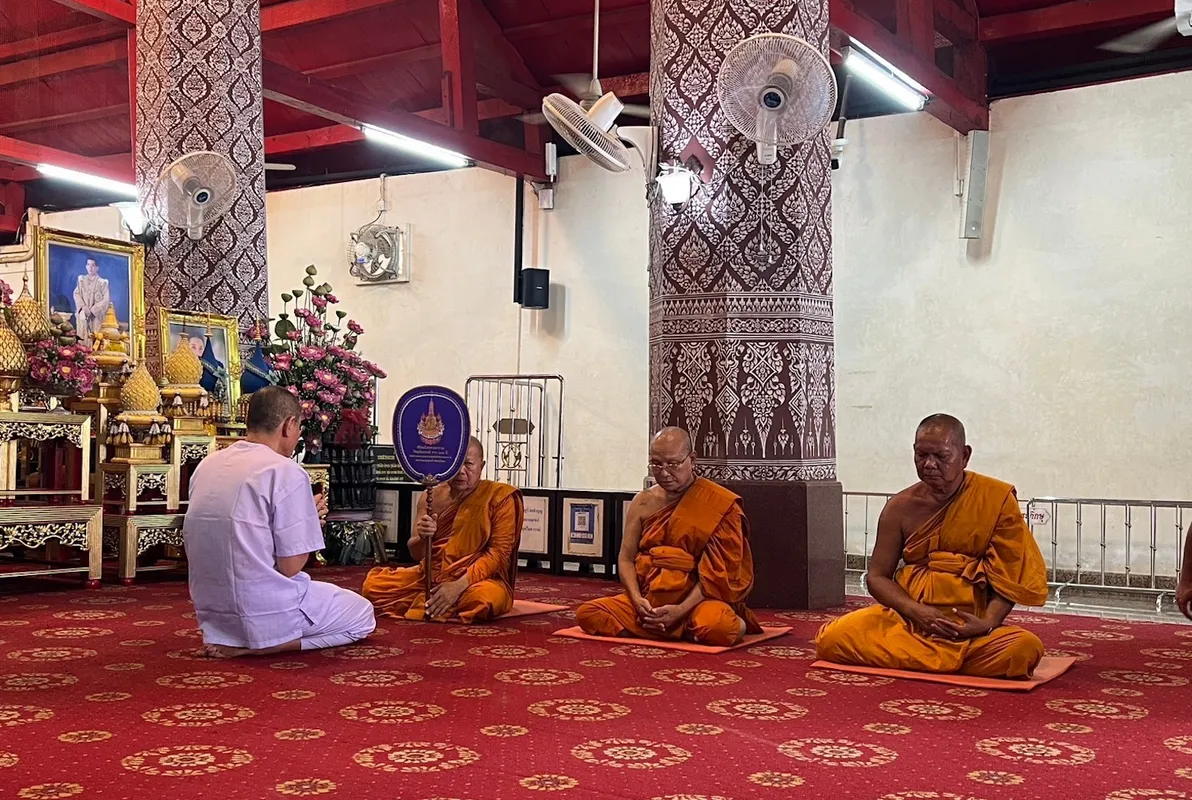
A recent embezzlement scandal involving a former abbot of Wat Phutthaisawan in Ayutthaya has ignited public interest, bringing to the forefront persistent issues within Thailand’s religious institutions. The ex-abbot, now defrocked, was taken into custody alongside a female aide accused of complicity in the alleged financial crimes and personal misconduct. The case, reportedly involving illicit surveillance footage and potentially hundreds of millions of baht in misappropriated funds, highlights a recurring pattern of temple-related scandals in the country.
Recurring Temple Scandals in Thailand
This latest incident is not an isolated event. A review of recent headlines reveals a troubling frequency of similar scandals across Thailand, often involving embezzlement, inappropriate relationships, or a combination of both. These incidents raise critical questions about the scrutiny major temples receive, the modern temptations faced by Buddhist clergy, and whether external elements are corrupting the religious institution.
Notable Past Cases
- Wat Phrabat Namphu (August last year): This temple in Lop Buri faced allegations of diverting donations, resulting in estimated damages of around 10 billion baht.
- Wilawan “Golf” Emsawat (July last year): Known as Sika Golf, she was arrested as a central figure in a scandal involving compromising footage of senior monks and approximately 400 million baht intended for religious activities.
- Wat Bang Khlan (April this year): The former abbot of this temple in Phichit surrendered to face accusations of misappropriating an estimated 9 million baht over an 11-year period.
Beyond a “Crisis of Faith”
While these frequent scandals might suggest a widespread crisis of faith, particularly among younger generations who appear less engaged with traditional temple practices, the public discourse often focuses on external factors or individual failings. Discussions frequently revolve around how modern life erodes traditional values or whether the faithful can simply separate the actions of corrupt individuals from the inherent importance of religious sites. For instance, following the Ayutthaya scandal, the Tourism and Sports Minister suggested that visitors could distinguish between an individual’s misconduct and a temple’s significance.
However, a deeper examination is often overlooked: whether the very practices and beliefs of Thai Buddhists themselves inadvertently create the conditions for these scandals to flourish. This includes the eagerness to donate generously, the tendency to view high-profile monks as infallible, and the association of good karma with worldly success and material wealth.
Buddhism’s Core Tenets and Thai Practices
Unlike some other religions that require specific rituals, regular attendance, or mandatory tithing, Buddhism, in its fundamental teachings, emphasizes introspection and detachment from worldly possessions. The path to enlightenment and liberation from the cycle of reincarnation is presented as a personal journey requiring self-examination and a renunciation of material trappings. This core teaching appears at odds with the opulent compounds and heavily funded monastic organizations that have become common.
The Buddha himself encouraged followers to question teachings, even his own, rather than accepting them on blind faith. This principle offers a framework for addressing the fallibility of human nature within the religious context. Instead of viewing the shortcomings of individuals as an insurmountable obstacle, Buddhism provides a path for adherents to cast off such distractions and continue their personal introspection.
The Role of Communal Introspection
Reconciling the core teachings of Buddhism with the prevalent superstitions and spiritual practices in Thailand is a complex task. However, it is evident that Thai Buddhists possess the capacity to reform the state of their religion by engaging in honest, communal introspection. This process requires confronting the uncomfortable reality of how certain practices may contribute to the ongoing scandals plaguing temples like Wat Rai Khing, Wat Phrabat Namphu, and Wat Phutthaisawan.
The widespread embezzlement of donations, the pursuit of expensive amulets, secret sexual relationships, and other disheartening actions by clergy could be significantly curbed if self-identifying Buddhists actively embraced the act of questioning. This questioning should extend to the very nature of donations, considering whether acts of kindness or the denial of personal desire for the sake of deeper insight might serve karmic betterment more effectively than contributing to organized religious bodies. By encouraging critical self-reflection and adherence to the Buddha’s teachings on detachment and introspection, the integrity of the faith can be better preserved.
