

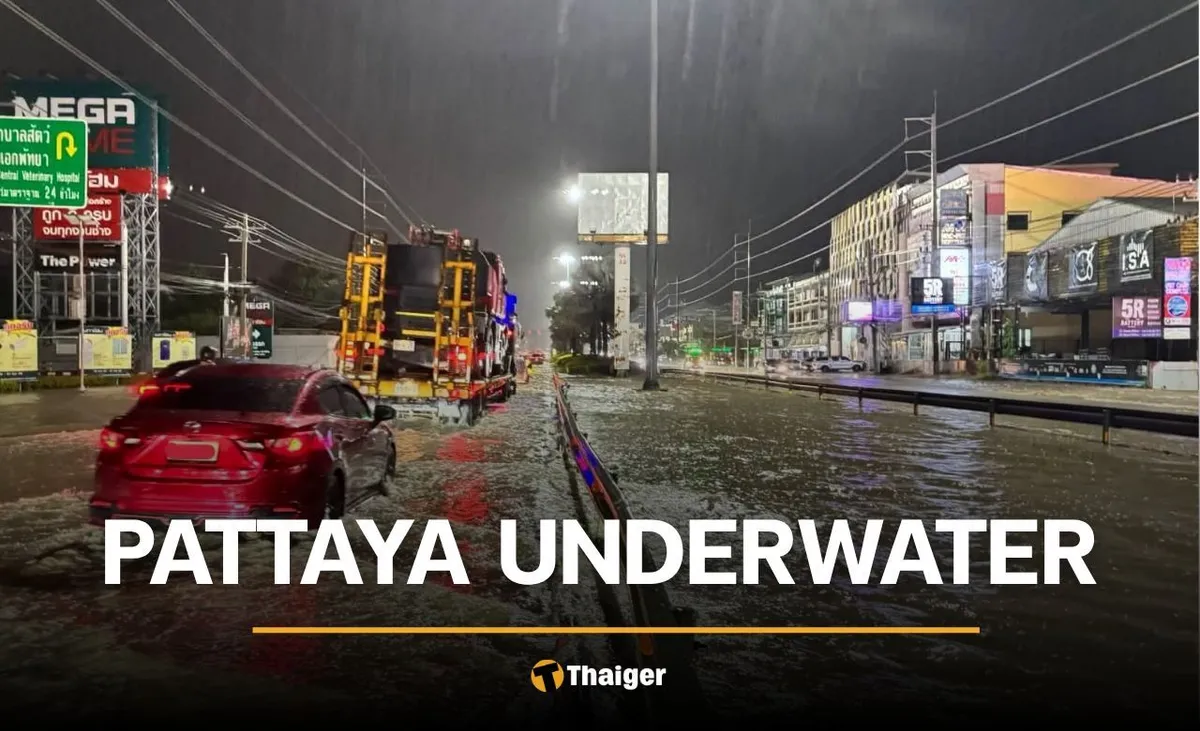
Pattaya experienced significant flooding late on September 10th, with heavy overnight rainfall inundating several key areas, including the major Sukhumvit Road. The deluge left motorists stranded, caused vehicles to stall, and highlighted ongoing drainage challenges within the popular Thai city. The flooding underscores the vulnerability of low-lying areas to intense weather events.
Widespread Flooding Disrupts Pattaya
The downpour, which began late in the evening, led to substantial water accumulation in multiple locations across Pattaya. By approximately 11 p.m., four specific areas were reported to be heavily affected:
- Sukhumvit Road, specifically in front of Lotus South Pattaya, on the side heading towards Sattahip.
- The Moom Aroi intersection, situated on Third Road.
- Railway Road, located behind Wat Tham.
- The Nong Yai Soi 2 intersection.
The depth of the floodwaters created considerable driving difficulties. The presence of stalled vehicles exacerbated traffic congestion, turning what would typically be a routine commute into a hazardous and time-consuming ordeal for many. Beyond the traffic chaos, the slippery and submerged road surfaces posed risks to both drivers and pedestrians. In some instances, the rising water levels encroached upon homes and other low-lying properties, causing inconvenience and potential damage to residents.
Official Response and Drainage Concerns
In response to the escalating situation, Pattaya City officials were promptly deployed to the affected zones. Their primary objectives were to manage the chaotic traffic flow and provide assistance to stranded motorists. While the immediate crisis involved navigating the flooded streets and helping those in distress, the recurring nature of such events brings into sharp focus the city’s drainage infrastructure. The rapid inundation following intense rainfall suggests that the existing systems are frequently overwhelmed, leading to predictable, yet disruptive, flooding.
As the night progressed, water levels in the affected areas began a gradual but steady decline. However, the incident served as a stark reminder for residents, particularly those living in areas prone to flooding. The speed at which water can accumulate in streets, sois (alleys), and parking lots during a sudden, heavy downpour means that preparedness is crucial. Vehicles left in vulnerable locations are at significant risk of becoming trapped or sustaining water damage.
Safety Advice and Future Preparedness
Authorities reiterated essential safety advice for navigating such hazardous conditions. Motorists are strongly cautioned against attempting to drive through deep or fast-moving floodwaters. Seeking higher ground is paramount when weather conditions deteriorate rapidly. For residents residing in flood-prone neighborhoods, proactive measures are recommended when heavy rain is forecast or imminent.
This includes relocating vehicles and valuable possessions to elevated or safer locations well in advance of the potential inundation. The unpredictable nature of monsoon weather means that periods of intense rainfall, especially overnight, can quickly lead to significant flooding. Pattaya, like many coastal and low-lying urban areas, remains susceptible to these events.
Contacting Authorities
Pattaya City officials confirmed that personnel would continue their efforts to assist the public as water levels receded and the situation normalized. Residents requiring immediate assistance or wishing to report ongoing flooding incidents are encouraged to contact Pattaya City directly via their dedicated hotline at 1337. This number serves as a crucial point of contact for emergency response and public information during flood events.
Looking Ahead: Persistent Vulnerability
The September 10th flooding incident on Sukhumvit Road and surrounding areas is not an isolated event but rather a recurring challenge for Pattaya. The city’s geographical characteristics, combined with periods of intense rainfall, create a persistent vulnerability. While drainage systems are in place, their capacity is often tested beyond its limits during severe weather. This necessitates a dual approach: immediate response and assistance during floods, coupled with long-term considerations for infrastructure improvements and enhanced urban planning to mitigate future risks.
The reliance on effective drainage is critical for urban resilience. When these systems fail to cope with the volume of water, the consequences can range from minor inconveniences to significant economic and personal disruption. The events of September 10th serve as a potent reminder that preparedness, both by authorities and by individual residents, is key to managing the impacts of increasingly unpredictable weather patterns. Continued vigilance and adherence to safety guidelines are advised for all inhabitants and visitors in flood-prone regions of Pattaya.
