

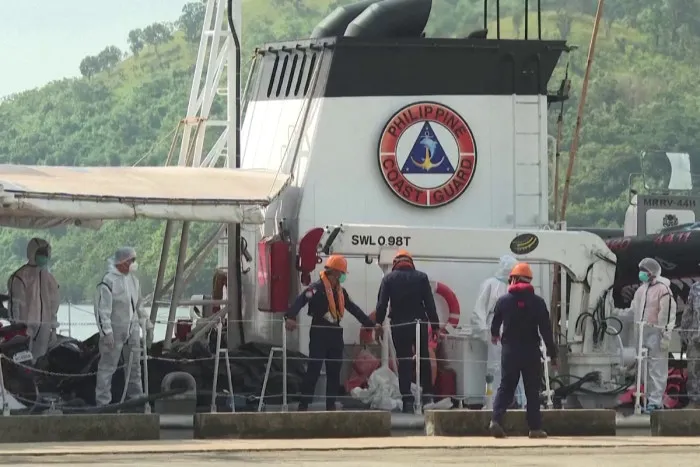
Efforts are underway in the Philippines to identify the victims of a devastating ferry fire that occurred off the coast of Coron. On Saturday, September 12, personnel from the Philippine Coast Guard were observed transferring body bags containing recovered victims. This solemn task followed the tragic blaze aboard a ferry, as anxious families gathered, awaiting news and the identification of their missing loved ones.
Ferry Fire Incident Details
The incident involved a ferry that caught fire under circumstances still under investigation. The blaze led to a significant loss of life and prompted a large-scale rescue and recovery operation. Authorities have confirmed a grim toll, with at least 35 individuals confirmed deceased as a result of the fire. The situation remains fluid, as 53 people are still reported missing, raising fears that the death toll may yet increase. In a glimmer of hope amidst the tragedy, 43 survivors were successfully rescued from the burning vessel.
Recovery and Identification Process
The Philippine Coast Guard has been at the forefront of the recovery efforts. Personnel meticulously worked to retrieve victims from the waters and the wreckage, placing them into body bags for transport. The transfer of these bags on Saturday marked a critical phase in the process, moving the deceased to facilities where identification could begin. This process is often painstaking, involving forensic examination, dental records, and DNA analysis, especially when victims may have suffered severe burns or trauma.
Challenges in Identification
Identifying victims of such a catastrophic event presents numerous challenges. The intensity of the fire can compromise physical remains, making visual identification impossible. Families are often left in agonizing limbo, waiting for definitive proof that can bring closure, however painful. The sheer number of missing persons underscores the severity of the disaster and the immense task facing investigators and forensic teams.
Eyewitness Accounts and Survivor Stories
While official reports focus on the numbers and the recovery efforts, the human element of this tragedy is profound. Survivors, many of whom likely experienced harrowing escapes, are being interviewed to piece together the events leading up to and during the fire. Their accounts are crucial not only for understanding how the disaster unfolded but also for providing comfort and information to the families of those lost. Details from survivors often paint a vivid, albeit distressing, picture of the chaos and fear that must have ensued.
Government Response and Support
The Philippine government, through its various agencies including the Coast Guard and disaster management authorities, has mobilized resources to manage the crisis. This includes coordinating search and rescue operations, managing the recovery of victims, and providing support to the survivors and the families of those affected. Efforts are being made to streamline the identification process and to offer assistance, such as counseling and financial aid, to those who have lost loved ones or were injured in the incident.
Investigation into the Cause
A thorough investigation into the cause of the ferry fire is paramount. Officials will be examining potential factors such as mechanical failure, electrical faults, or even arson, although no specific cause has been determined at this early stage. Understanding the root cause is essential for implementing measures to prevent similar tragedies in the future and for ensuring accountability.
Community Impact and Grief
Ferry accidents are not uncommon in the Philippines due to its archipelagic nature, but the scale of this fire has sent shockwaves through the community. The loss of life impacts families, friends, and entire communities. The waiting period for identification is particularly agonizing, prolonging the grieving process. Support networks and community outreach are vital during such times of collective sorrow.
Looking Ahead: Prevention and Safety
As the immediate crisis response continues, attention will inevitably turn to maritime safety regulations and enforcement. This tragedy will likely prompt a review of safety protocols on ferries, including fire prevention measures, emergency equipment, and evacuation procedures. Ensuring the safety of passengers is a continuous challenge that requires vigilance from both authorities and ferry operators. The hope is that lessons learned from this devastating event will lead to tangible improvements in maritime safety across the Philippines, preventing future loss of life on its waters.
Conclusion
The identification of victims from the Coron ferry fire is a critical and sensitive phase following a major maritime disaster. With 35 confirmed dead, 53 missing, and 43 survivors, the focus remains on providing answers to grieving families and understanding the full scope of the tragedy. The ongoing efforts by the Philippine Coast Guard and other agencies highlight the complex and challenging nature of such recovery operations. The community now awaits definitive identifications and the commencement of investigations into the cause, hoping to find a path towards healing and improved safety standards for the future.
