

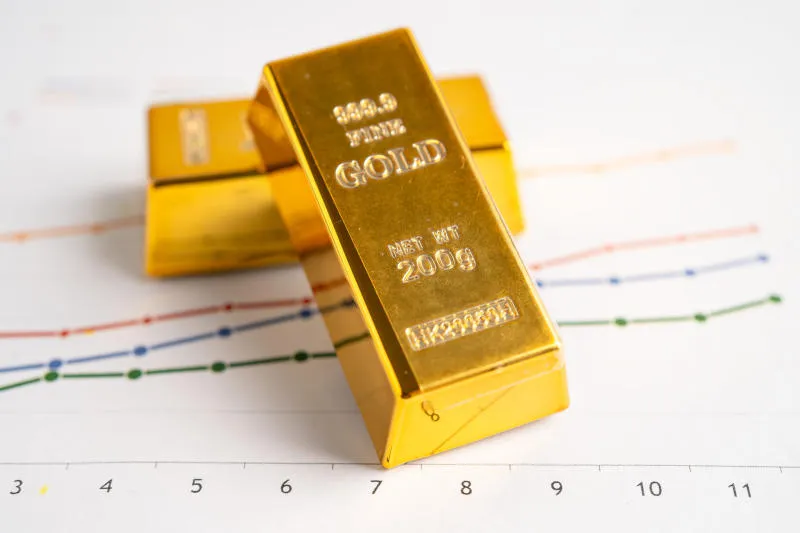
Gold prices have fallen to their lowest point in over a month, driven by a confluence of factors including a significant rally in oil prices and robust inflation data that is bolstering expectations of further interest rate hikes by major central banks. Spot gold experienced a notable decline, dropping 1.8% to trade at US$4,271.59 per ounce by 9:28 AM EDT (1328 GMT), marking its weakest performance since August 7. US gold futures also saw a substantial decrease, falling 2.2% to $4,311.20.
Rate Hike Expectations Fuel Gold’s Decline
The upward pressure on oil prices is directly contributing to increased inflation expectations. Analysts suggest this scenario compels central banks globally to consider tighter monetary policies to curb rising costs, a move that typically dampens the appeal of precious metals like gold. Jim Wyckoff, a market analyst at American Gold Exchange, commented on the situation, noting that sharply higher crude oil prices are driving inflation expectations, which in turn suggests that major central banks will need to tighten their monetary policies to control inflation. “That’s bearish for the metals,” he stated.
This sentiment is particularly relevant for the US Federal Reserve. A significant majority of economists surveyed by Reuters anticipate the Fed will announce an interest rate increase at its upcoming policy meeting. Furthermore, these economists predict at least one more rate hike before the end of March. This outlook represents a reversal from a previous, more cautious consensus that favored maintaining current rates, a view that prevailed before the release of recent official data indicating firm inflation.
Supporting these expectations, official figures released on Friday revealed that the Consumer Price Index (CPI) rose by 0.4% last month. This follows a modest 0.1% increase observed in July, according to data from the Bureau of Labor Statistics. The market is keenly watching these indicators, with trading data from the CME FedWatch Tool showing an approximately 89% probability that the Fed will implement a rate hike at its upcoming policy meeting.
The Bank of Japan is also under pressure to adjust its monetary policy. With energy prices on the rise and persistent geopolitical tensions in the Middle East showing little sign of de-escalation, the Bank of Japan is widely expected to consider raising interest rates soon.
Gold’s Role as an Inflation Hedge Under Pressure
While gold has historically been regarded as a safe haven and a hedge against inflation, the current economic climate presents a challenge to this traditional role. Higher interest rates generally make non-yielding assets, such as gold, less attractive to investors compared to interest-bearing instruments. As the potential for increased returns from bonds and other fixed-income investments rises, the opportunity cost of holding gold increases, leading to reduced demand.
Geopolitical Tensions and Supply Concerns Drive Oil Prices
The surge in oil prices, which climbed approximately 4% on Monday, is a significant contributing factor to the current market dynamics. This increase was exacerbated by recent developments in the Middle East, including new strikes targeting Saudi Arabian energy and civilian infrastructure, as well as Iranian attacks on commercial vessels in the Gulf. These events have intensified supply concerns, particularly following the shutdown of a critical Saudi oil pipeline.
Adding to the market’s uncertainty, diplomatic efforts in the region appeared to stall with the reported postponement of a meeting between Iran and other Gulf powers. The ongoing geopolitical instability in a major oil-producing region directly impacts global energy markets, contributing to price volatility and supply chain worries.
Stronger Dollar Adds to Gold’s Woes
The strengthening US dollar has further compounded the challenges for gold. The dollar reached a two-week high, making gold, which is priced in US dollars, more expensive for international buyers holding other currencies. This increased cost can dampen demand from key markets, putting additional downward pressure on gold prices.
Other Precious Metals Follow Gold Lower
The downward trend was not confined to gold alone. Other precious metals also experienced significant declines. Spot silver slid 2.5% to $62.88 per ounce, while platinum dipped 2% to $1,759.87. Palladium also saw a decrease, falling 0.6% to $1,291.50 per ounce.
Conclusion
The current downturn in gold prices reflects a complex interplay of macroeconomic factors and geopolitical events. Rising inflation expectations, coupled with the prospect of higher interest rates and a stronger dollar, are creating headwinds for the precious metal. Simultaneously, a surge in oil prices, driven by supply concerns and Middle East tensions, further influences market sentiment and central bank policy considerations. Investors are closely monitoring these developments as they navigate the evolving economic landscape.
