

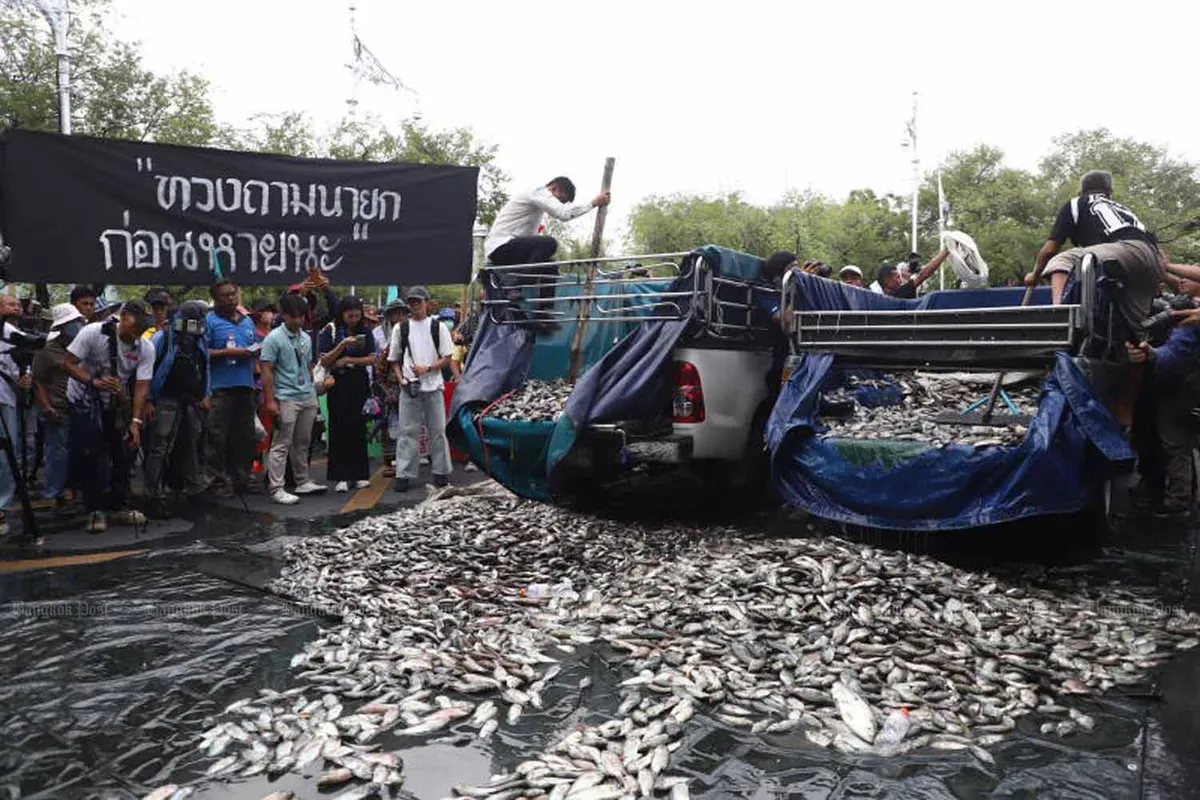
The Appeal Court has upheld a class action lawsuit filed by local villagers against Charoen Pokphand Foods (CPF), allowing the case concerning damages from invasive blackchin tilapia to proceed. The ruling, delivered at the Bangkok South Civil Court on Monday, signifies a crucial step for the plaintiffs who allege significant financial losses due to the proliferation of the non-native fish.
Class Action Status Upheld
In its decision, the Appeal Court affirmed the local villagers’ right to pursue their complaint as a class action. This means the case can represent a larger group of affected individuals, rather than requiring each person to file a separate suit. The appeal had been lodged by CPF and its executive board, challenging the initial acceptance of the class action status.
The court also scheduled a further hearing for November 30th to determine if the lawsuit should be officially classified as an environmental case. CPF had specifically requested the court’s consideration regarding the environmental dimensions of the matter, indicating a focus on the ecological impact and potential regulatory frameworks.
Background of the Lawsuit
The class action lawsuit was initiated in 2024 by a group of ten fishermen and fish breeders hailing from Samut Songkhram province. Their central grievance is the detrimental impact they attribute to the spread of the invasive blackchin tilapia, a species originally from Africa. The complainants contend that this fish has disrupted their livelihoods, leading to substantial income loss from traditional fish breeding and small-scale farming operations.
Central to the plaintiffs’ claim is the suspicion that CPF was involved in the initial importation of the blackchin tilapia into Thailand for research or other purposes. They allege that the company’s actions, or lack thereof, contributed to the fish escaping and establishing populations that now threaten local aquatic ecosystems and the livelihoods dependent on them.
Legal Proceedings and Compensation Sought
The legal counsel for the complainants, Somchai Ameen of the Lawyers Council of Thailand, expressed optimism following the Appeal Court’s decision. He anticipates that the Bangkok South Civil Court will commence hearing witness testimony in the upcoming year, with a final ruling also expected within the same timeframe. This timeline suggests a potentially swift progression of the case through the judicial system.
The total compensation sought by the plaintiffs amounts to 2.4 billion baht. This figure is intended to cover the cumulative loss of income experienced by the affected fishermen and fish breeders. The Bangkok South Civil Court had initially accepted the class action suit in March of the previous year, paving the way for the legal battle that has now reached this appellate stage.
Broader Context: Government Action on Invasive Tilapia
This legal development occurs against a backdrop of increasing governmental concern and action regarding the invasive blackchin tilapia. Earlier in the month, the Central Administrative Court issued a significant order directing the Department of Fisheries and its director-general to actively pursue measures for the eradication of blackchin tilapia from Thai waterways. Furthermore, the court mandated the Interior Ministry to officially designate Samut Songkhram province as a tilapia disaster area. This designation is intended to unlock specific funds and resources allocated for compensation and mitigation efforts related to the invasive species.
The Central Administrative Court’s order underscores the severity of the problem, recognizing the widespread ecological and economic damage caused by the blackchin tilapia. By compelling government agencies to act and providing a framework for disaster relief, the court acknowledged the urgent need for intervention. The class action lawsuit against CPF, therefore, is part of a larger, multi-faceted response to the challenges posed by invasive species in Thailand’s aquatic environments.
Potential Ramifications
The outcome of this class action lawsuit could have significant implications, not only for CPF but also for other agricultural and aquaculture businesses operating in Thailand. It sets a precedent for how companies might be held accountable for the environmental consequences of their operations, particularly concerning the introduction and management of non-native species. The case will likely be closely watched by environmental advocates, industry stakeholders, and affected communities alike, as it navigates the complex intersection of business, environmental protection, and community welfare.
As the legal proceedings move forward, the focus will remain on the evidence presented regarding CPF’s alleged role in the introduction of the blackchin tilapia and the extent of the damages suffered by the plaintiffs. The court’s eventual decision will hinge on a thorough examination of these factors, alongside the broader environmental context and any relevant regulatory guidelines.
