

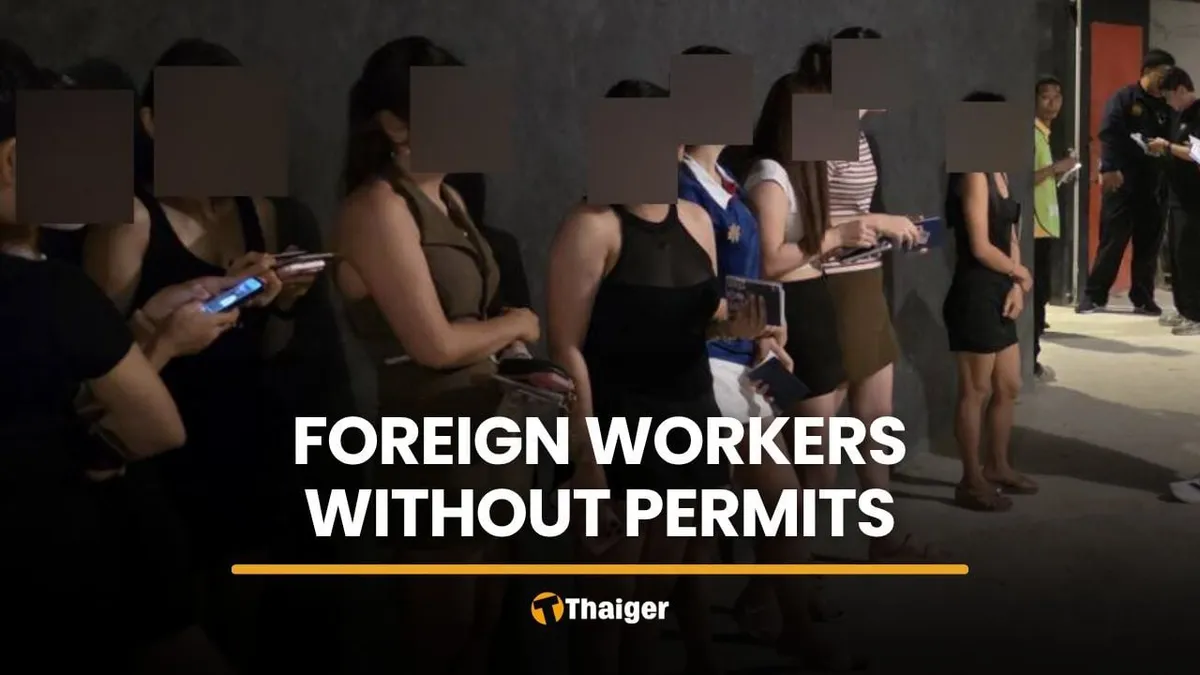
Six foreign nationals were apprehended at a restaurant in Bangkok’s Bang Bon district on the evening of July 9th, after an inspection revealed they were allegedly working without the necessary permits. The operation, involving officials from the Employment Department, immigration authorities, and security personnel, was initiated following a labor complaint lodged with the Bangkok Employment Office.
Inspection Uncovers Alleged Illegal Employment
The inspection commenced around 9 PM, targeting a restaurant based on information suggesting the establishment was employing foreign workers illegally. During the on-site examination, officials identified six individuals who reportedly lacked valid work permits. The group consisted of three Laotian nationals (two women, one man) and three Vietnamese nationals (also two women, one man).
Following their detention, all six individuals were transported to the Samae Dam Police Station to face legal proceedings. They are accused of violating Section 8 of the Emergency Decree on the Management of Foreign Workers B.E. 2560 (2017), which was subsequently amended in 2018. This specific offense, as outlined in Section 101 of the decree, carries potential penalties including imprisonment for up to five years, a fine ranging from 2,000 to 100,000 baht, or a combination of both.
Authorities reported that the inspection and subsequent detentions proceeded smoothly and without any complications.
Broader Crackdown on Foreign Labor Violations
This incident is part of a wider effort by Thai authorities to enforce regulations concerning the employment of foreign nationals. Officials have indicated that joint inspections of businesses suspected of non-compliance with foreign employment laws will continue across the capital and potentially other regions.
Related Incidents Highlight Enforcement Efforts
The crackdown on illegal foreign labor has seen several other recent operations:
- Karaoke Venue Raids: In a separate operation, the Department of Employment conducted raids on seven karaoke venues in the Khlong San district. This action was prompted by intelligence regarding the alleged illegal employment of foreign workers. Out of 52 migrant workers inspected, 28 were reportedly found to be working without the required permits.
- Beauty Salon Arrests: Another recent raid targeted a beauty salon in Bangkok that reportedly catered to Chinese tourists. The operation resulted in the arrest of six hairdressers, identified as being from China and Myanmar. The owner of the salon, reportedly Chinese, managed to evade authorities at the scene.
These enforcement actions underscore the government’s commitment to ensuring that all foreign nationals working within Thailand possess the appropriate documentation and permits. The regulations are designed to protect both the domestic labor market and the rights of foreign workers who comply with legal requirements.
Understanding Work Permit Regulations in Thailand
Foreign nationals seeking to work in Thailand are required to obtain a work permit before commencing employment. This process typically involves securing a Non-Immigrant B (Business) visa, followed by an application for the work permit through the Ministry of Labour. The permit specifies the type of work and the location where the individual is authorized to be employed.
The legal framework governing foreign employment aims to regulate the labor market, prevent exploitation, and ensure that foreign workers contribute positively to the Thai economy without displacing local workers or engaging in unauthorized activities. The penalties for violations are significant, serving as a deterrent against non-compliance.
Consequences for Employers and Employees
Both employers who hire foreign nationals without valid work permits and the foreign nationals themselves who work illegally face severe penalties. For employers, fines can be substantial, and they may also face business suspension or other sanctions. For foreign workers, the consequences include deportation in addition to fines and potential imprisonment.
Authorities emphasize the importance of due diligence for businesses considering hiring foreign staff, urging them to verify the legal status and work permit validity of all employees. Similarly, foreign nationals intending to work in Thailand are advised to thoroughly understand and adhere to the country’s immigration and labor laws to avoid legal repercussions.
Conclusion: Ongoing Enforcement and Compliance
The recent raid at the Bangkok restaurant and other similar enforcement actions highlight a continued focus on regulating foreign employment in Thailand. These operations serve as a reminder to both employers and foreign workers about the critical importance of adhering to work permit regulations. Authorities are maintaining vigilance, conducting inspections to ensure compliance and uphold the integrity of the labor market.
