

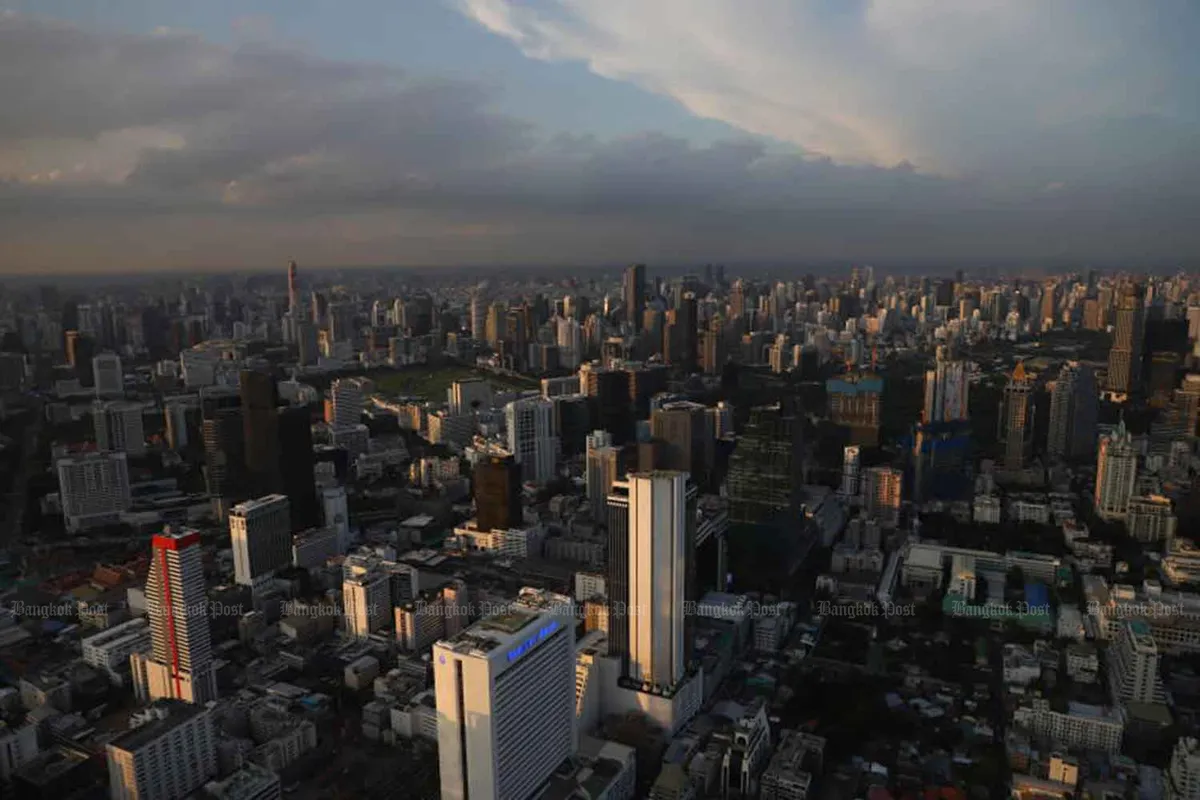
Bangkok is poised for a significant surge in its ultra-high-net-worth (UHNW) population, with projections indicating a growth of over 50% in the next five years. This rapid expansion is set to solidify the city’s status as a burgeoning global wealth center and Southeast Asia’s premier wealth hub. According to the World Ultra Wealth Report 2026 by wealth intelligence firm Altrata, Bangkok was home to 1,210 UHNW individuals in 2025. These individuals are defined as those possessing net assets exceeding US$30 million. The report forecasts this number to climb to approximately 1,840 by 2030, reflecting an average annual growth rate of 8.7%.
Bangkok’s Rise as a Global Wealth Hub
The anticipated growth trajectory places Bangkok as the world’s 12th fastest-growing major UHNW city among the top 100 global economies by nominal GDP. This impressive ranking positions it ahead of other major regional centers like Jakarta, highlighting its increasing importance in the global financial landscape. Maya Imberg, senior director and head of thought leadership and analytics at Altrata, noted that Bangkok’s appeal lies not only in its swift wealth creation but also in its blend of robust domestic entrepreneurship and growing international allure. She emphasized that Bangkok is expected to experience one of the fastest expansions in its UHNW population globally over the coming half-decade.
Drivers of Wealth Expansion in Bangkok
Several key factors are contributing to Bangkok’s expanding wealth base. Imberg pointed out that the city’s economic growth is supported by a diverse economic foundation, rather than an over-reliance on any single industry. Key sectors fueling this wealth generation include:
- Real estate
- Hospitality and entertainment
- Banking and finance
- Business and consumer services
The report further reveals that the majority of UHNW individuals in Bangkok are self-made entrepreneurs. While many received initial support from inherited capital, fully inherited fortunes constitute less than 10% of the UHNW population. This indicates a strong culture of innovation and business building within the city. Imberg stated, “The majority are entrepreneurs who have built their fortunes themselves, often with some degree of family support rather than inheritance alone.”
The sustained growth of Thailand’s wealthy demographic is attributed to long-term structural strengths. These include institutional quality, favorable tax and trade policies, a vibrant entrepreneurial ecosystem, robust capital markets, and currency stability. These elements collectively foster an environment conducive to wealth accumulation and preservation.
Global Trends in Ultra-High-Net-Worth Populations
The surge in Bangkok’s UHNW population mirrors a broader global trend. In 2025, the global UHNW population reached a record 556,850 individuals, marking a substantial 14.4% increase from the previous year. This represents the second consecutive year of double-digit growth and the most significant expansion since 2017. The combined wealth of this demographic climbed to $63.8 trillion, more than double the annual GDP of the United States. Altrata projects that the global UHNW population will continue its upward trajectory, reaching 746,570 by 2030, with their collective wealth expected to rise to $85 trillion.
Future wealth creation is anticipated to be driven by technological advancements, the expansion of private capital, and the global economic restructuring around artificial intelligence, the energy transition, and digital infrastructure. Emerging opportunities are also foreseen in sectors such as private credit, network infrastructure, defense technology, renewable energy, biotechnology, and advanced manufacturing.
Shifting Demographics and Wealth Distribution
Over the past two decades, the global ultra-wealthy population has seen remarkable growth, increasing by 255% since 2004, significantly outpacing the growth of the global adult population. In 2025, there were nearly 51 million millionaires worldwide. Although UHNW individuals constitute just 1.1% of this group, they control a disproportionate 32% of total millionaire wealth. A particularly fast-growing segment is centi-millionaires (those with net assets exceeding $100 million), whose numbers nearly doubled in the decade leading up to 2025, largely fueled by the technology sector.
Demographically, Asia exhibits a younger UHNW population compared to other regions, while North America’s UHNW demographic is the oldest. Women represent 13% of Asia’s UHNW population, the highest regional share, though still a relatively small percentage. Globally, female representation is expected to increase from 12% currently to 19% by 2040, driven by greater wealth diversification, expanding entrepreneurial opportunities for women, and increasing intergenerational wealth transfers.
Financial services remains the predominant industry for UHNW individuals globally, followed by business and consumer services. Looking ahead, Delhi is projected to be the world’s fastest-growing UHNW city by 2030, alongside other emerging wealth centers in Asia, the Pacific, and the Nordic regions. The collective economic power of the global ultra-wealthy is substantial, with $26 trillion in investable assets, annual spending of $282 billion on luxury goods and services, and contributions of $220 billion annually to philanthropic causes.
