

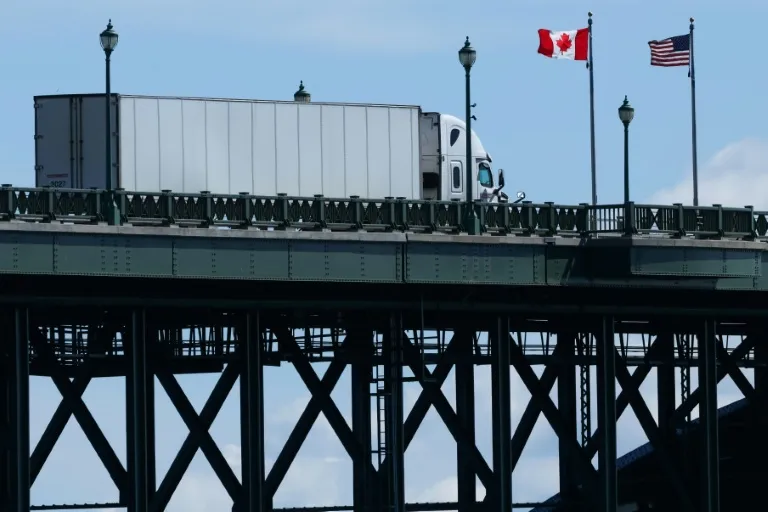
Facing significant economic pressure from United States tariffs, Canadian Prime Minister Mike Carney is spearheading a strategic initiative to reduce the nation’s heavy reliance on its southern neighbor. The multi-pronged approach centers on forging new international trade partnerships, bolstering domestic commerce, and launching ambitious large-scale projects to stimulate economic growth and resilience.
Navigating Trade Tensions with the United States
The economic relationship between Canada and the United States is deeply intertwined, with approximately 70% of all Canadian exports historically directed towards the U.S. market. Recent U.S. levies on key Canadian exports, including automobiles, steel, aluminum, and lumber, have had a tangible negative impact, contributing to job losses and hindering economic expansion. The Canadian economy experienced a technical recession earlier this year, marked by two consecutive quarters of contraction, underscoring the vulnerability to external trade shocks.
The latest imposition of 50% tariffs by the U.S. followed a breakdown in negotiations, affecting goods valued at approximately $20 billion, which represents about 5.5% of Canada’s total exports to the United States. These tariffs target a diverse range of products, from sporting equipment like hockey sticks to construction materials such as cement. In response, Prime Minister Carney declared that Canada would implement matching tariffs on a dollar-for-dollar basis to safeguard Canadian workers and businesses.
The Impact of USMCA Changes
Notably, some of the exports now subject to U.S. tariffs were previously shielded under the framework of the United States-Mexico-Canada Agreement (USMCA). This development has raised concerns among trade experts. Professor Richard Ouellet, an international economic law specialist at Laval University, described the situation as “frightening,” noting that the USMCA had previously served as a “shield” and that the U.S. action represented “opening a breach.”
The U.S. decision not to renew exemptions under the USMCA, making it subject to annual reviews, could signal a precursor to more severe trade measures. However, a recent analysis by RBC, Canada’s largest bank, suggests that the initial package of 50% tariffs may not significantly alter the overall trajectory of Canadian economic growth. The bank’s assessment indicates that while the tariffs are substantial, they affect a relatively small portion of the total bilateral trade, with roughly 80% of Canadian goods still entering the U.S. market without tariffs.
Diversification as a Core Strategy
Since assuming office in March 2025, Prime Minister Carney has made economic diversification a cornerstone of his administration’s policy. The overarching goal is to lessen Canada’s dependence on the U.S. market by cultivating robust trade relationships with a wider array of international partners.
“Canada has what the world wants,” Prime Minister Carney stated following the collapse of trade talks with Washington. “We will not allow any nation to determine our future.” To this end, the Prime Minister has actively engaged in diplomatic and trade missions to key global economies, including China, India, and Saudi Arabia, as well as several European nations, seeking to broaden Canada’s economic horizons.
Significant strides have already been made. In January, a preliminary trade agreement was reached with China, facilitating the import of electric vehicles into Canada. Relations with Europe have also seen strengthening, exemplified by Canada’s selection of the German firm TKMS in July to construct its new fleet of submarines. These efforts align with a broader trend observed by Canada’s central bank, which noted in a recent report that the economy is showing signs of improvement, with businesses adapting to protectionist measures by seeking new international clientele.
Data from Canada’s international trade minister further supports this diversification strategy. In 2025, the value of exports to markets outside the U.S. saw a notable increase, jumping by 11% and reaching a high of 33% at one point – a level not seen in over four decades. This indicates a successful shift towards a more balanced export portfolio.
Revitalizing Domestic Trade and Infrastructure
Complementing the international diversification efforts, a renewed emphasis on strengthening domestic trade is another key pillar of Canada’s strategy to mitigate the impact of U.S. tariffs. One of Prime Minister Carney’s early legislative priorities was the introduction of federal measures aimed at dismantling interprovincial trade barriers.
While provincial governments have historically shown some reluctance to fully relinquish their trade restrictions, Professor Ouellet observes a positive trend, stating that “the Canadian market has been reinvigorated and there is more domestic trade.” This internal strengthening is crucial for building a more self-sufficient and resilient economy.
Furthermore, Prime Minister Carney has initiated efforts to stimulate domestic economic activity through the establishment of a Major Projects Office. This initiative is designed to streamline bureaucratic processes and expedite approvals for significant infrastructure projects across the country. The government has committed substantial funding towards these endeavors, including plans for port expansions in Montreal and Vancouver, the development of new mines for critical minerals, and support for an oil pipeline connecting Alberta to the Pacific coast.
Overall, the Canadian government has outlined ambitious plans for future spending, allocating C$115 billion (approximately US$83 billion) towards infrastructure development and an unprecedented C$82 billion towards defense modernization. These investments are expected to create jobs, foster innovation, and bolster Canada’s long-term economic standing, providing a buffer against external trade volatility.
Conclusion
Canada’s response to U.S. tariffs is characterized by a proactive and strategic shift towards economic diversification and domestic strengthening. By actively pursuing new international markets, reducing internal trade barriers, and investing in major infrastructure and defense projects, Prime Minister Carney’s government aims to build a more resilient and less U.S.-dependent Canadian economy. While the immediate impact of U.S. trade actions remains a concern, the long-term strategy focuses on creating a more robust and globally integrated economic future for Canada.
