

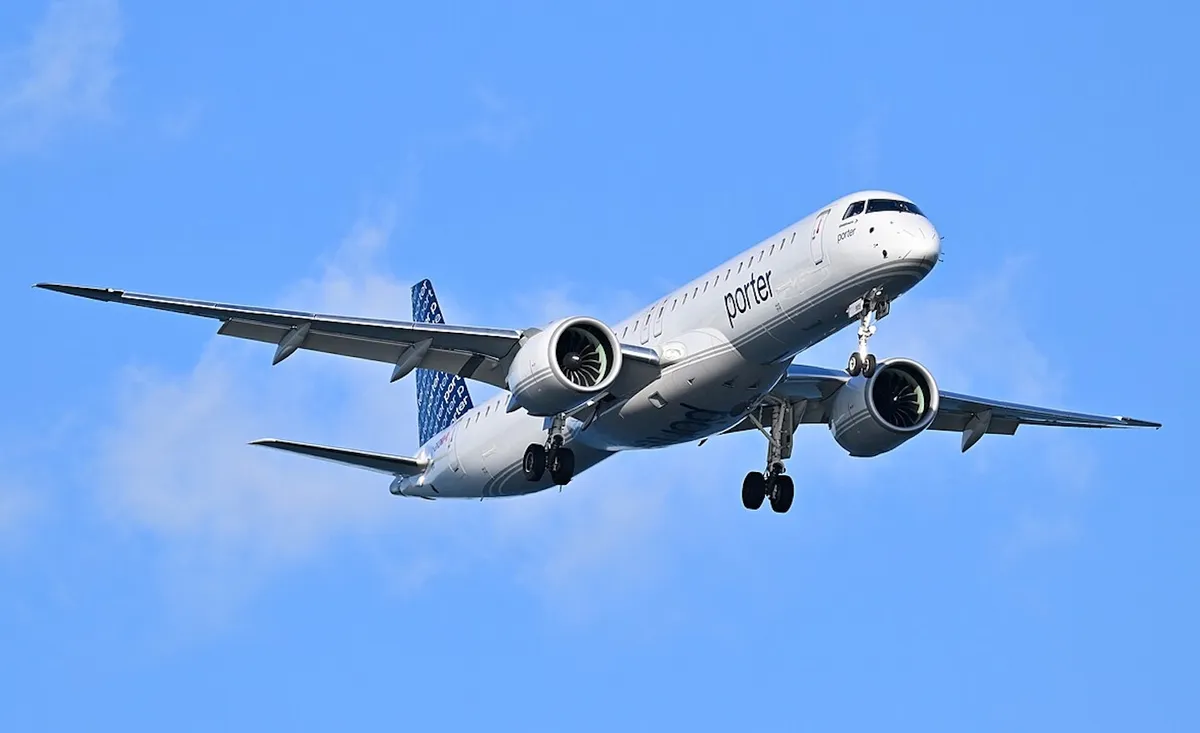
A Porter Airlines flight bound for Toronto was cancelled late Friday night after a young child refused to buckle their seat belt, leading to the overnight stranding of passengers at Victoria International Airport. The incident, which occurred as flight PD444 was taxiing towards the runway, forced the aircraft to return to the terminal, ultimately resulting in the flight’s cancellation due to the airport’s scheduled closure.
Seat Belt Safety Incident Leads to Flight Cancellation
The disruption began as Porter Airlines flight PD444, en route from Victoria to Toronto, had departed the terminal and was proceeding to the runway. According to a statement from the airline, crew members observed a young child standing in their seat and refusing to fasten their seat belt. Despite efforts by the accompanying parent and the flight crew to resolve the situation, the child remained unrestrained. The airline emphasized that the aircraft could not safely take off under these conditions, prompting the crew’s decision to return to the gate.
The process of returning to the terminal, deplaning the passengers, retrieving baggage, and refiling flight plans consumed valuable time. By the time these procedures were completed, it was too late to depart, as Victoria International Airport’s runway closes at 12:30 a.m. A spokesperson for the airport confirmed that the flight’s cancellation was a direct result of this scheduled airfield closure.
While the exact number of passengers affected was not disclosed, the aircraft has a capacity of 132 seats. Porter Airlines extended an apology to the passengers for the inconvenience, noting that they were able to depart on a rescheduled flight the following day. The airline, which is Canada’s third-largest carrier, operates flights between Victoria and Toronto. The rescheduled flight eventually departed Victoria International Airport at 10:49 p.m. local time on Friday and arrived in Toronto at 6:16 a.m. local time on Saturday.
Expert and Passenger Perspectives on Aviation Safety
This unusual incident has sparked renewed discussion regarding child passenger safety and airline procedures. Aviation safety expert Lia Tuso commented on the situation, asserting that the Porter crew’s decision was a necessary measure to protect the safety of all passengers, including the child involved. Tuso explained that unrestrained children, much like unsecured luggage, can become dangerous projectiles during flight, particularly in the event of turbulence, takeoff, or landing.
The importance of seat belt compliance for all passengers, regardless of age, is a cornerstone of aviation safety protocols. Regulations mandate that passengers remain seated with their restraints fastened during critical phases of flight. While the specific age of the child was not released, the airline’s statement indicated that the child was not secured in their seat as required.
One passenger who was on board the affected flight, Aryeh Kozuch, offered a different perspective on the child’s behavior. Kozuch suggested that the child was not being deliberately defiant but appeared genuinely scared. He described the child as trying to hide under the seat in front of them, sliding out of restraints if attempts were made to secure them. Kozuch felt that online commentary characterizing the child as bratty or criticizing the parents overlooked the child’s apparent distress.
Kozuch also commended the flight crew for their handling of the situation, noting their helpfulness. He elaborated on the stressful environment for a young child, stating, “This was a child that was in a tube with 150 people… They’re obviously terrified, and their response was to try and hide under the seat in front of them.” He contrasted this with a child who might be running around or screaming, implying that the child’s actions stemmed from fear rather than misbehavior.
Aviation Safety Regulations and Passenger Experience
Aviation regulations worldwide place a strong emphasis on passenger safety, with specific rules governing the use of seat belts and restraints. Airlines are obligated to enforce these regulations to ensure the well-being of everyone on board. The decision to return to the gate and deplane passengers, while disruptive, underscores the non-negotiable nature of these safety requirements.
The incident serves as a reminder of the complex challenges flight crews face in balancing safety protocols with passenger comfort and individual circumstances. While the majority of passengers were inconvenienced, the airline’s adherence to safety procedures ensured that a potentially hazardous situation was averted. The subsequent flight the following day allowed passengers to reach their destination, albeit with a significant delay.
Conclusion
The cancellation of Porter Airlines flight PD444 highlights the critical importance of adhering to aviation safety regulations, particularly concerning passenger restraints. While the situation presented a difficult challenge for the child, parents, and crew, the ultimate decision prioritized the safety of all individuals on board. Passengers eventually reached Toronto on a subsequent flight, with the airline acknowledging the disruption caused by the incident.
