

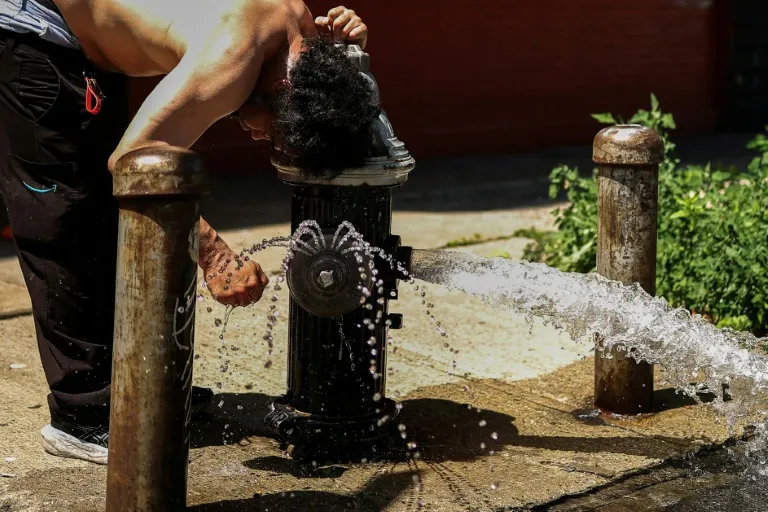
A relentless heat dome has intensified its grip on the eastern United States, pushing temperatures into the triple digits in major cities like New York and Washington, D.C., just as the nation approaches a major holiday weekend. The oppressive conditions are exacerbated by high humidity, creating dangerously high heat index values that could reach as high as 115°F (46°C) in the mid-Atlantic region, according to the National Weather Service. This severe heat wave arrives at a critical time, coinciding with widespread outdoor celebrations for America’s 250th anniversary and several international sporting events.
Intense Heat Poses Significant Risks
Authorities are issuing urgent warnings and implementing measures to protect public health. Residents are strongly advised to remain indoors, particularly during the hottest parts of the afternoon. Checking on vulnerable neighbors, increasing fluid intake, and seeking out air-conditioned spaces are paramount. The risks are amplified for those who must work outdoors, including delivery drivers and construction crews, as well as for pets, with hot asphalt presenting a burn hazard.
New York City has responded by designating numerous public buildings as cooling centers, extending operating hours for public swimming pools, and deploying volunteers to check on elderly and at-risk residents. Misting fans and wet towels are being provided at designated cooling stations throughout the city.
Luis Rivera, who works at his family’s restaurant in lower Manhattan, sought a brief respite at a crowded public pool before his shift. “It’s hot, man,” he commented. “If you don’t need to come outside, stay home.” Trey Parker, a 27-year-old resident, brought his two young children to the pool to escape his apartment, where the air conditioning had become overwhelmed. “So we had to come outside, get some air, get some Icees, get some water on our body,” he explained. For those hoping for relief at the coast, authorities have cautioned about intermittent beach closures due to multiple shark sightings, potentially disrupting holiday plans.
Strained Infrastructure and Public Appeals
The city’s electrical infrastructure is under immense strain as demand for air conditioning surges. Mayor Zohran Mamdani highlighted that the “power grid is working overtime to keep us cool.” In an effort to conserve energy and prevent blackouts, a request was made for residents to set their air conditioning thermostats to 78°F (26°C). This directive, similar to requests made by previous administrations, has drawn criticism on social media, with some questioning the prioritization of energy conservation over comfort, suggesting that non-essential city lights, such as those in Times Square, should be addressed first.
The power authority is also urging residents to limit the use of high-consumption appliances like dishwashers and washing machines, and to moderate their air conditioning usage. Similar appeals are being made across the country; in Philadelphia, for instance, residents are being asked to use ovens sparingly to reduce the load on air conditioning systems.
Climate Change Context and Event Disruptions
This extreme heat event is occurring within the broader context of climate change, which scientists attribute to human activities, primarily the burning of fossil fuels. Experts note that heat waves are becoming more frequent, longer-lasting, and more intense globally, with Europe also experiencing severe heat recently. The current phenomenon is described as a “heat dome,” where a high-pressure system traps warm air, preventing it from dissipating.
The timing of this heat wave is particularly challenging, impacting numerous planned events celebrating the United States’ 250th anniversary. A rodeo scheduled on the National Mall as part of the festivities has been postponed. Additionally, a dress rehearsal for an annual holiday concert on the U.S. Capitol lawn was closed to the public due to the extreme heat, with further announcements regarding the main event expected.
June Martin, 65, who was selling merchandise near the White House, emphasized the necessity of staying hydrated. “If you don’t have to be out here, don’t be out here,” she advised, noting the critical importance of cold water and sports drinks. “It’s excruciating.”
Preparedness and Long-Term Outlook
As the heat dome persists, officials continue to stress the importance of community vigilance and individual preparedness. Public health departments are providing guidance on recognizing and treating heat-related illnesses, such as heat exhaustion and heatstroke. Cooling centers remain open, and emergency services are on standby to respond to heat-related incidents.
The current situation serves as a stark reminder of the increasing impacts of climate change on daily life and public safety. While immediate measures focus on managing the current crisis, the event also underscores the need for long-term strategies to adapt to a warming climate, including improved urban planning, energy infrastructure resilience, and public awareness campaigns about heat safety and climate mitigation.
The forecast indicates a slight chance of relief towards the latter part of the holiday weekend, but temperatures are expected to remain elevated. Residents are urged to stay informed through official channels and to take all necessary precautions to stay safe during this period of extreme heat.
