

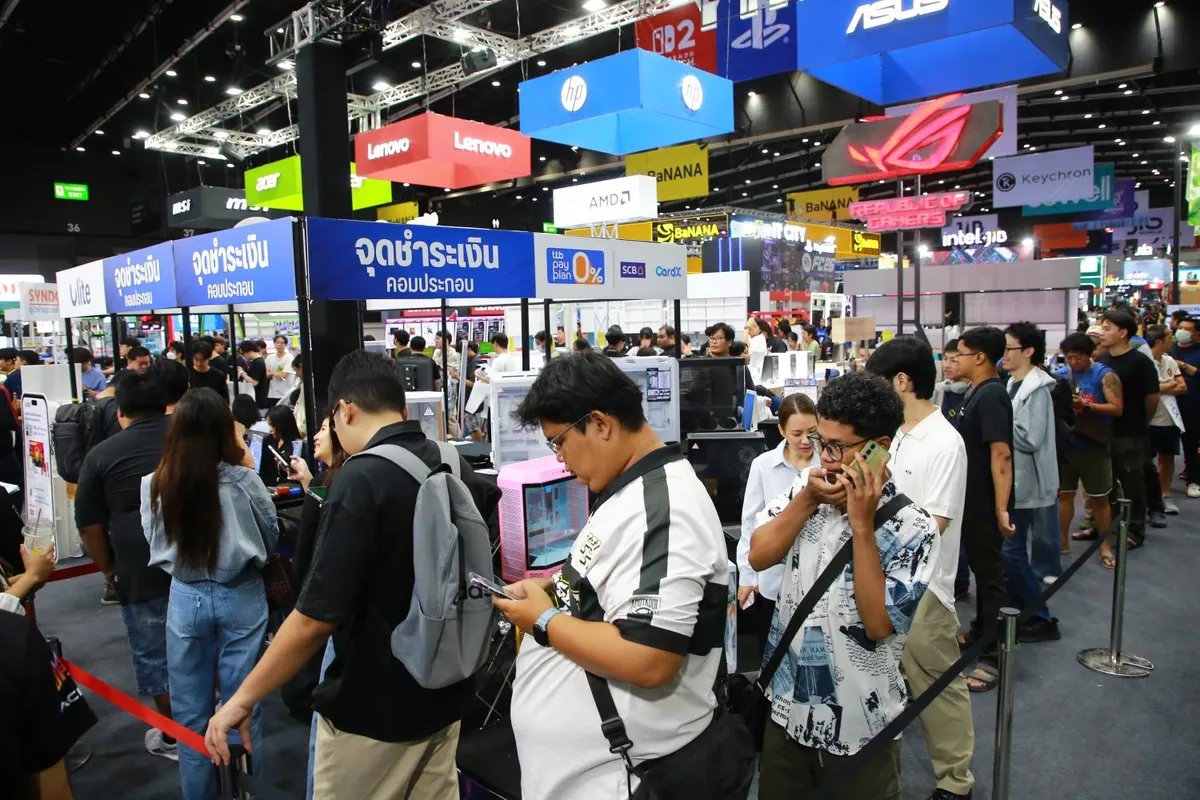
Despite significant price increases for computer hardware and electronics, consumers are demonstrating a surprising resilience, with many shifting towards higher-end models or engaging in “panic buying” to secure devices before further cost escalations. Retailers and trade show organizers report that while the overall volume of IT products sold may have seen a slight dip, revenue is climbing due to a pronounced preference for premium devices, fueled by the burgeoning demand for artificial intelligence (AI) capabilities and the necessity of staying current with technological advancements.
Price Surge Driven by Component Costs
The first half of the year witnessed a substantial rise in retail prices for IT products, with increases ranging from 30% to 50%. This surge is largely attributed to a dramatic spike in the cost of memory components, which reportedly skyrocketed by 200% to 300%. This inflationary pressure has impacted a wide array of devices, prompting major brands like Apple to adjust their product pricing upwards.
Takon Niyomthai, investor relations manager at IT product distributor Com7, explained that the escalating costs have made essential technology more expensive. Even standard entry-level smartphones, once available for around 3,000 baht, are now priced closer to 5,000 baht. Similarly, devices previously considered budget-friendly, such as older Apple models under 20,000 baht, have become scarce, effectively raising the entry-level price point to over 20,000 baht.
Shift Towards Premium and AI-Enabled Devices
The market’s dynamics have noticeably shifted, with a strong preference emerging for premium products. While the total number of IT units sold has decreased by approximately 5%, the premium market segment has experienced robust growth of 30%. This has contributed to an overall revenue increase of about 15% for the industry.
This trend is significantly influenced by the growing integration of AI technology. Consumers are purchasing devices, including Windows PCs and Android smartphones, out of necessity to access new AI features and maintain pace with standard upgrade cycles. The anticipation of further price increases, particularly for memory, has also spurred some consumers to accelerate their purchase plans, effectively “panic buying” to lock in current prices.
AI Workstations and Custom Builds Face Higher Costs
The impact of rising component costs is particularly evident in specific computer categories. High-end AI workstations have become considerably more expensive. Standard AI PCs, which might have cost between 25,000 and 30,000 baht at the beginning of the year, are now priced between 35,000 and 40,000 baht in the latter half. This price adjustment reflects the increased expense of the powerful components required for AI processing.
The do-it-yourself (DIY) PC building market has also seen a notable decline, especially in the mid-range segment (around 30,000 baht). The inflated prices of essential components like memory and solid-state drives (SSDs) have made custom builds prohibitively expensive for many enthusiasts.
Apple Users Less Price-Sensitive, Second-Hand Market Thrives
Customers of premium brands, such as Apple, appear to be the least sensitive to price increases. Instead of switching to less expensive alternatives like Android or Windows devices, they are more inclined to opt for lower-tier models within the same brand ecosystem. For instance, a user might choose a MacBook Air over a MacBook Pro to manage costs.
Concurrently, the second-hand market is experiencing a significant boom. With tighter consumer budgets, pre-owned devices, particularly smartphones and tablets, have become an attractive option. iPhones consistently rank as the most sought-after items in this market segment.
Industry Outlook and Trade Show Indicators
Despite the challenging price environment, major IT retailers like Com7 are maintaining their annual targets, projecting 10% revenue growth and 15% profit growth, partly due to a strong first-quarter performance. This resilience suggests that consumers who require new devices for essential functions continue to make purchases.
Kasame Srilertchaipanij, vice-president of marketing at IT City, echoed the sentiment that demand has not declined, with consumers still buying despite rising prices. He noted that the fear of future price hikes is a significant driver of current purchasing behavior. While prices are increasing, the industry’s overall gross profit margins have seen only modest improvements due to high operational costs and intense market competition.
IT City has adapted by diversifying its services, focusing on project-based sales and offering more consulting to help users leverage AI-enabled PCs for enhanced productivity. Trade shows like Commart Ultraforce, held from July 2-5 at Bitec, serve as crucial indicators of consumer purchasing power. Attendees at Commart typically exhibit high spending power, with an average expenditure of 40,000 baht per visitor.
Pornchai Jantarasupasang, media and event director at ARIP, the organizer of Commart, indicated that product prices at the event were expected to be about 10% higher than previous editions, in addition to component cost increases. The best-selling items at the trade show were anticipated to be AI PCs priced between 30,000 and 40,000 baht. Transactions at the event were projected to reach 3 billion baht, mirroring the figures from the March edition.
Conclusion: Navigating a Price-Sensitive Yet Tech-Hungry Market
The current IT market is characterized by a dual dynamic: consumers are increasingly cost-conscious due to significant price hikes, yet they remain eager to adopt new technologies, especially those powered by AI. This has led to a market where premium products are gaining traction, the second-hand market is flourishing, and strategic purchasing, sometimes driven by the fear of future price increases, is becoming common. Retailers and event organizers are adapting by focusing on value-added services and highlighting the benefits of the latest AI-enabled devices to meet the evolving demands of consumers.
