

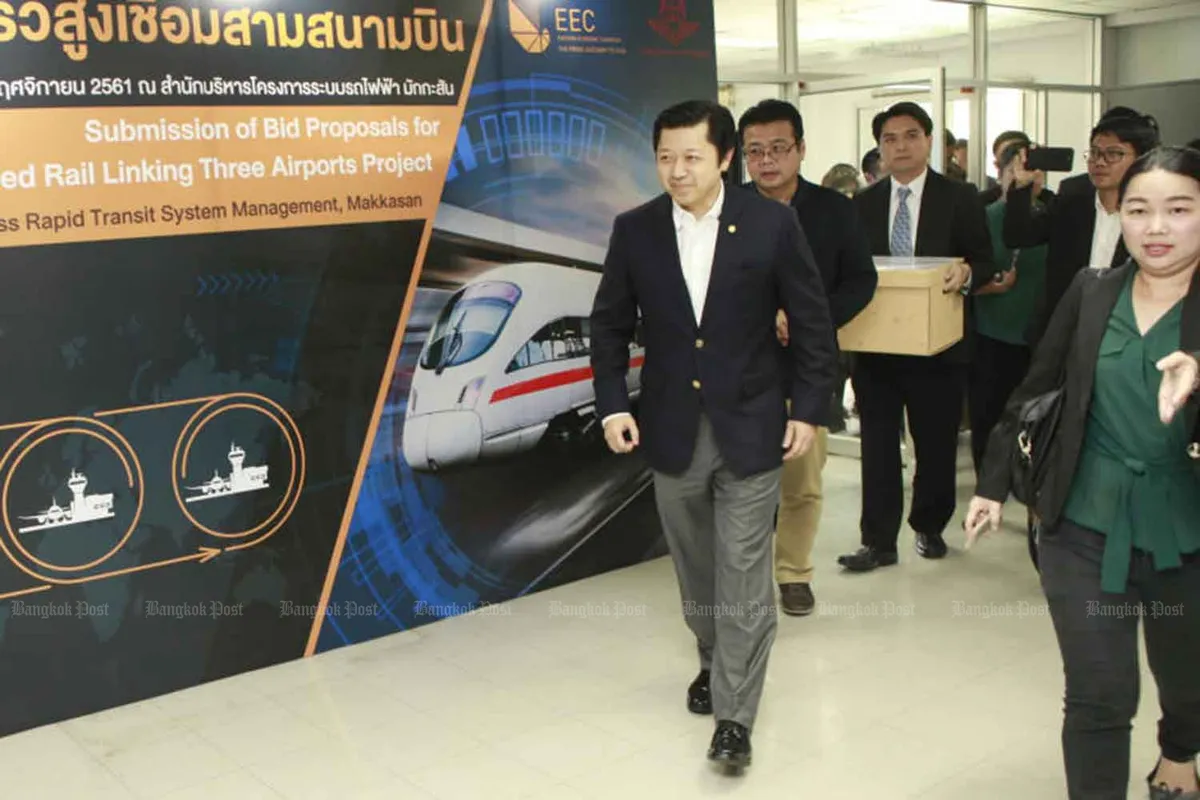
A significant high-speed rail project in Thailand is currently navigating complex contractual challenges, with both the government and the private concessionaire, Asia Era One Co, expressing a commitment to finding a resolution. The core issue revolves around the implementation of the contract, adherence to public procurement laws, and addressing operational obstacles that have arisen since the agreement was signed.
Government Stance on Contractual Obligations
Prime Minister and Interior Minister Anutin Charnvirakul has emphasized the government’s dedication to upholding the terms of the agreement as stipulated in the contract between the State Railway of Thailand (SRT) and Asia Era One. He stressed that the contract is a legally binding document for both parties, requiring strict adherence to its provisions and relevant regulations.
Addressing concerns about the project’s necessity, Mr. Anutin reaffirmed its status as a critical infrastructure investment for the nation. He cautioned that altering contract conditions after signing is a difficult and potentially problematic process. Bidders, he explained, accepted the agreed-upon terms before entering into the contract, and any subsequent revisions could set a precedent that impacts other government agreements.
Regarding reports that Asia Era One might consider terminating the agreement, the Prime Minister stated that unilateral cancellation of state contracts is not permissible. Such actions would necessitate mutual consent and could lead to substantial legal repercussions for the defaulting party.
Potential Consequences of Contract Abandonment
Mr. Anutin outlined the serious consequences a concessionaire could face if they abandon a project. These include:
- Blacklisting from future government contracts.
- Forfeiture of performance guarantees.
- Potential liability for damages incurred by the government, especially if the project needs to be re-auctioned.
He concluded that the most constructive path forward involves both sides honoring their contractual commitments to ensure the project’s successful completion.
Asia Era One’s Perspective and Challenges
Sarit Jinnasith, president of Asia Era One, has asserted that the consortium has no intention of abandoning the contract. However, he highlighted significant obstacles that have impeded the project’s progress. These challenges primarily stem from unresolved issues, most notably delays in land handover and legal constraints that have impacted construction timelines.
Mr. Jinnasith explained that the prolonged delays in receiving the necessary land sites have also created complications for the project’s financial arrangements. He reiterated that Asia Era One’s primary objective is to collaborate with the government to find solutions rather than pursuing contract termination.
Path Forward and Contingency Planning
The issue is slated for review by the contract administration committee and the Eastern Economic Corridor (EEC) Policy Committee in August. Chula Sukmanop, the EEC secretary-general, confirmed that if the private consortium ultimately decides to withdraw, the public-private partnership agreement would be terminated, leading to subsequent negotiations with the SRT.
The EEC has reportedly developed contingency plans to ensure the project’s continuity, regardless of the outcome of negotiations or potential termination. This proactive approach aims to mitigate disruptions and maintain momentum for this vital infrastructure development.
Legal Framework Strengthening
In parallel, Deputy Prime Minister Pakorn Nilprapunt has given his approval to a draft law designed to enhance measures against contractors who fail to meet their obligations in government contracts. This proposed legislation aims to empower authorities to act more swiftly and with greater legal certainty in such situations.
The ongoing dialogue and procedural reviews underscore the government’s commitment to resolving the impasse. The focus remains on finding a mutually agreeable solution that respects the legal framework, addresses the practical challenges faced by the concessionaire, and ultimately ensures the successful realization of the high-speed rail project.
Conclusion
The high-speed rail project faces a critical juncture, with both the government and Asia Era One committed to resolving contractual disputes and operational hurdles. While the government emphasizes adherence to the signed agreement and warns against unilateral actions, Asia Era One points to significant delays in land acquisition and legal impediments as key challenges. The upcoming committee reviews and potential legislative enhancements signal a concerted effort to navigate these complexities. The ultimate goal is to ensure the project’s continuation, either through renewed collaboration or by implementing contingency plans, thereby safeguarding this crucial infrastructure investment.
