

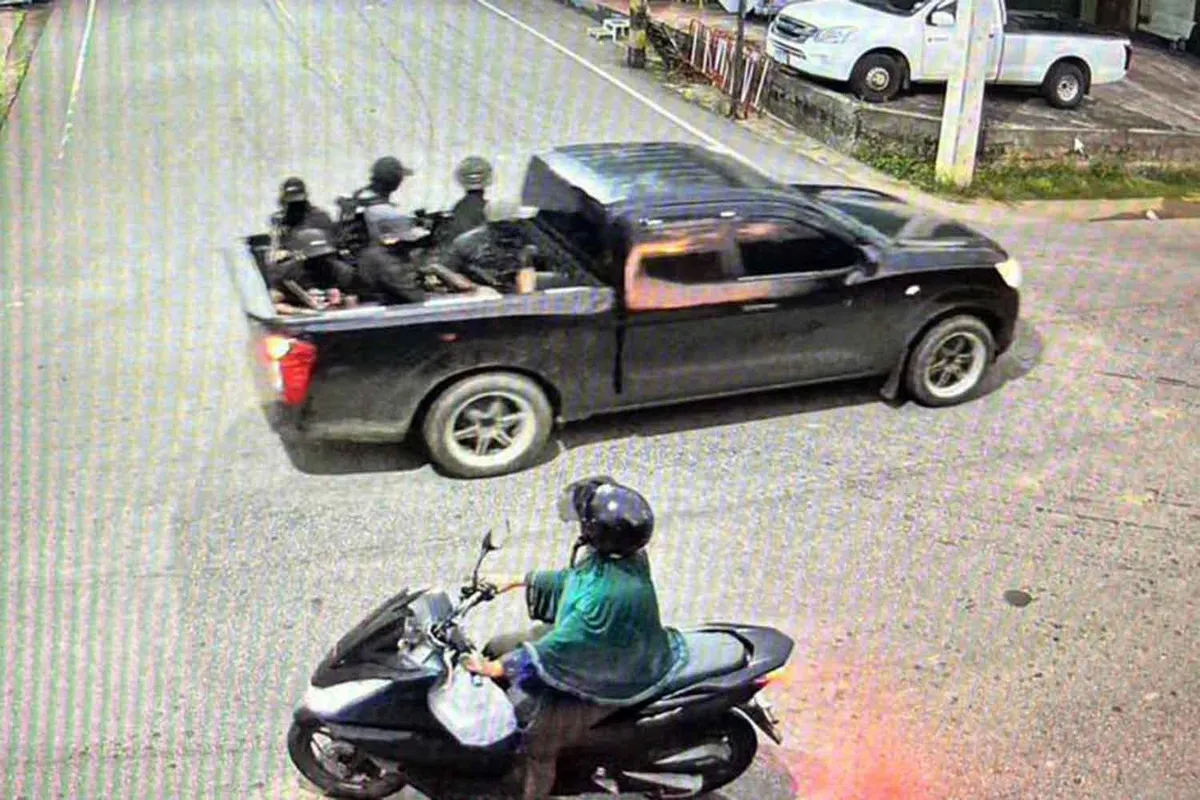
Authorities in Narathiwat province are seeking an arrest warrant for a second suspect, identified as Mr. Sahabudin, in connection with a violent attack on the Buket Sami checkpoint in Rangae district on July 22. The warrant request stems from alleged DNA evidence linking him to the coordinated shooting and pipe bomb assault. This development follows an earlier warrant issued for another suspect, Mr. Azizun, in relation to the same incident. Investigators believe both Sahabudin and Azizun were part of a larger group of approximately 13 individuals responsible for the attack.
Charges and Allegations
Both Mr. Sahabudin and Mr. Azizun face serious charges, including participation in a criminal organization, providing support to terrorist activities, premeditated murder, and attempted murder of state officials. Additional charges pertain to the attempted murder of other victims present during the assault. These charges underscore the severity of the incident and the alleged involvement of the suspects in organized violence aimed at state security personnel.
Details of the Buket Sami Checkpoint Attack
The target of the attack was Ranger Company 4509, personnel who were actively engaged in providing security at the Buket Sami checkpoint at the time of the incident. According to information released by the Internal Security Operations Command Region 4 (Isoc 4), surveillance footage captured the coordinated nature of the assault. The footage indicated that more than ten armed individuals arrived at the scene, utilizing both a pickup truck and motorcycles.
Assailants’ Tactics and Equipment
Eyewitness accounts and security reports suggest a well-organized operation. Six attackers, reportedly dressed in black attire and wearing wide-brimmed hats to obscure their identities, occupied the rear of the pickup truck. Simultaneously, another team on a motorcycle served as scouts, providing reconnaissance and covering the escape route. The assailants initiated the attack by opening fire with M16 and AK-style rifles, subsequently deploying pipe bombs against the checkpoint defenses. The entire engagement reportedly lasted approximately 90 seconds.
Loot and Escape Route
Following the initial assault, the attackers managed to overpower the rangers on duty. They proceeded to seize a significant cache of weaponry and equipment, including four AK rifles, a handgun, multiple ammunition magazines, and body armor. After securing these items, the group fled the scene, heading towards the Dusong Yo district. The swiftness and organized nature of the raid highlight the attackers’ preparedness and tactical execution.
Ongoing Manhunt and Investigation
In the aftermath of the attack, joint special operations forces from Narathiwat, Yala, and Pattani have intensified their efforts to locate and apprehend suspected insurgent leaders. The ongoing manhunt is focused on a mountainous region that spans the Rangae, Chanae, and Si Sakhon districts. This area is believed to be a potential refuge for individuals involved in the insurgency. The investigation continues to piece together the full scope of the network involved in the Buket Sami checkpoint attack, with a particular focus on identifying and apprehending all individuals implicated in the violence.
Broader Context of Insurgency in Southern Thailand
The Narathiwat attack is part of a long-standing insurgency in Thailand’s southern border provinces, which include Narathiwat, Pattani, and Yala. This conflict, which has persisted for decades, involves various separatist and militant groups seeking greater autonomy or independence from the Thai government. The violence has often targeted state security forces, government officials, and civilians perceived as collaborators. Security forces employ a range of strategies, including intelligence gathering, special operations, and community engagement, to counter the insurgency and restore peace and stability to the region. The investigation into the Buket Sami attack is a critical component of these broader efforts, aiming to disrupt insurgent operations and bring perpetrators to justice. The use of DNA evidence signifies a modern approach to forensic investigation in combating these complex security challenges.
Conclusion
The pursuit of Mr. Sahabudin represents a significant step in the ongoing investigation into the July 22nd attack on the Buket Sami checkpoint. As authorities continue their efforts to apprehend all those involved, the incident serves as a stark reminder of the persistent security challenges in the southern border provinces. The meticulous gathering of evidence, such as DNA, and the coordinated efforts of joint special operations forces are crucial in dismantling insurgent networks and ensuring accountability for acts of violence. The focus remains on restoring security and fostering stability in the affected regions through rigorous law enforcement and intelligence operations.
