

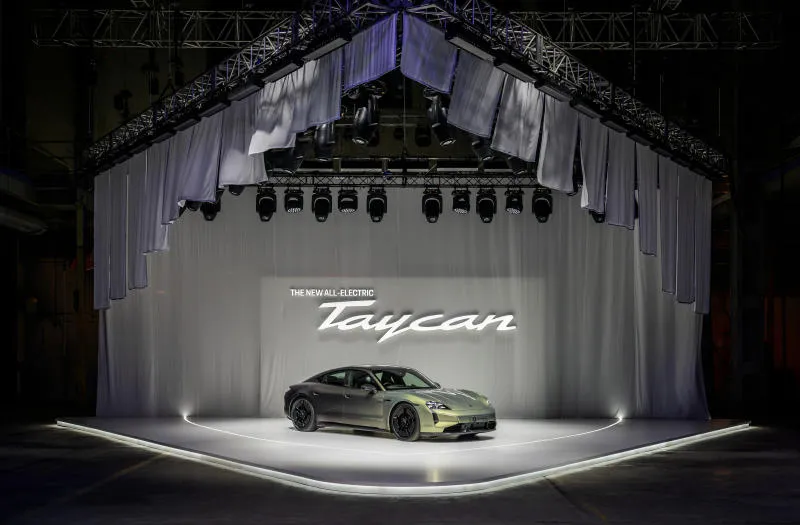
Speculation is circulating regarding the future production timeline of Porsche’s all-electric Taycan sedan. While initial reports suggested a potential discontinuation of the model by 2030, recent statements from Porsche’s leadership indicate a different trajectory. The company has reportedly abandoned earlier considerations of moving Taycan production from its primary Stuttgart facility to a plant in Leipzig.
Porsche’s Stance on Taycan Discontinuation
A Porsche spokesperson has refrained from commenting directly on the reports concerning the Taycan’s production end date. However, they pointed to an interview given by CEO Michael Leiters to the FAZ newspaper in July. In that discussion, Leiters stated that there were “no plans to discontinue the Taycan in the short term.” This suggests that the company is committed to the electric sedan for the foreseeable future, countering immediate speculation about its demise.
Evolution of the Taycan Model
The Porsche Taycan, launched in 2019, marked the German automaker’s significant entry into the all-electric vehicle market. It has since become a key model in Porsche’s lineup, praised for its performance, handling, and luxury appointments, all while offering zero-emission driving. The model competes in the growing segment of high-performance electric sedans and has received several updates and variants since its debut, including the Taycan Turbo S, Taycan 4S, and the more recent Taycan Cross Turismo and Sport Turismo body styles.
Technological Advancements and Market Position
Porsche has consistently invested in the Taycan’s technology, focusing on battery efficiency, charging speed, and powertrain performance. The vehicle’s development reflects the broader automotive industry’s shift towards electrification, with luxury manufacturers increasingly prioritizing electric powertrains. The Taycan’s market position is crucial for Porsche as it navigates this transition, aiming to balance its heritage of performance with the demands of sustainable mobility.
Production Strategy and Future Outlook
The reported decision to keep Taycan production consolidated at the main Stuttgart plant, rather than relocating it to Leipzig, suggests a strategic focus on optimizing existing infrastructure and supply chains. This move could be aimed at maintaining quality control, streamlining manufacturing processes, and managing costs associated with producing a high-value, technologically advanced vehicle like the Taycan. While the 2030 date remains a point of discussion, the company’s public statements emphasize a commitment to the model’s ongoing development and sales.
The Broader Electric Vehicle Landscape
Porsche’s strategy for the Taycan is unfolding against a backdrop of intense competition and rapid innovation in the electric vehicle sector. Established automakers and new entrants alike are introducing compelling electric models, forcing all manufacturers to continually enhance their offerings. Porsche’s approach, as indicated by CEO Leiters, appears to be one of sustained commitment rather than an immediate phase-out, allowing ample time for further technological evolution and market adaptation before any potential end-of-life considerations for the model.
Conclusion: Taycan’s Enduring Role
While the automotive world is constantly evolving, Porsche’s current statements suggest that the Taycan is set to remain a significant part of its product portfolio for the foreseeable future. The company’s focus on short-term continuity and its ongoing investment in electric mobility underscore the Taycan’s role as a pioneering model in Porsche’s transition to an electric future. Any definitive plans regarding its discontinuation beyond the immediate term are yet to be officially communicated, leaving room for continued development and market presence.
