

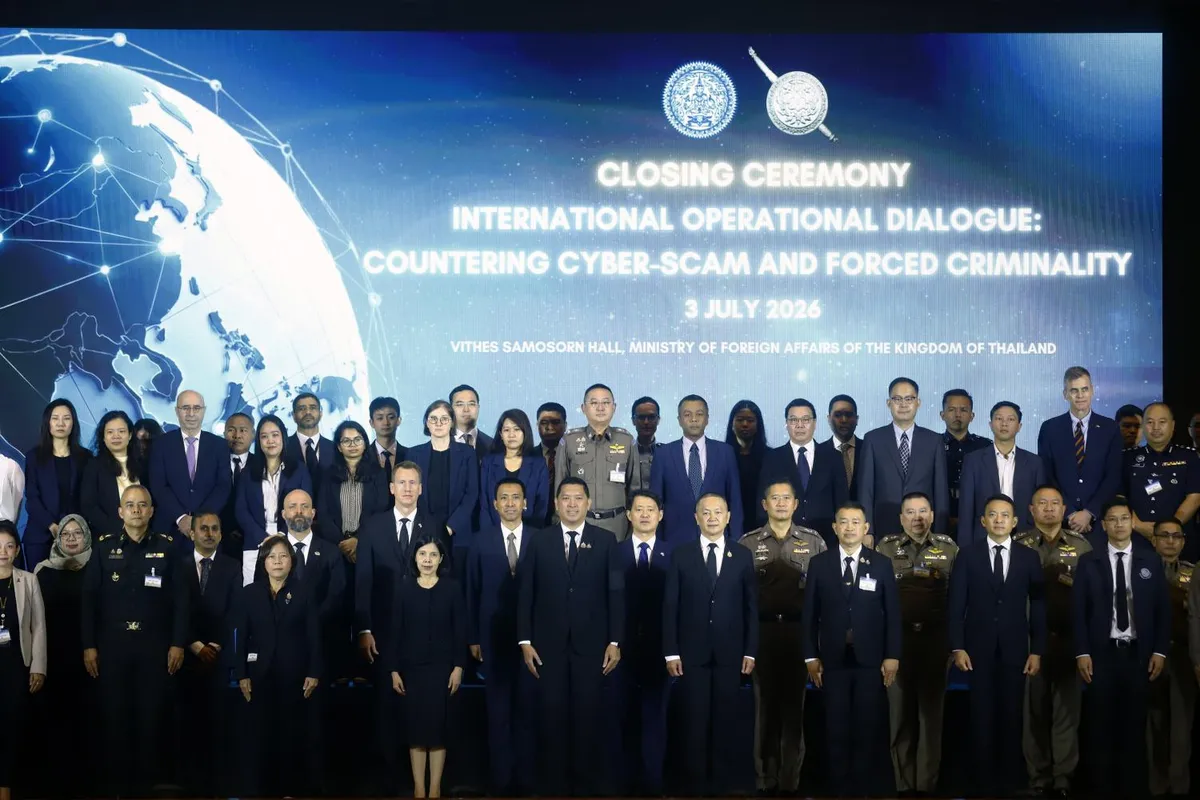
The Royal Thai Police (RTP) has launched a new centralized web-based platform named SHIELD, designed to enhance international cooperation in combating cyber-scams and human trafficking. The unveiling took place on Friday during the closing ceremony of the 2nd International Operational Dialogue — Countering Cyber-Scam and Forced Criminality, an event co-organized by the RTP and the Ministry of Foreign Affairs.
What is the SHIELD Database?
SHIELD, an acronym for Scam and Human Trafficking Information Exchange and Linked Database, serves as a secure portal for participating nations to share vital intelligence. This includes information on scam compounds, criminal networks, victim profiles, financial transactions, and cross-border movements. The platform was developed collaboratively by the RTP and the Ministry of Foreign Affairs, aiming to streamline the exchange of information crucial for tackling sophisticated transnational criminal operations.
Addressing the Need for Faster Information Exchange
According to Police Colonel Sanya Niempradit, deputy commander of the RTP’s Foreign Affairs Division, the impetus for creating SHIELD stemmed from the limitations of existing information-sharing mechanisms. He explained that traditional methods often proved too slow to effectively counter the rapid and borderless nature of modern criminal activities. “Each country is holding a piece of a jigsaw puzzle,” Pol Col Sanya stated. “This system allows member countries to securely share and analyse key information.”
Pol Col Sanya highlighted the increasing trend of online scam syndicates operating across international borders. These operations are frequently intertwined with human trafficking and other serious criminal enterprises, underscoring the critical need for robust international cooperation and intelligence sharing.
International Participation and Scope
The SHIELD platform has already garnered significant international support. Police General Thatchai Pitaneelaboot, deputy national police chief, confirmed that 11 countries have joined the initiative. These founding members include Thailand, China, Japan, Malaysia, the Philippines, Vietnam, the United States, India, Australia, South Korea, and Nepal.
In addition to national law enforcement agencies, key international organizations are partnering with SHIELD. These include the United Nations Office on Drugs and Crime (UNODC), the International Organisation for Migration (IOM), and Interpol. Their involvement signifies a broad commitment to leveraging the platform for a more coordinated global response to these crimes.
Development and Operational Readiness
The SHIELD platform officially commenced operations on Thursday, following an intensive year-long period dedicated to its development, rigorous testing, and comprehensive training for personnel from participating nations. This preparatory phase ensured the system’s security, reliability, and user-friendliness.
Future Expansion and Collaboration
When questioned about the current absence of Cambodia, Laos, and Myanmar – nations often associated with regional scam operations – Pol Gen Thatchai explained that future participation would be contingent upon building mutual trust and securing explicit consent from these countries. “We expect that after this launch, we will see more efficient arrests and suppression because multiple countries are now working together,” he remarked, expressing optimism about the platform’s potential to yield tangible results in law enforcement efforts.
The Strategic Importance of SHIELD
The establishment of the SHIELD database represents a significant step forward in the global fight against sophisticated transnational crime. By providing a secure and efficient channel for intelligence sharing, the RTP and its international partners aim to dismantle criminal networks, rescue victims, and disrupt illicit financial flows more effectively. The platform’s web-based nature ensures accessibility and facilitates real-time data analysis, a critical advantage in pursuing agile criminal organizations. The collaborative approach, bringing together diverse law enforcement agencies and international bodies, is expected to create a more formidable deterrent and response mechanism against the evolving landscape of cyber-scams and human trafficking.
The success of SHIELD will likely depend on continued commitment from its member states and the willingness of other nations to join and contribute. As criminal tactics continue to evolve, such integrated intelligence systems are becoming indispensable tools for maintaining security and justice in an increasingly interconnected world. The RTP’s initiative underscores a proactive stance in addressing these pervasive threats, fostering a unified front against those who exploit technology and human vulnerability for criminal gain.
