

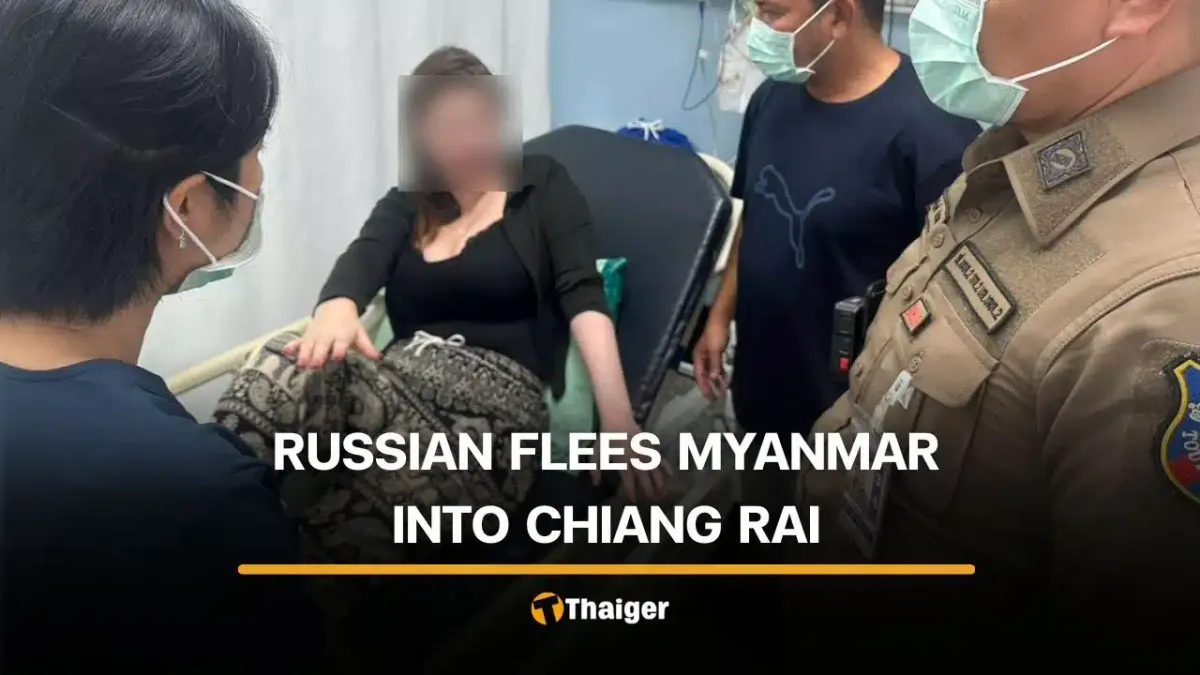
A 19-year-old Russian woman, identified as Mariia Tsygankova, sought assistance from Thai police in Chiang Rai on August 9th after reportedly fleeing across the border from Myanmar. She presented with injuries to her arms and legs and is believed to have escaped a situation involving a potential call center scam operation. Mae Sai Police Station officers responded to a call at a supermarket car park where the woman was found seeking help. She was subsequently transported to Mae Sai Hospital for medical treatment.
Seeking Escape and Assistance
Through an interpreter, Tsygankova recounted her journey, stating she initially traveled to China for work before moving to Thailand. A job opportunity then led her to Yangon, Myanmar. From Yangon, she was reportedly taken to Tachileik, a border town directly opposite Mae Sai in Chiang Rai province. It was in Tachileik that she claims to have been assaulted, prompting her decision to escape into Thailand. A Thai pickup truck driver reportedly assisted her, bringing her to the supermarket where she was discovered by authorities.
Tsygankova appeared distressed during questioning, expressing a strong desire to return to Russia and contact her mother. She declined to provide specific details about the nature of the work she was supposed to undertake in Myanmar. Authorities are working to identify the pickup truck driver who transported her to the supermarket, reviewing security camera footage in collaboration with the Tourist Police.
Investigation into Call Center Scams
The incident has drawn the attention of police due to Tachileik’s known association with call center scam networks. Myanmar authorities have been actively conducting operations against these organizations in the area. Investigators suspect that Tsygankova may have been lured into working for such a network and potentially faced assault after refusing to comply with their demands. Some reports suggest that the Russian woman was abandoned at the supermarket by a call center scam gang after she failed to follow their instructions.
The Thai police intend to contact the Russian Embassy in Thailand to inform her family of her situation and facilitate her potential return home. This case aligns with a pattern of foreign nationals seeking help after becoming entangled with scam operations in Myanmar.
Precedent of Scam-Related Escapes
This incident is not isolated. In February of the previous year, a Kenyan man sought refuge with Thai authorities, alleging he had escaped a call center scam operation in Myanmar. He reported being assaulted and having to walk over 10 kilometers to reach Thailand.
Furthermore, in April of the same year, seven Chinese nationals were apprehended in Mae Sot district, Tak province, for illegal entry into Thailand. These individuals reportedly claimed to have worked for a call center scam operation in Myanmar. They stated they were dismissed due to poor performance and were attempting to travel onward to China when they entered Thailand.
These recurring cases highlight the significant risks faced by individuals who are recruited for work in neighboring countries, particularly in regions known for illicit activities. The Thai police are continuing their investigation into Tsygankova’s case, aiming to uncover the full extent of the operation she may have been involved with and to provide her with the necessary assistance.
Conclusion
The arrival of the injured Russian woman in Chiang Rai underscores the ongoing challenges posed by transnational crime, specifically call center scams operating in border regions. Thai authorities are committed to investigating the matter thoroughly, providing humanitarian assistance to the victim, and collaborating with international partners, including the Russian Embassy, to ensure her safety and facilitate her return home. The investigation aims to shed light on the activities of the suspected scam network and prevent future exploitation of vulnerable individuals.
