

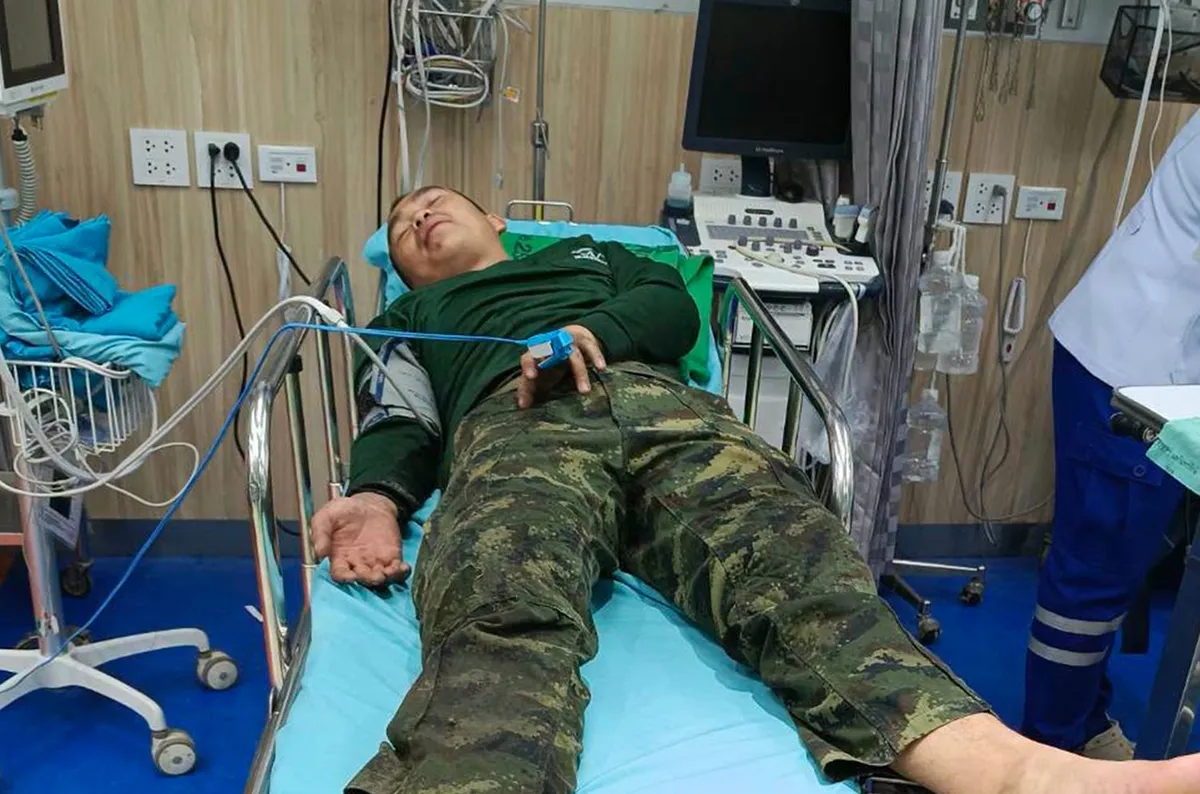
Two soldiers sustained injuries after stepping on an old landmine during a clearing operation in the Phu Pha operating base in Si Sa Ket, a northeastern border province. The incident occurred on Friday morning, prompting immediate medical attention for the affected personnel.
Landmine Incident Details
The soldiers, part of the 122nd Infantry Company, 12th Infantry Battalion, were engaged in clearing vegetation within the firing area of the Phu Pha operating base. Their mission was to reinforce security and improve defensive positions. At approximately 10:30 AM, members of an anti-aircraft gun unit encountered an old landmine that failed to detonate with its full explosive force.
First Soldier’s Injuries
Sgt. Maj. 1st Class Chakkrit Buakaew, commander of the anti-aircraft gun unit, was the first to step on the buried explosive. Fortunately, the landmine did not detonate completely. As a result, Sgt. Maj. 1st Class Chakkrit suffered minor injuries, primarily to his right foot and ankle. He experienced swelling and bruising from the blast pressure and also reported slight discomfort in his chest. He was promptly evacuated for medical treatment.
Second Soldier’s Injuries
The explosion also affected another soldier, Sgt. Maj. 1st Class Sathit Phongkaew, a gunner in the same unit. While assisting with the clearing operation, he was struck by flying rocks and soil dislodged by the blast. Initial medical examinations indicated no deep wounds, but he was admitted to Kantharalak Hospital for further assessment to ensure no underlying issues were present.
Medical Response and Condition
Both injured soldiers were immediately evacuated to Kantharalak Hospital. The Suranaree Task Force confirmed that the evacuation process was conducted smoothly and that both soldiers arrived safely at the medical facility. Authorities reported that both soldiers were in stable condition following their admission. Military medical personnel are continuing to monitor their recovery closely.
Ongoing Investigations and Safety Measures
Following the incident, military authorities initiated a thorough inspection of the surrounding area. The primary objective of this inspection is to identify and neutralize any other potential unexploded ordnance (UXO) that may still be present in the vicinity. Preliminary findings suggest that the device involved in Friday’s incident was an old landmine, likely a remnant from previous conflicts or training exercises in the region.
Historical Context of Landmines in Border Areas
Border regions, particularly those that have experienced historical conflicts or served as strategic military zones, often face the persistent threat of unexploded ordnance, including landmines. These devices, even decades after their initial placement, can remain active and pose a significant danger to civilians and military personnel alike. Clearing operations in such areas are inherently risky and require specialized expertise and equipment.
The presence of old landmines underscores the long-term challenges associated with demining and ensuring the safety of communities and military operations in former or active conflict zones. International efforts and national demining programs are crucial in mitigating these risks, but the process is often slow and resource-intensive.
Military Procedures and Future Prevention
The incident has prompted a review of current demining and area-clearing protocols within the 2nd Army Area. While the soldiers were performing their duties in a designated operational area, the discovery of an active landmine highlights the need for continuous vigilance and adherence to safety procedures. The military is committed to ensuring the well-being of its personnel and is reinforcing training on identifying and responding to potential UXO threats.
The Suranaree Task Force continues to work diligently to secure the operational base and surrounding areas. The focus remains on preventing future incidents and ensuring that all personnel can carry out their duties without facing undue risks from historical ordnance. The successful evacuation and prompt medical attention provided to the injured soldiers demonstrate the effectiveness of the military’s emergency response capabilities.
Conclusion
The landmine incident in Si Sa Ket serves as a stark reminder of the enduring dangers posed by unexploded ordnance in certain regions. While the two soldiers involved are reported to be in stable condition, the event underscores the critical importance of thorough area assessments and ongoing safety protocols in military operations. The authorities are committed to a comprehensive investigation and the continued safety of the operational area.
