

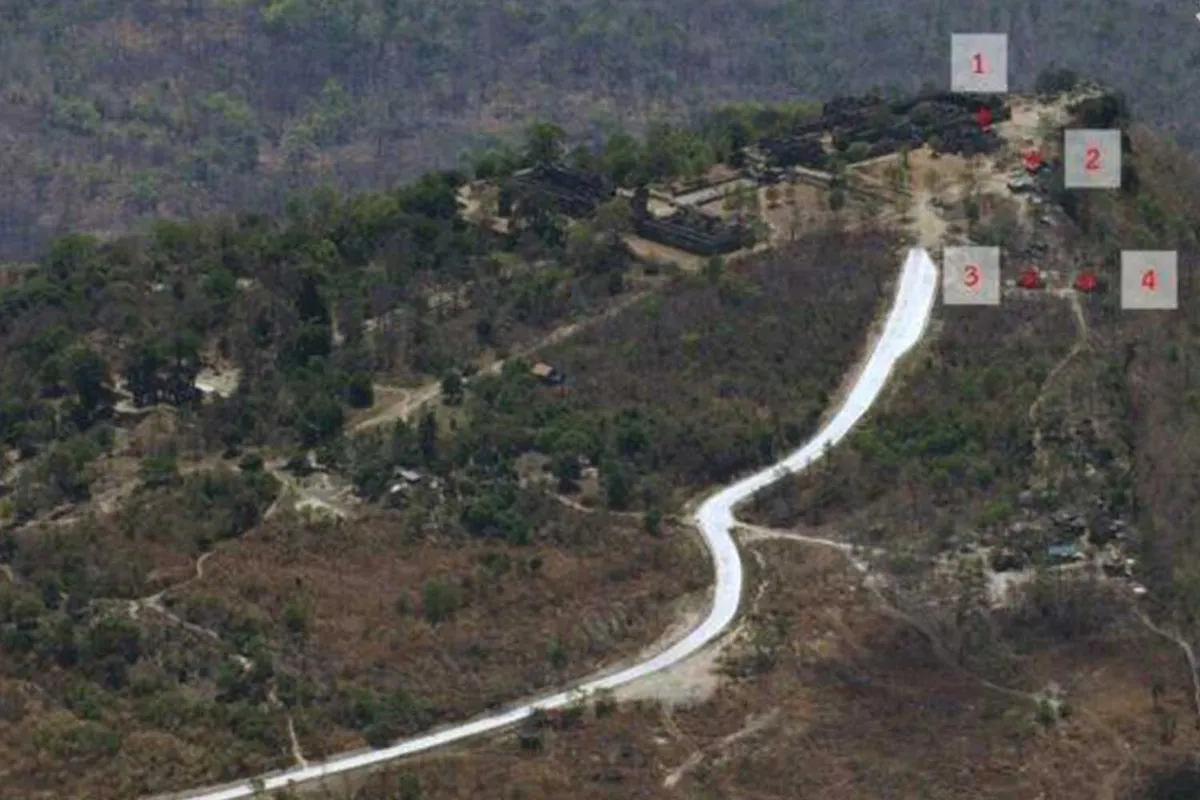
Thailand possesses evidence indicating that Cambodia utilized the Preah Vihear Temple complex as a military base, according to Air Chief Marshal Prapas Sornchaidee, director of the Thailand-Cambodia Joint Information Centre (JIC). This assertion comes amid ongoing tensions and historical disputes surrounding the temple and its surrounding territory.
Historical Context of Preah Vihear Temple
The Preah Vihear Temple, a UNESCO World Heritage site, is perched atop a cliff in the Dangrek Mountains, straddling the border between Thailand and Cambodia. Its ownership has been a subject of contention for decades, with both nations laying claim to the ancient Khmer structure. The International Court of Justice (ICJ) ruled in 1962 that the temple belonged to Cambodia, a decision that has been a source of lingering friction.
Allegations of Military Use
Air Chief Marshal Prapas Sornchaidee stated on Saturday that the JIC has gathered information and proof suggesting that Cambodian forces have occupied and used parts of the Preah Vihear Temple area for military purposes. While specific details regarding the nature of the alleged military activities and the exact locations within the complex were not immediately disclosed, the statement implies a violation of the temple’s status as a cultural heritage site and potentially a breach of agreements concerning the border region.
The JIC, established to facilitate communication and information sharing between Thailand and Cambodia, particularly on border-related issues, is tasked with addressing such sensitive matters. The director’s public statement suggests that diplomatic channels may have been insufficient or that Thailand felt compelled to bring the issue to wider attention.
Thailand’s Stance and Evidence
Thailand’s position, as articulated by Air Chief Marshal Prapas, emphasizes the existence of concrete evidence. This evidence is crucial for substantiating the claims and could involve photographic, satellite, or intelligence data. The Thai government has historically expressed concerns about any military presence near the temple, citing the need to preserve its historical and cultural significance and to maintain regional stability.
The historical dispute over Preah Vihear has, at times, led to military confrontations along the border. In 2011, clashes between Thai and Cambodian forces near the temple resulted in casualties and heightened regional tensions. These past incidents underscore the sensitivity of the area and the potential for even minor provocations to escalate.
Cambodia’s Perspective and Historical Claims
Cambodia has consistently maintained its sovereignty over the Preah Vihear Temple and the surrounding territories. While the 1962 ICJ ruling recognized Cambodian ownership of the temple itself, the demarcation of the surrounding area, particularly the contested 4.6 square kilometers, has remained a point of dispute. Cambodia has previously accused Thailand of encroaching on its territory and has voiced its own concerns about Thai military activities near the border.
Official responses from Cambodia regarding the latest allegations have not yet been detailed. However, in past disputes, Cambodian authorities have often denied accusations of military buildup or provocative actions, framing their presence as necessary for border security and the protection of their national heritage. They have also pointed to Thai military installations and activities in proximity to the border as contributing to the tensions.
Implications for Regional Stability
The allegations of Preah Vihear being used as a military base carry significant implications for the broader relationship between Thailand and Cambodia, as well as for regional stability in Southeast Asia. Both nations are members of the Association of Southeast Asian Nations (ASEAN), an organization that promotes economic, political, and security cooperation. Disputes that threaten to destabilize the border regions can undermine these cooperative efforts.
The international community, including UNESCO, has a vested interest in ensuring the protection of World Heritage sites like Preah Vihear. Any military activity within or around such sites is a serious concern that could potentially lead to international scrutiny and diplomatic pressure.
Path Forward and Diplomatic Efforts
The statement from Air Chief Marshal Prapas Sornchaidee suggests that Thailand intends to pursue the matter through official channels. The effectiveness of the JIC and other bilateral mechanisms will be tested in addressing this sensitive issue. Dialogue, transparency, and adherence to international law and agreements will be crucial in preventing further escalation.
Resolution of the Preah Vihear dispute has been a long and complex process. While the ICJ ruling settled the ownership of the temple, the surrounding land and border demarcation remain challenging. Both countries will need to engage in sustained diplomatic efforts, possibly with the assistance of third-party mediators or international bodies, to find a lasting solution that respects historical claims, cultural heritage, and the principles of peaceful coexistence.
Conclusion
The assertion by Thailand that Cambodia has used Preah Vihear Temple as a military base introduces a new layer of complexity to the long-standing dispute over the UNESCO World Heritage site. With evidence reportedly in hand, Thailand’s JIC director has brought these allegations to the forefront. The situation calls for careful diplomatic handling, clear communication between the two nations, and a commitment to preserving the sanctity of the temple and ensuring peace along the shared border.
