

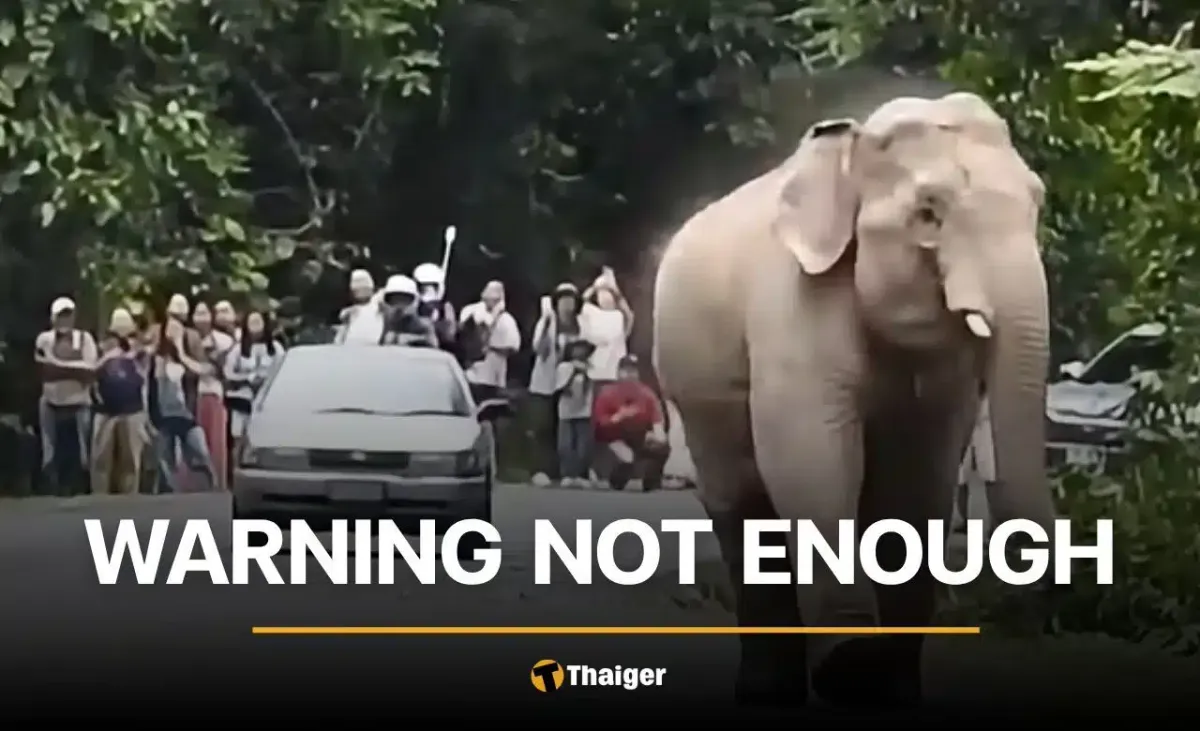
A recent incident in Khao Yai National Park, Thailand, has ignited public concern and calls for stricter enforcement after a speeding vehicle allegedly frightened a mother and calf elephant pair as they crossed a road. The event, which occurred on September 19th, has drawn widespread criticism from wildlife advocates and prompted a political figure to demand accountability from park authorities.
Incident Details Emerge
Eyewitness accounts and shared social media posts describe a car traveling at excessive speed as it approached a section of road within the national park. At that moment, two wild elephants, identified as Pho Ngathong and her calf Tonkla, were in the process of crossing. The sudden appearance of the fast-moving vehicle reportedly startled Tonkla, causing the young elephant to veer sharply and narrowly avoid colliding with its mother.
The distressing near-miss was captured and shared online, leading to an outpouring of public sentiment. Many questioned the driver’s judgment and apparent lack of respect for the wildlife sharing the elephants’ natural habitat. Online discussions highlighted the inherent dangers of speeding in protected areas, emphasizing that such behavior puts both animals and humans at risk.
Political Figure Calls for Action
Kanchana Silpa-archa, a prominent political leader and head of the Chart Thai Pattana Party, publicly addressed the incident via her Facebook page. She detailed how the driver’s actions not only frightened Tonkla but also placed Pho Ngathong in immediate danger. Silpa-archa posed a critical question: would the driver have accepted responsibility had he caused harm to the elephant within its own territory?
Further complicating the matter, Silpa-archa indicated that the driver in question is believed to be a retired park official, specifically a former assistant chief. She urged Chaiya, the current chief of Khao Yai National Park, to take decisive disciplinary measures against the individual. According to Silpa-archa, this was not an isolated lapse in judgment, as the individual allegedly has a history of problematic behavior and has received previous warnings.
She expressed concern that a mere warning would be insufficient, suggesting the behavior might be ingrained. Silpa-archa also cautioned that the park chief could face public disapproval if the situation is not handled with appropriate firmness and transparency. Her public statements underscored the community’s expectation for robust park management that prioritizes wildlife safety.
Broader Concerns for Wildlife Safety in Khao Yai
Khao Yai National Park, a UNESCO World Heritage site, is renowned for its rich biodiversity, including a significant population of wild elephants. The park’s popularity as a tourist destination, however, presents ongoing challenges in balancing human access with the protection of its natural inhabitants. Incidents like the one involving Pho Ngathong and Tonkla highlight the critical need for drivers to exercise extreme caution and adhere strictly to park regulations, particularly speed limits.
Park authorities are responsible for ensuring that visitors understand and respect the rules designed to protect wildlife. This includes clear signage, regular patrols, and consistent enforcement of traffic laws within the park boundaries. The incident serves as a stark reminder that these measures are not merely suggestions but essential components of conservation efforts.
The Importance of Habitat Respect
Wildlife conservation hinges on the principle of respecting animals in their natural environments. Elephants, like all wild creatures, require space and freedom from undue stress. Human activities, especially those involving high speeds and potential for collision, can disrupt their natural behaviors, including migration patterns, foraging, and social interactions. The near-miss with Tonkla underscores the vulnerability of young animals and the potential for severe consequences when drivers disregard the presence of wildlife.
Enforcement and Public Awareness
The public outcry following this event emphasizes the growing awareness and concern for animal welfare among the general population. Social media platforms have become powerful tools for disseminating information and mobilizing public opinion on such matters. While this can lead to swift attention, it also places pressure on authorities to act decisively and transparently.
The call for disciplinary action against the former official suggests a desire not only for immediate consequences but also for a broader message that such behavior will not be tolerated, regardless of an individual’s past affiliation with the park. Effective enforcement requires not only rules but also the consistent application of penalties to deter future violations.
Conclusion: A Call for Vigilance
The incident involving the speeding driver and the elephants in Khao Yai National Park serves as a critical reminder of the delicate balance between human recreation and wildlife preservation. It highlights the responsibility that visitors bear when entering natural habitats and the imperative for park management to enforce regulations rigorously. The public’s engagement, amplified by social media, underscores a collective desire to see wildlife protected. Moving forward, sustained vigilance, strict adherence to speed limits, and decisive action against those who endanger wildlife will be crucial in safeguarding the future of Khao Yai’s magnificent elephant population and ensuring their continued presence in their natural home.
