

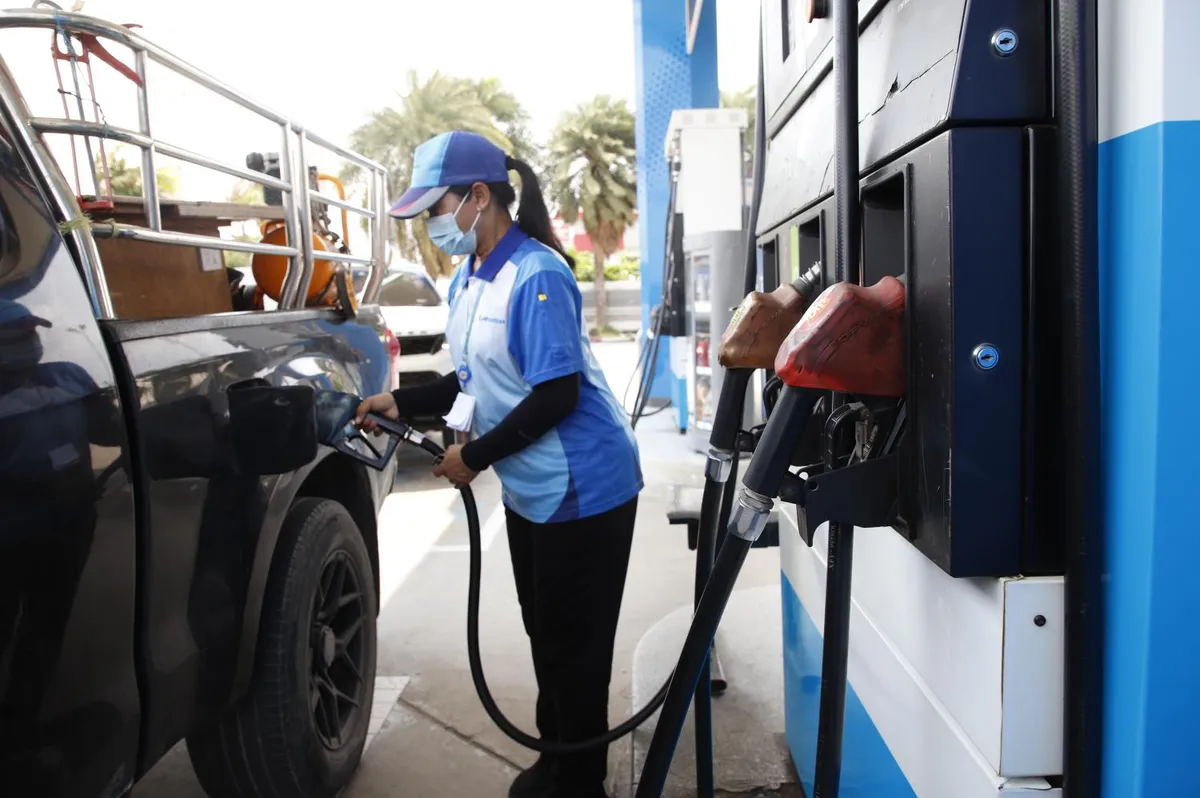
High Fuel Costs Persist for Thai Drivers
Motorists in Thailand are set to continue facing elevated prices at the pump, with projections indicating no significant relief until the fourth quarter of the year. This comes despite a recent downturn in international crude oil markets.
Global Market Fluctuations vs. Domestic Reality
While global benchmarks like Brent crude have seen a decrease, settling around $90 per barrel on June 12, down from earlier highs in March, this trend has not been mirrored in Thailand’s retail fuel prices. As of June 15, diesel was priced at 39.80 baht per litre, and gasohol 95 at 42.30 baht, showing only marginal reductions compared to the previous month.
Factors Driving Domestic Prices
Several key factors are contributing to the sustained high domestic fuel costs. Thailand’s heavy reliance on crude oil imports means that fluctuations in foreign exchange rates directly impact operational expenses. Furthermore, recent geopolitical events, including military actions in the Middle East, have disrupted oil production, storage, and transportation infrastructure, particularly impacting refineries and liquefied natural gas facilities.
The reduced supply of refined oil, exacerbated by a lack of extensive refining capacity across many Asian nations, has consequently driven up prices for refined products. Analysis of forward contracts further supports this outlook, with the latest figures for October diesel delivery indicating prices are expected to remain around $100 per barrel.
The Role of the Oil Fuel Fund and Taxes
Domestic pricing is also influenced by the Oil Fuel Fund, designed to buffer consumers from extreme price volatility. This fund typically subsidizes fuel costs during price surges and collects levies when prices fall. However, substantial past expenditures have led to a significant deficit within the fund. Mid-May saw losses of 63.7 billion baht, which had narrowed to 58.4 billion baht by June 15, according to the Oil Fuel Fund Office.
Officials emphasize that immediate price reductions are not feasible when global crude prices decline, as levies are necessary to address the fund’s outstanding debt. Additionally, taxes, including excise, municipal, and value-added taxes, constitute approximately 30% of the retail price, with refining costs accounting for the remaining 70%. Value-added tax is applied at both wholesale and retail stages, adding further cost pressure. Contributions to the Energy Conservation Promotion Fund also factor into the final price, explaining why retail fuel costs often deviate from global crude oil trends.
The fixed per-litre nature of these taxes and levies means that retail fuel prices do not automatically adjust in response to global crude price movements, contributing to the prolonged period of high prices expected through the end of the year.
