

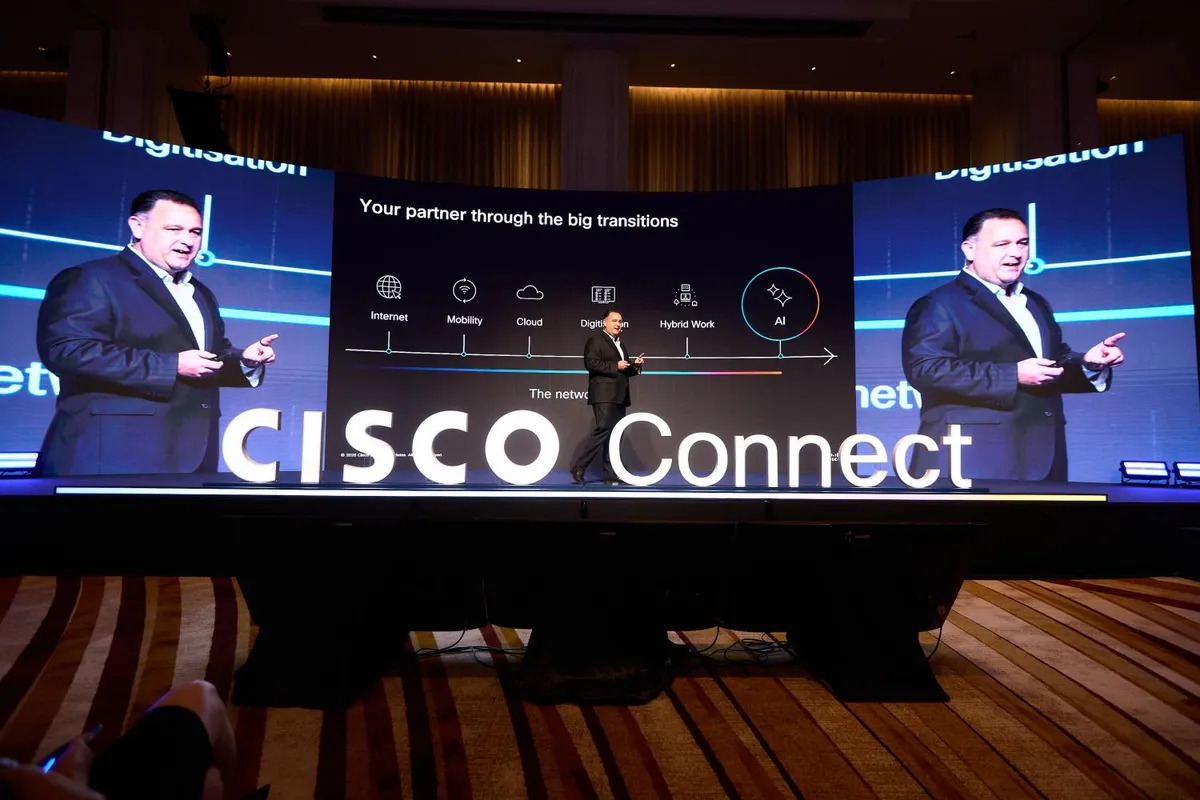
While Thailand shows promising ambition in adopting artificial intelligence (AI), significant infrastructure hurdles, a lack of trust, and data deficiencies are preventing most organizations from achieving full AI readiness. A recent assessment indicates that only 21% of Thai organizations are fully prepared for the AI era, despite 98% planning to deploy AI agents within the next year.
AI Adoption Amidst Infrastructure Challenges
The rapid advancement of AI, characterized by autonomous actions and an accelerated threat landscape, presents both opportunities and challenges for Thai businesses. Ben Dawson, president for Asia-Pacific at Cisco Systems, highlighted that the timeframe between discovering and exploiting a security threat has dramatically shrunk, underscoring the need for organizations to scale AI securely and efficiently. This involves managing a complex workforce of both humans and AI agents, and adapting to rapidly evolving risks that outpace traditional security measures.
Cisco’s research reveals a stark reality: over half (52%) of organizations in Thailand risk devaluing their AI investments due to accumulating “AI infrastructure debt.” This debt stems from compromises, shortcuts, and delays in critical areas such as computing power, networking capabilities, data management, security protocols, and skilled talent. As companies rush to implement AI, these gaps tend to compound, hindering long-term success.
Thailand’s AI Readiness Score and Key Success Factors
In Cisco’s AI readiness index, Thailand achieved a score of 21%, surpassing the global average of 13%. This indicates a strong regional performance, with 92% of Thai respondents intending to integrate AI agents alongside their human employees in the coming year. However, this overall readiness score remains relatively low, suggesting widespread room for improvement.
Organizations that are leading the charge in AI adoption, termed “pacesetters,” attribute their success to several key strategies:
- Embedding AI directly into their core business strategies.
- Ensuring their existing networks are robust and capable of handling AI demands.
- Allocating sufficient financial resources for AI initiatives.
- Establishing clear processes for moving AI projects from initial concept to full production.
Conversely, the majority of organizations (79%) struggle due to a lack of clearly defined business cases or uncertain return on investment (ROI) models for their AI deployments.
The Critical Role of Network Modernization
A significant bottleneck identified by Cisco is the inadequacy of existing network infrastructure. Mr. Dawson emphasized that networks built over the past five to ten years are often insufficient to support the intensive demands of modern AI applications. This necessitates a substantial network modernization effort. Cisco estimates that the opportunity for network modernization related to AI could be worth approximately US$43 billion over the next five years.
Addressing Evolving Cybersecurity Threats in the AI Era
The proliferation of AI is fundamentally reshaping the cybersecurity landscape, creating threats that operate at machine speed. Traditional human-speed security responses are becoming increasingly insufficient. To combat this, security must be deeply integrated into the network’s fabric, rather than being an add-on layer.
Cisco’s findings reveal that a significant 90% of Thai organizations have already encountered AI-related security incidents. These incidents range from the theft of AI models to sophisticated AI-driven social engineering attacks and data poisoning, where malicious data is introduced to corrupt AI systems. Mr. Dawson advocates for a shift from static defense mechanisms to a dynamic model where security is intrinsically woven into the network infrastructure, allowing organizations to manage risks that escalate far more rapidly than conventional controls can handle.
Cisco’s Commitment to Thailand’s AI Future
Cisco is actively investing in Thailand to support its AI transition. Through its Cisco Networking Academy, the company has provided training to over 100,000 students in the region. Furthermore, Cisco Thailand and Myanmar Managing Director, Weera Areeratanasak, noted that the company revamped its partner programs in February, introducing the Cisco 360 Partner Program. This initiative aims to cultivate specialized partners equipped to meet the evolving needs of customers navigating the complexities of AI adoption and infrastructure modernization.
Conclusion: Bridging the AI Readiness Gap
While Thailand demonstrates a strong intent to embrace AI, the path forward requires addressing critical infrastructure deficits, building greater trust in AI systems, and ensuring robust data governance. By focusing on network modernization, integrating security at the core, and developing clear strategic roadmaps, Thai organizations can move beyond their current readiness limitations. Partnerships and targeted investments, like those from Cisco, are crucial in helping businesses bridge these gaps and unlock the full potential of artificial intelligence securely and effectively.
