

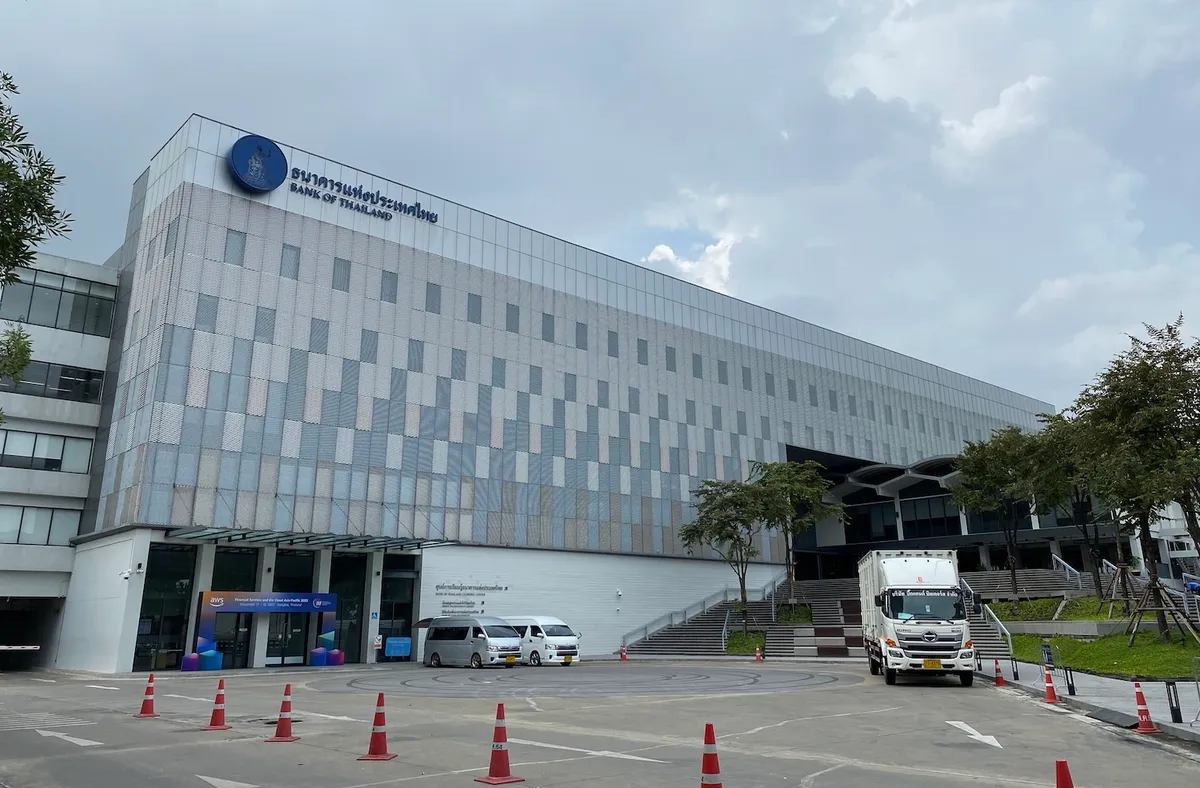
The Bank of Thailand’s Monetary Policy Committee (MPC) has unanimously decided to maintain the benchmark one-day repurchase rate at 1.00%. This decision keeps the key interest rate unchanged, reflecting the committee’s assessment that the current policy stance is appropriate for supporting economic recovery.
Interest Rate Decision and Economic Outlook
The MPC’s vote to hold the policy rate steady was unanimous. This aligns with the expectations of most economists, as a Reuters poll indicated that only a small minority anticipated a rate change. Furthermore, a significant majority of economists surveyed forecast that the interest rate will remain at its current level through the end of 2027.
In its official statement, the central bank highlighted that the current policy rate is deemed suitable for bolstering the ongoing economic recovery. Projections for economic expansion in the current year and the next remain broadly in line with previous assessments, suggesting a stable outlook for growth.
Context of Global and Domestic Monetary Policy
This decision by the Bank of Thailand contrasts with monetary policy actions taken by some other central banks in the region. Notably, central banks in South Korea, Indonesia, and the Philippines have already implemented interest rate hikes. Thailand, however, has maintained its policy rate since a reduction in February, a move aimed at mitigating the economic impact of the conflict in the Middle East.
The Thai Baht showed minimal fluctuation following the announcement, trading around 32.71 against the US dollar. This stability suggests that the market had largely priced in the likelihood of the rate remaining unchanged.
Historical Monetary Policy and Economic Challenges
The current interest rate of 1.00% is the result of a series of rate cuts implemented between October 2024 and February 2026. During that period, the policy rate was reduced six times, totaling 150 basis points. These adjustments were made to stimulate a sluggish economy that has been contending with persistent challenges, including weak domestic demand and a high level of household debt.
Despite these efforts, the Thai economy’s growth trajectory has been described as low and uneven. The economy experienced a slowdown in the second quarter of this year, expanding by 1.9% annually. This represents a notable decrease from the 2.8% growth recorded in the preceding quarter.
Impact of Technology and AI
The central bank’s statement acknowledged that the Thai economy is benefiting from the ongoing technological advancements and the artificial intelligence cycle. However, it reiterated that the overall growth rates remain subdued and inconsistent, indicating that the positive impact of these technological drivers has not yet translated into robust and broad-based economic expansion.
Revised Growth Forecasts and Inflation
In its June meeting, the Bank of Thailand revised its Gross Domestic Product (GDP) growth forecast for 2026 upwards. The projection was increased to 2.3% from an earlier estimate of 2.0%. Additionally, the central bank anticipates export growth of 14% and a headline inflation rate of 2.8% for the same period.
Last year, the Thai economy grew by 2.4%, a rate that lagged behind many of its regional counterparts. Inflationary pressures have shown signs of easing, with the headline inflation rate slowing to 1.95% in July. This figure falls comfortably within the central bank’s target range of 1% to 3%, suggesting that inflation is currently under control.
Upcoming Economic Review
The next interest rate meeting for the Monetary Policy Committee is scheduled for October 28. At this upcoming session, the committee is expected to provide updated economic forecasts, offering further insights into the central bank’s outlook and potential future policy considerations.
The decision to maintain the status quo on interest rates underscores the central bank’s cautious approach, balancing the need to support economic recovery with concerns about inflation and global economic uncertainties. The focus remains on achieving sustainable and stable growth while managing domestic economic challenges.
