

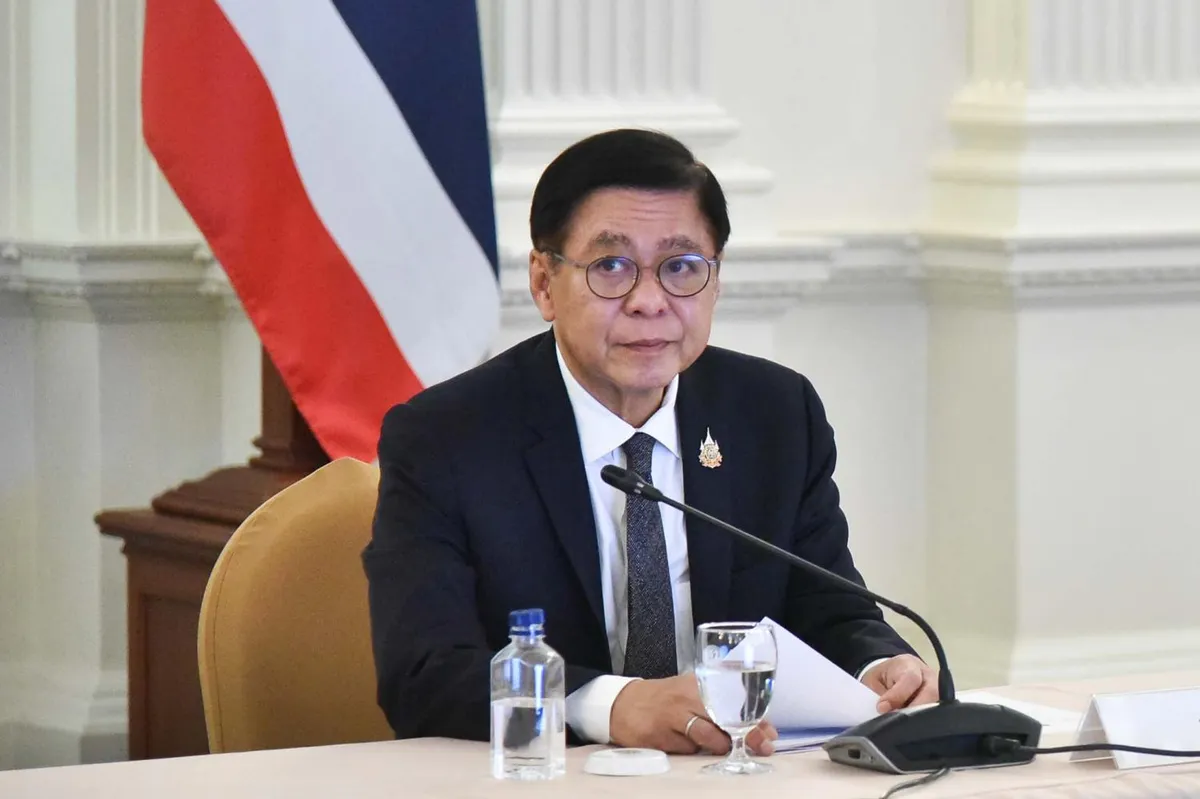
Thailand Charts Path for Industrial Policy at Global Summit
Paris, France – Deputy Prime Minister Sihasak presented Thailand’s strategic vision for industrial policy at the Organisation for Economic Co-operation and Development (OECD) Ministerial Council Meeting (MCM) 2026 in Paris on Wednesday. The discussions, held under the theme “Getting Industrial Policies Right for Open Markets, Growth and Prosperity,” focused on adapting national strategies to a changing global economic landscape.
Evolution of Thailand’s Industrial Strategy
Sihasak detailed how industrial policy has been a cornerstone of Thailand’s development since the 1960s. Through a combination of targeted incentives, robust foreign direct investment (FDI) strategies, and the cultivation of domestic supply chains, the nation successfully transitioned from an agrarian economy to a prominent regional manufacturing hub. Key sectors benefiting from this approach included automotive, electronics, and petrochemicals.
Adapting to New Economic Realities
However, Sihasak acknowledged that the foundational conditions driving past successes have significantly altered. Current global imperatives demand a focus on creating high-quality employment, bolstering economic resilience, and integrating sustainability principles with economic growth. He emphasized a necessary shift in industrial policy, moving away from supporting specific sectors towards facilitating economy-wide transformation.
Key Pillars for Future Growth
This strategic pivot requires substantial investment in human capital, encompassing skills development and lifelong learning initiatives. Furthermore, greater support for innovation ecosystems, advanced digital infrastructure, and green technologies is crucial. Sihasak also highlighted the importance of deeper regional economic integration, given the increasingly cross-border nature of supply chains, technology, energy, and investment.
OECD Membership as a Catalyst for Reform
These priorities are central to Thailand’s ongoing efforts to accelerate reforms, enhance its global competitiveness, and build long-term resilience. Sihasak underscored the significance of OECD membership within this framework, stating that accession is not an endpoint but a vital component of a broader economic transformation process. Membership is expected to facilitate the alignment of national policies with international best practices, improve policy coherence, and strengthen institutional frameworks.
Thailand’s engagement with the OECD extends beyond the accession process, with prior participation in various OECD programs, committees, and instruments. The kingdom believes its practical experience as an upper-middle-income economy can offer valuable insights, enriching OECD discussions and fostering stronger engagement with emerging economies.
Navigating Economic Transitions
Concluding his remarks, Sihasak posed a critical question: how can industrial policy effectively guide societies through major economic transitions while ensuring that growth remains both competitive and sustainable? He also held separate discussions with representatives from Bulgaria and Japan, as well as with OECD Secretary-General Mathias Cormann.
