

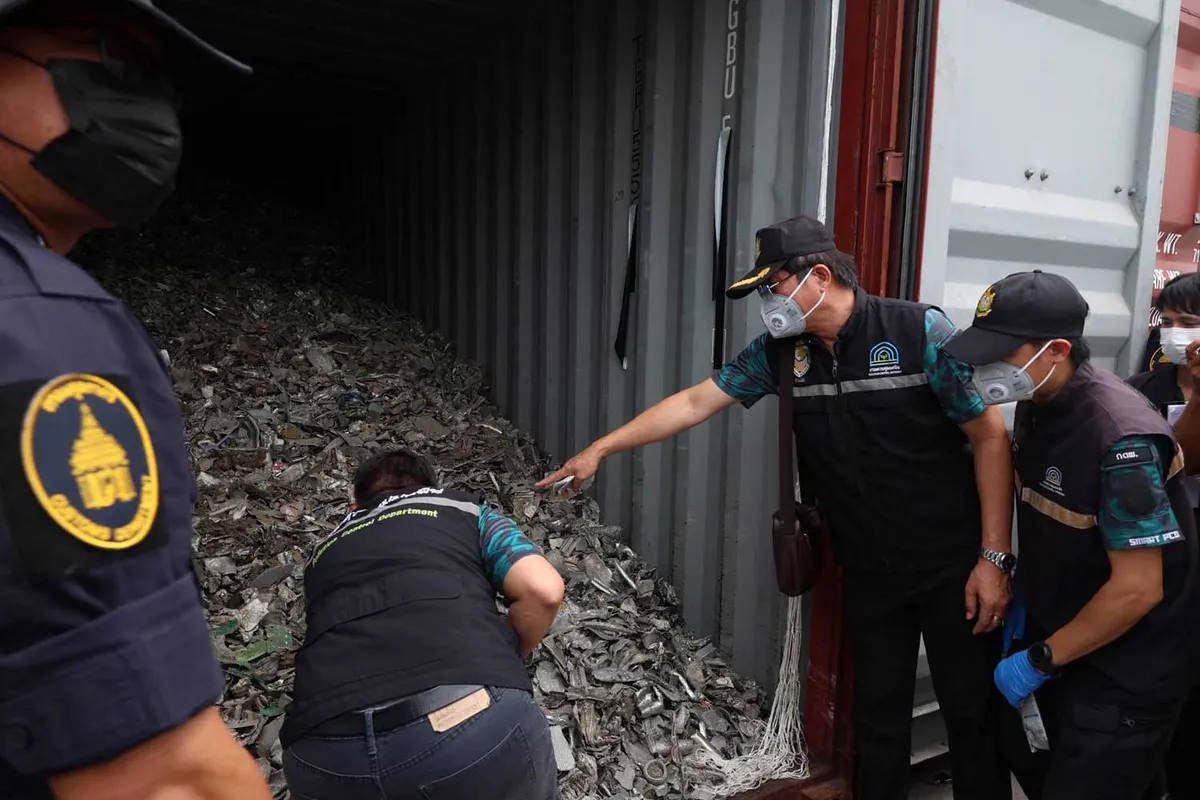
Thailand is intensifying its efforts to combat illegal waste imports and dismantle networks involved in illicit disposal, aiming to shed its long-standing reputation as the “world’s waste bin.” A significant operation was recently launched at Laem Chabang Port in Chon Buri province, signaling a determined governmental push to enforce environmental regulations and protect the nation’s natural resources.
Government Takes Action Against Illegal Waste Trade
The Minister of Natural Resources and Environment, Suchart Chomklin, personally led a search operation targeting an illegal waste disposal network operating within the strategic Laem Chabang Port. This high-profile action underscores the government’s commitment to tackling the pervasive issue of waste dumping, which has tarnished Thailand’s environmental image for years. The operation aimed to identify and apprehend individuals and organizations involved in the clandestine import and disposal of waste, often originating from foreign countries.
Laem Chabang Port, a vital hub for international trade and logistics in Thailand, has unfortunately become a focal point for illicit waste trafficking. The sheer volume of goods passing through the port makes it a challenging environment to monitor effectively, creating opportunities for illegal waste operators to exploit loopholes and circumvent customs regulations. The recent crackdown signifies a strategic move to tighten controls at this critical entry point.
The Growing Problem of Transboundary Waste
Thailand, like many developing nations, has faced increasing pressure from the global trade in waste. Developed countries often export their recyclable and non-recyclable waste to other nations, seeking cheaper disposal solutions. While recycling can be a beneficial practice, the improper management and disposal of these imported wastes can lead to severe environmental degradation, including soil and water contamination, air pollution from burning, and health risks to local communities.
The term “world’s waste bin” has been used to describe countries that disproportionately receive and struggle to manage waste exported from wealthier nations. This label reflects a global imbalance in waste management responsibilities and highlights the environmental burden placed on importing countries. Thailand’s government has expressed a strong desire to move away from this negative perception by implementing stricter import controls and enhancing domestic waste management capabilities.
Strategies for a Cleaner Future
Beyond enforcement actions, Thailand is exploring a multi-pronged approach to address the waste crisis. Key strategies include:
- Stricter Import Regulations: Revising and enforcing laws to prevent the entry of hazardous and non-recyclable waste materials. This involves enhanced screening processes at ports and borders.
- Improved Domestic Waste Management: Investing in modern waste treatment facilities, promoting recycling initiatives, and developing sustainable waste-to-energy solutions.
- International Cooperation: Engaging with countries of origin to discuss shared responsibility for waste management and explore collaborative solutions to reduce transboundary waste flows.
- Public Awareness Campaigns: Educating citizens about the impacts of waste pollution and encouraging responsible consumption and disposal habits.
- Technological Integration: Utilizing advanced technologies for waste tracking, monitoring, and management to improve efficiency and transparency.
The government recognizes that tackling the illegal waste trade requires a sustained and coordinated effort involving multiple agencies, the private sector, and the public. The operation at Laem Chabang Port is a crucial step in this ongoing battle, demonstrating a clear intent to reclaim Thailand’s environmental integrity and foster a more sustainable future.
Challenges and Outlook
Despite the government’s renewed commitment, significant challenges remain. The global nature of the waste trade means that demand for cheap disposal options will likely persist. Furthermore, the complexity of international shipping and the potential for corruption within the supply chain present ongoing hurdles. Effective enforcement requires continuous vigilance, robust legal frameworks, and international collaboration.
However, the proactive stance taken by the Ministry of Natural Resources and Environment, spearheaded by Minister Suchart Chomklin, offers a hopeful outlook. By actively dismantling illegal networks and committing to comprehensive waste management reforms, Thailand is signaling its determination to transition from being a dumping ground to a leader in environmental stewardship. The success of these initiatives will not only improve the nation’s environmental health but also enhance its global standing and attract responsible tourism and investment.
