

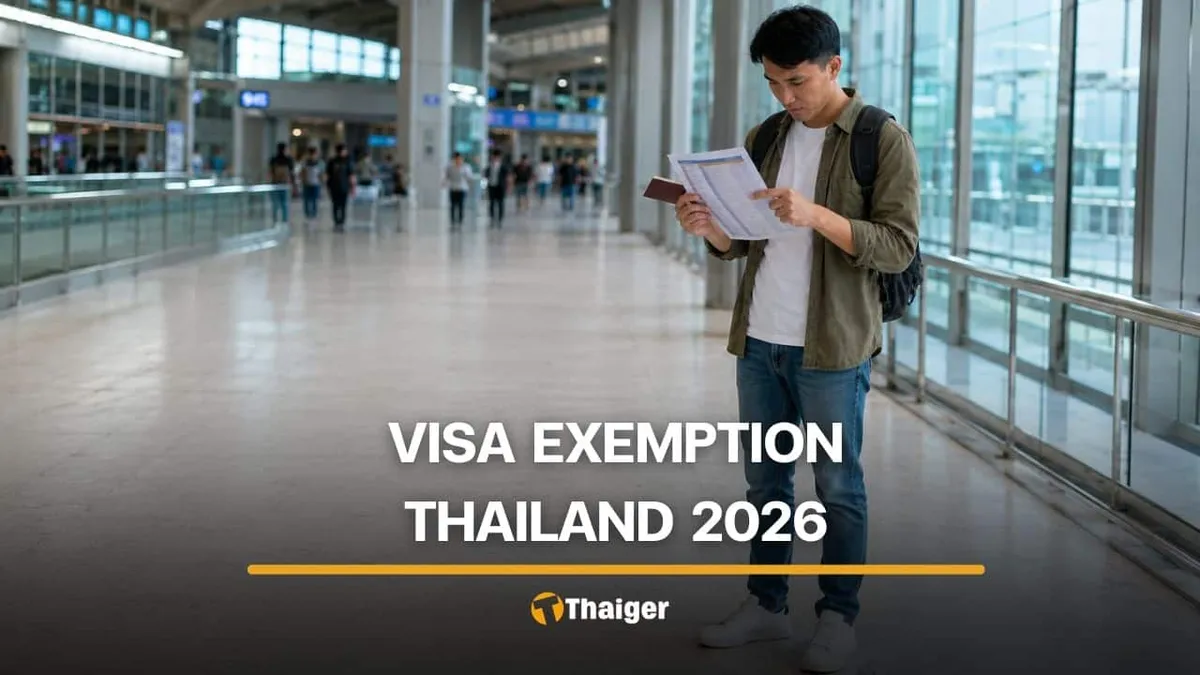
Thailand’s popular visa exemption program is set for significant changes in late 2026, potentially altering entry conditions for travelers from numerous countries. While currently allowing citizens from 93 nations and territories to enter visa-free for up to 60 days, a recent Cabinet decision aims to introduce a tiered system with shorter stays for many. As of late June 2026, these changes have not yet been officially published in the Royal Gazette, meaning the existing 60-day exemption remains in effect. This guide outlines the current rules, the approved modifications, and their implications for international visitors.
Current Thailand Visa Exemption Rules
As of July 15, 2024, nationals from 93 countries and territories are eligible for a visa-free stay in Thailand for up to 60 days. This exemption is valid for tourism, business meetings, and certain short-term urgent work. The 60-day period can be extended once by an additional 30 days by visiting an immigration office and paying a fee of 1,900 Thai Baht, effectively allowing a maximum stay of 90 days under the current rules. This framework will continue to be legally binding until the new regulations are officially published in the Royal Gazette, after which a 15-day grace period will commence before the new rules take effect.
Mandatory Thailand Digital Arrival Card (TDAC)
A crucial requirement for all foreign nationals entering Thailand, regardless of visa status, is the completion of the Thailand Digital Arrival Card (TDAC). This online form must be submitted within 72 hours prior to arrival. The TDAC is free to complete on the official immigration website, tdac.immigration.go.th. Travelers should be wary of third-party websites attempting to charge fees for this service, as they are likely scams.
Approved Changes to the Visa Exemption Framework
On May 19, 2026, the Thai Cabinet approved a revised visa exemption policy, moving towards a ‘one-country, one-visa’ principle. The overarching goal is to shift focus from tourism volume to ‘quality tourism,’ as stated by Tourism and Sports Minister Surasak Phancharoenworakul. The key changes include:
- Reduced Stays for Most: The standard visa-free period for many nationalities will revert from 60 days to 30 days.
- Shorter Stays for Island Nations: Citizens of the Maldives, Mauritius, and Seychelles will see their visa-free stay reduced to 15 days.
- Fewer Visa on Arrival Countries: The list of countries eligible for Visa on Arrival (VOA) will be reduced from 31 to just four.
- Land Border Restrictions: A cap of two visa-exempt land border entries per calendar year will be reinstated for most nationalities, effectively ending the practice of ‘border runs’ for extended stays. Nationals of Malaysia, Brunei, Indonesia, and Singapore are exempt from this cap.
These changes are not retroactive. Travelers already in Thailand under the existing 60-day exemption or those entering before the new rules become effective will retain their granted stay duration.
Timeline for Implementation
The exact date these changes take effect is contingent upon their publication in the Royal Gazette. Until this official notification occurs, the current 60-day visa exemption remains in force. Travelers are advised to check official sources, such as the Ministry of Foreign Affairs website (mfa.go.th) or their nearest Royal Thai Embassy, for the most current information closer to their travel dates.
Visa Exemption by Nationality Under the New Framework
The approved, though not yet gazetted, framework categorizes nationalities as follows:
30-Day Visa Exemption (54 Countries)
This category includes major countries such as the United States, the United Kingdom, all primary European Union member states, Australia, New Zealand, Canada, Japan, Singapore, Malaysia, Indonesia, the Philippines, Brunei, Israel, the UAE, Saudi Arabia, Bahrain, Kuwait, Oman, Qatar, South Africa, Turkey, Georgia, Bhutan, Fiji, and Taiwan, among others.
15-Day Visa Exemption (3 Territories)
The Maldives, Mauritius, and Seychelles will be limited to a 15-day visa-free stay.
Visa on Arrival (15 Days) (4 Countries)
Under the new rules, only citizens from Azerbaijan, Belarus, India, and Serbia will be eligible for a 15-day Visa on Arrival.
Bilateral Arrangements Unaffected
Several countries maintain longer stays based on existing bilateral treaties and agreements, which are separate from the unilateral visa exemption scheme and are not impacted by the May 2026 Cabinet decision:
- 90 Days: Argentina, Brazil, Chile, Peru, and South Korea will continue to benefit from 90-day stays under separate bilateral treaties.
- 30 Days (Mutual Agreement): China retains its 30-day visa-free entry under the Thailand-China mutual exemption agreement, effective since March 2024.
- 30 Days (Bilateral Arrangements): Laos, Mongolia, Russia, Kazakhstan, Vietnam, Hong Kong, and Macao will continue to have 30-day visa-free access under bilateral arrangements.
- 14 Days: Myanmar will retain a 14-day stay, applicable only at international airports.
Impact on India
India is notably affected by these changes. Having recently been upgraded to the 60-day visa-free list in February 2026, Indian nationals will now fall under the 15-day Visa on Arrival category. This shift is significant given that India was Thailand’s third-largest source market in 2025, with approximately 2.48 million arrivals, according to data from the Tourism Authority of Thailand.
Important Considerations: What Visa Exemption Does Not Mean
It is essential for travelers to understand the limitations of the visa exemption:
- Right of Admission: Visa exemption does not guarantee entry into Thailand. Immigration officers reserve the right to refuse entry based on Section 12 of the Immigration Act. Factors such as frequent visa-exempt entries, insufficient proof of funds, unclear accommodation plans, or suspected intent to reside long-term can lead to denial. In 2025, immigration authorities reportedly refused entry to around 2,900 foreigners for such reasons.
- No Work Permitted: The visa exemption does not permit employment. While the July 2024 framework included a limited provision for urgent work in 16 specific categories for up to 15 days, general employment requires a valid work permit.
- Land Border Caps: As mentioned, most nationalities will be limited to two visa-exempt land border crossings annually. This measure aims to curb the practice of using border runs for prolonged stays.
- Proof of Funds: Travelers may be required to demonstrate sufficient funds. Recent guidance suggests a requirement of 20,000 Thai Baht per person or 40,000 Thai Baht per family. Carrying proof of onward travel and confirmed accommodation is also advisable.
For travelers planning longer stays, alternative visa options such as the Thailand DTV (Digital Travel Visa) may be more suitable. Comprehensive information on eligibility and application processes for such visas can be found through official Thai immigration and embassy channels.
