

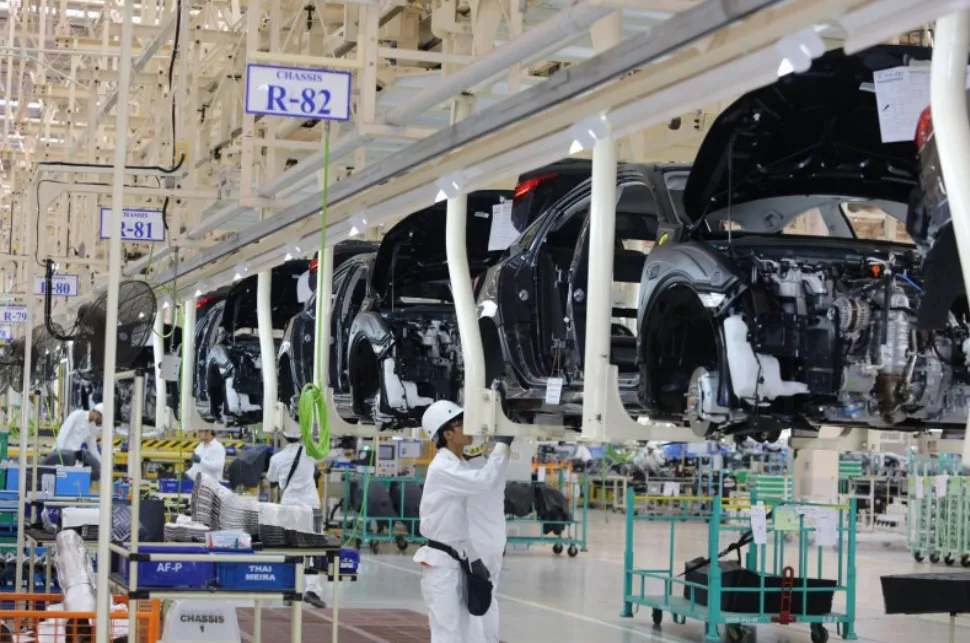
Car production in Thailand experienced a significant downturn in May, dropping by 17.94% compared to the same month last year. This decline follows a more modest decrease of 0.44% observed in April, indicating a challenging period for the nation’s automotive manufacturing sector. The latest figures were released by the Federation of Thai Industries (FTI), highlighting a contraction in output that impacts Thailand’s position as a key player in the global automotive supply chain.
May Production Figures and Contributing Factors
The total number of vehicles produced in May saw a substantial year-on-year decrease. While specific figures for the total production volume in May were not detailed in the initial report, the percentage drop underscores a significant slowdown. This contraction is occurring despite a notable increase in domestic sales, which rose by 10.60% to 57,765 units during the same month. This surge in domestic demand was particularly bolstered by strong sales of electric vehicles (EVs), suggesting a shift in consumer preferences and market dynamics within Thailand.
The FTI’s data indicates that while domestic consumption is showing resilience, particularly in the EV segment, the overall production figures are being dragged down. This disparity could be attributed to several factors, including global economic uncertainties, supply chain disruptions affecting component availability, or a strategic shift by manufacturers focusing on specific markets or vehicle types. The automotive industry is complex, with production levels often influenced by international demand, export orders, and the availability of raw materials and semiconductors.
Year-to-Date Performance and Industry Outlook
Looking at the broader picture for the first five months of the year, car production has also contracted, albeit at a slower pace than the May figures suggest. From January to May, production fell by 1.13% year-on-year, totaling 587,759 vehicles. This cumulative decline indicates that the challenges faced in May are part of a larger trend observed throughout the first half of the year.
Thailand has long held the title of Southeast Asia’s largest auto production hub and serves as a critical export base for major global car manufacturers such as Toyota and Honda. The industry is a cornerstone of the Thai economy, contributing significantly to employment and export revenues. Therefore, any sustained downturn in production raises concerns about the sector’s overall health and its impact on national economic performance.
Thailand’s Automotive Landscape and Future Projections
The automotive sector in Thailand is undergoing a significant transformation, driven by the global push towards electrification and sustainable mobility. The strong performance of EV sales in the domestic market is a clear indicator of this trend. However, the overall production decline suggests that the transition is complex, potentially involving challenges in scaling up EV production, securing battery supply chains, and adapting manufacturing processes.
Despite the recent production setbacks, the FTI has offered a forward-looking projection. The federation forecasts that car production is expected to rebound and rise by 3% to reach 1.5 million units in 2026. This optimistic outlook hinges on several factors, including the continued growth of the domestic market, successful adaptation to EV manufacturing, and a stable global economic environment that supports export demand. Achieving this target will require strategic investments, supportive government policies, and the industry’s ability to navigate evolving technological and market landscapes.
Navigating Challenges and Embracing Opportunities
The recent production figures present a mixed picture for Thailand’s automotive industry. While domestic sales, especially for EVs, are encouraging, the overall drop in production highlights immediate challenges. The industry must address the underlying causes of this decline, whether they are related to global demand, supply chain issues, or the complexities of transitioning to electric vehicle manufacturing.
Moving forward, Thailand’s automotive sector will need to leverage its established manufacturing expertise while embracing innovation. The government’s role in facilitating this transition through incentives, infrastructure development, and regulatory support will be crucial. The projected recovery by 2026 suggests confidence in the sector’s long-term potential, but the path to achieving that goal will require careful navigation of current economic headwinds and a proactive approach to the evolving automotive landscape.
The emphasis on electric vehicles within domestic sales is a positive sign, indicating that Thailand is aligning with global trends. Continued investment in EV production capabilities, research and development, and the necessary supporting infrastructure will be key to ensuring that Thailand not only maintains its position as a regional automotive powerhouse but also thrives in the era of electric and autonomous mobility.
