

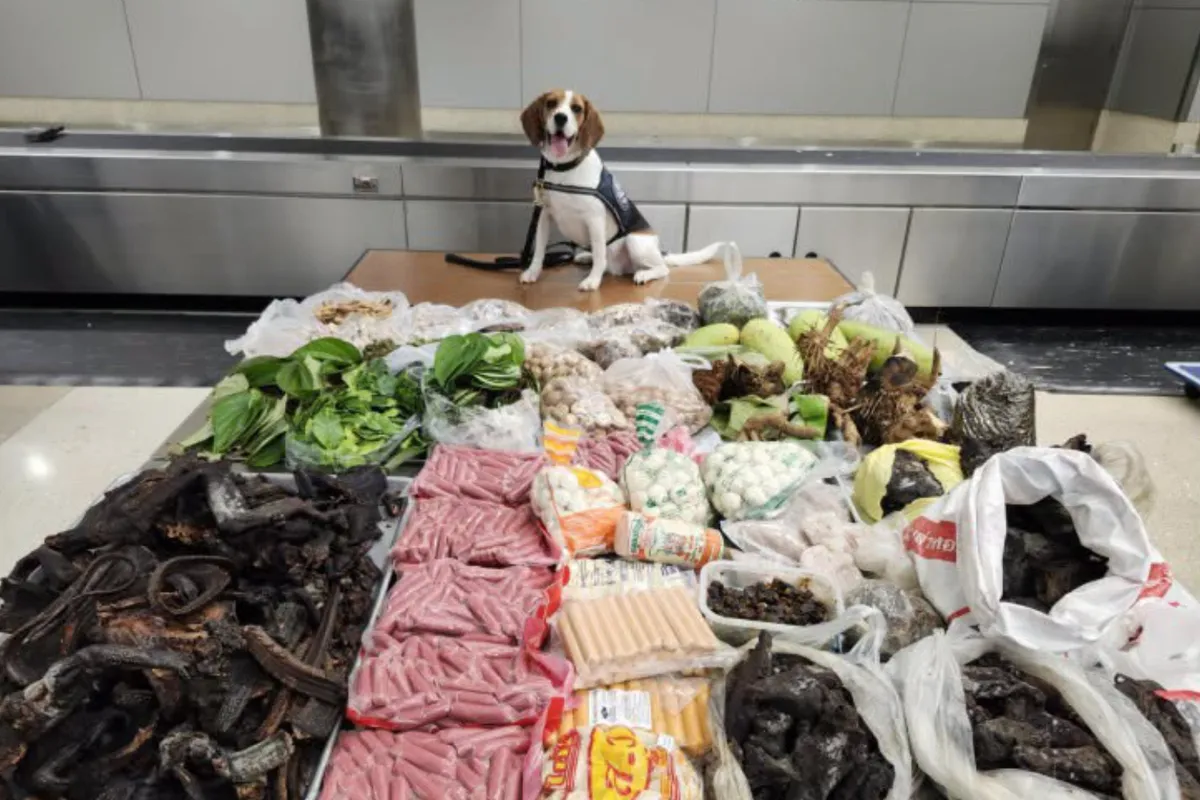
A specialized Customs and Border Protection (CBP) canine unit has successfully intercepted a significant haul of prohibited items, including a large monitor lizard carcass and a substantial quantity of food products, originating from Thailand. The discovery was made when a highly trained beagle, known as Maisy, alerted officers to a suspicious suitcase during a routine inspection.
K9 Unit’s Sharp Senses Lead to Major Seizure
The incident highlights the critical role of K9 units in safeguarding national biosecurity. Maisy, a beagle with specialized training in detecting agricultural products, demonstrated her exceptional olfactory capabilities by flagging a piece of luggage that contained a variety of undeclared items. This successful interdiction prevented potential threats to U.S. agriculture and ecosystems from entering the country.
Details of the Seized Items
Upon investigation, CBP officers discovered the suitcase held approximately 50 pounds (22 kilograms) of assorted meat products, including raw meat, which are subject to strict import regulations. Alongside the meat, the luggage contained about 33 pounds (14 kilograms) of agricultural goods such as mangoes, garlic, bamboo shoots, and banana shoots. These items, if imported without proper permits and inspections, can carry pests and diseases that could harm American crops and natural resources.
The most striking find, however, was the seizure of a 16-pound (7-kilogram) monitor lizard carcass. This particular item was confiscated by the U.S. Fish and Wildlife Service, indicating its status as a protected or regulated species, or its potential to carry zoonotic diseases. The presence of such an item underscores the diverse and often surprising nature of smuggling attempts.
Public Reaction and Previous Incidents
The discovery of the monitor lizard carcass, in particular, generated considerable attention and discussion online. Many individuals expressed astonishment at the attempt to smuggle such an item into the United States, alongside the sheer volume of food found in the single suitcase. Social media platforms were abuzz with comments ranging from surprise to amusement.
One widely shared comment from a Facebook user, Lorraine Anthony, praised the canine’s performance: “Omg, the smell should have alerted anyone, but Maisie did her job perfectly. Give Maisie extra treats.” This sentiment reflects a general appreciation for the diligent work of K9 units in their challenging role.
Humorous remarks also emerged, with some users jokingly inquiring about the smuggler’s packing techniques, given the unusual and extensive contents of the luggage. The identity of the individual traveling with the prohibited items was not disclosed by the authorities.
Precedent for High-Profile Seizures
This incident is not an isolated event, as K9 units have a history of making significant seizures. In April of the same year, another detector beagle named Merla gained widespread recognition for intercepting over 100 pork and chicken sandwiches. These sandwiches were found concealed within the luggage of a traveler arriving from Thailand, further emphasizing the ongoing challenges faced by border protection agencies in preventing the illicit transport of food and animal products.
Such interceptions are crucial for maintaining the integrity of U.S. agricultural markets and protecting the environment from invasive species and diseases. The efforts of canines like Maisy and Merla are invaluable in this ongoing mission, demonstrating their effectiveness in detecting a wide array of prohibited items that might otherwise go unnoticed by human inspectors alone.
The Importance of Biosecurity at Borders
Customs and border protection agencies worldwide face a constant battle against the smuggling of goods that pose risks to public health, agriculture, and national security. The items seized in this case – raw meats, fresh produce, and wildlife – all fall under categories that require strict scrutiny and adherence to import regulations.
Raw meats can harbor dangerous pathogens like foot-and-mouth disease or African swine fever, which could devastate livestock industries. Exotic fruits and vegetables can introduce invasive insects and plant diseases that threaten native flora and agricultural output. Wildlife carcasses, like the monitor lizard, can carry zoonotic diseases transmissible to humans or pose ecological risks if they are of an invasive species.
The U.S. Fish and Wildlife Service’s involvement highlights the interconnectedness of agencies working to protect national interests. Their expertise is vital in identifying and managing threats related to wildlife trafficking and conservation.
Conclusion: Vigilance and Canine Excellence
The successful interception by K9 Maisy serves as a potent reminder of the vigilance required at international borders. The ability of these highly trained animals to detect even well-concealed items is a testament to their training and the sophisticated methods employed by CBP. While the specific motivations behind the smuggling attempt remain unknown, the outcome underscores the importance of declaring all items when traveling internationally and adhering to the customs regulations of the destination country. The efforts of Maisy and her handlers, alongside other dedicated officers, are essential in maintaining the safety and security of the United States.
