

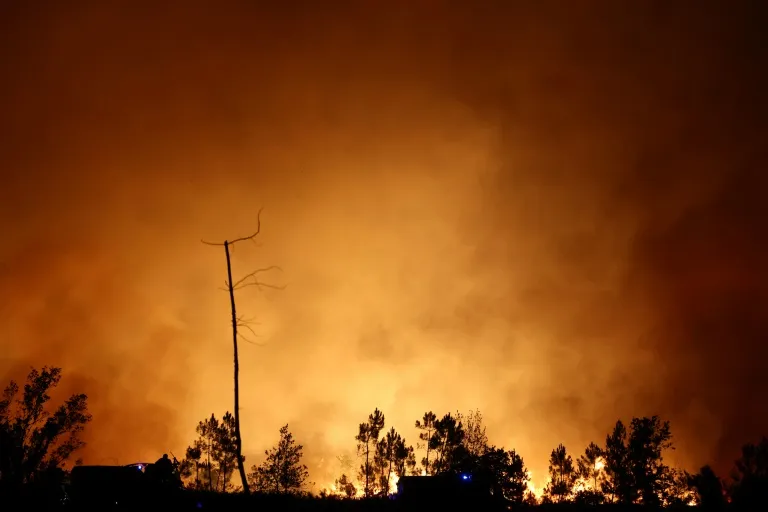
Wildfires are currently devastating significant areas across southern France, Italy, and Spain, driven by extreme heat and dry conditions. Thousands of firefighters are engaged in a desperate battle against the blazes, which have forced evacuations, destroyed vast tracts of land, and tragically claimed lives. The escalating frequency and intensity of these fires are consistent with scientific consensus on the impacts of human-caused climate change.
Italy Grapples with Intense Blazes in Sicily and Calabria
The southern Italian island of Sicily has been particularly hard-hit, with temperatures soaring above 40 degrees Celsius (104 degrees Fahrenheit) and strong winds exacerbating the wildfires. Regional governor Renato Schifani reported that approximately 6,000 firefighters, forest guards, and civil protection officials, supported by water-bombing aircraft, are working to control the situation. As of recent reports, 50 fires were still active on the island. The Italian Civil Protection Agency described the situation in Sicily as “serious,” noting that the fires are being fueled by exceptionally high temperatures and parched soil.
Tragically, a firefighter lost his life after falling ill while combating the flames, according to Interior Minister Matteo Piantedosi. In the neighboring Calabria region, over 160 fires have been recorded. Local civil protection authorities suspect deliberate arson in many of these cases, with disturbing reports of individuals allegedly using stray cats with flammable materials tied to their tails to spread the fires.
France Battles Multiple Fronts in Southern Regions
France is contending with several major wildfires, particularly in its southern departments. In the picturesque Arcachon Basin near Bordeaux, two intense fires have displaced thousands of residents. One blaze has consumed over 1,000 hectares (approximately 2,500 acres) of land, primarily dense pine forests. Firefighter Captain Wilfried Schneider described the fire as being of “rare” intensity, noting the significant challenge posed by the closely packed trees.
Residents in the affected areas have described witnessing large clouds of black smoke rising into the sky. Many have been forced to evacuate their homes, with some expressing distress over the heat and the speed at which the fires are spreading. One long-time resident, Bernard Roche, recounted leaving his cabin due to the extreme heat. The mayor of Le Porge, Martial Zaninetti, indicated that the fire might have originated from machinery used for forest track maintenance, though this remains unconfirmed.
In another part of southern France, the Var region, a separate wildfire erupted on Tuesday and spread with alarming speed. This blaze forced the evacuation of around 400 people and has already consumed an area twice the size of London’s Heathrow Airport, totaling 2,550 hectares. Nearly 1,000 firefighters and specialized aerial units are working to contain this fire, which is located along the Mediterranean coast between Marseille and Nice.
Spain Orders Evacuations as Wildfires Threaten Communities
Spanish authorities have been compelled to order the evacuation of several districts surrounding the historic city of Toledo, south of Madrid, as a significant wildfire encroaches on residential areas. Emergency alerts were dispatched via telephone to residents, and major roads were closed due to the fire’s progression. Civil Guard officials confirmed that three villages have been evacuated, while residents in a fourth village were instructed to remain indoors with windows and doors shut until further notice.
This new blaze is occurring while hundreds of firefighters are already engaged in battling a massive wildfire approximately 100 kilometers north of Madrid. That fire has already devastated an area of 32,000 hectares. Data from the European Forest Fire Information System indicates that Spain has already experienced its worst year on record for wildfire destruction in 2025, with over 393,000 hectares consumed by flames.
Climate Change and Extreme Weather
Scientists widely agree that human activities, particularly the burning of fossil fuels, are driving climate change. This phenomenon is increasing the likelihood and severity of extreme weather events, including prolonged heatwaves and devastating wildfires. The current situation across southern Europe serves as a stark illustration of these escalating risks, highlighting the urgent need for global action to mitigate climate change and adapt to its impacts.
Conclusion
The ongoing wildfires in France, Italy, and Spain underscore the severe threat posed by extreme weather events in a warming world. With thousands of emergency personnel working tirelessly and communities displaced, the focus remains on containing the blazes and supporting those affected. The interconnectedness of climate change and such disasters emphasizes the critical importance of addressing greenhouse gas emissions and enhancing resilience to future environmental challenges.
