

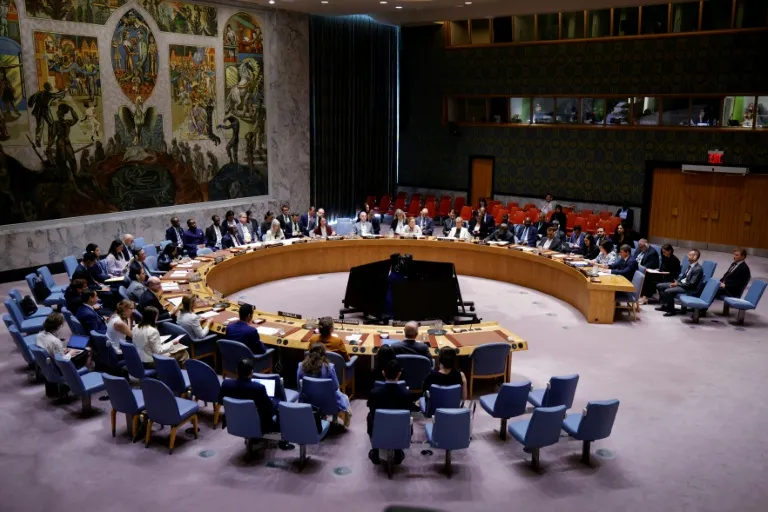
The annual United Nations General Assembly (UNGA) High-level Week is set to convene world leaders, with pressing global issues such as escalating Middle East tensions, the rapid advancement of artificial intelligence, and the intensifying climate crisis dominating the agenda. The gathering provides a critical platform for diplomatic engagement on conflicts, technological governance, and environmental sustainability.
Middle East Tensions and Ukraine Conflict Take Center Stage
The volatile situation in the Middle East, particularly concerning Iran, and its global ramifications are expected to be a primary focus. This comes amid ongoing conflict in Ukraine, where President Volodymyr Zelensky is anticipated to press allies for continued support and attention to his country’s defense needs. Russia’s response to drone strikes on its energy infrastructure adds another layer of complexity to the already fraught geopolitical landscape.
UN Secretary-General António Guterres expressed grave concern about the escalating global instability. “When we see the Russia-Ukraine war, and when we see the whole Middle East, every day things get a little bit worse,” Guterres stated, warning of a “serious risk of an explosion” if current trends continue without improvement.
Divisive Issues on the UNGA Agenda
Beyond the immediate conflicts, several long-standing and divisive issues will be addressed. The Israeli-Palestinian conflict, encompassing the stalled Gaza peace process and Israel’s settlement expansion in the West Bank, remains a significant point of contention. The attendance of Israeli Prime Minister Benjamin Netanyahu is planned for a brief visit, while Palestinian leaders, like Mahmoud Abbas, have faced visa denials for international forums, reflecting ongoing diplomatic challenges.
China’s President Xi Jinping will not attend the UNGA, opting instead for a state visit to Washington. Beijing’s foreign policy, including its relationships with Russia and Iran, will be subjects of discussion among global powers. Experts note that China often views the UNGA as a forum primarily for the United States, with Chinese diplomats aiming to project an image of stability.
Artificial Intelligence: Opportunities and Existential Threats
The rapid development and potential implications of artificial intelligence (AI) are poised to be a major topic of discussion. Following warnings from technology leaders about AI’s potential threats to humanity, the UNGA will host dialogues on its governance and safety. An emergency Security Council meeting is scheduled to specifically address AI.
Nicolas Miailhe, an expert in AI governance, highlighted the importance of the UNGA in potentially shaping a global framework for AI. “This year’s UNGA could be where a plan starts to take shape to define what the world wants from industry’s pledge on safety and who is responsible for monitoring it,” Miailhe commented. He acknowledged, however, that the practical implementation and agreement on such a plan would be challenging.
Amidst the competitive landscape between the United States and China in AI development, Secretary-General Guterres has called for enhanced global cooperation. “The world cannot afford a race to the bottom on AI safety,” he urged, emphasizing the need for international coordination to manage the risks associated with AI.
Climate Change: An Urgent Global Imperative
With record-breaking heat and an increase in extreme weather events globally, climate change remains a critical item on the UNGA’s agenda. Secretary-General Guterres will continue his advocacy for robust international action to combat the climate crisis. He is set to convene a meeting focused on Climate Action and the Just Transition, followed by a dedicated session on sea-level rise, a particularly acute threat to low-lying island nations.
The environmental impact of AI, alongside its potential benefits, is also expected to be a significant theme during the UNGA and the concurrent Climate Week in New York. This broader event brings together activists, corporations, and academics to discuss climate solutions.
The Future of the UN and Leadership Succession
Behind the public sessions, discussions will also focus on the future of the United Nations itself. Power brokers will engage in negotiations regarding the selection of a candidate to lead the organization, which faces internal divisions and financial challenges. While a breakthrough is not anticipated, the permanent members of the Security Council—Britain, France, Russia, China, and the United States—may use the gathering to advance discussions on this critical leadership transition.
The current Secretary-General’s term concludes on December 31, 2026. His tenure has been marked by significant global challenges, including widespread conflict, the COVID-19 pandemic, growing inequality, and political polarization. European diplomats have expressed that the selection process has thus far been unproductive, with no clear consensus emerging.
Conclusion
The UN General Assembly High-level Week presents a crucial moment for global diplomacy, bringing together leaders to confront complex challenges. From de-escalating conflicts and navigating the ethical landscape of artificial intelligence to accelerating climate action and ensuring the stability of international institutions, the outcomes of these discussions will shape the trajectory of global cooperation in the coming years.
