

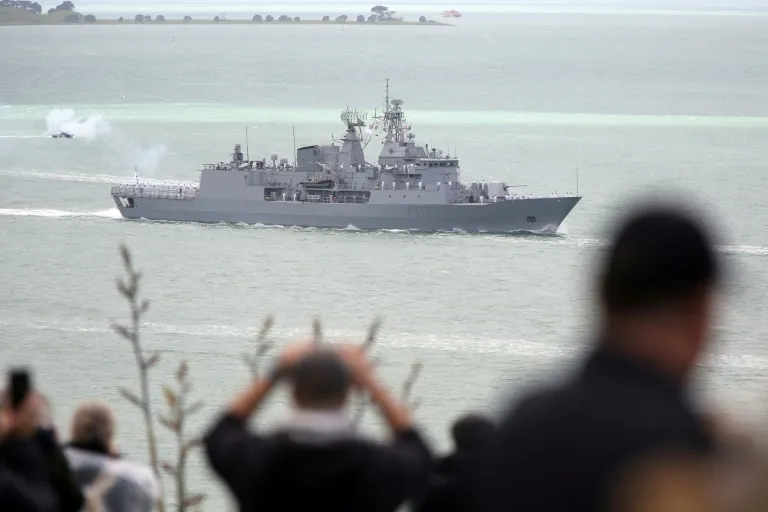
Two Royal New Zealand Navy vessels, HMNZS Te Mana and HMNZS Aotearoa, successfully completed a transit of the Taiwan Strait on September 18th. The ships were en route to participate in a joint exercise with the Philippines. This passage through the strategically vital waterway has been characterized by New Zealand officials as a routine operation conducted in accordance with international law.
Naval Passage Through a Contested Waterway
The Taiwan Strait, a major artery for global maritime trade, is a focal point of geopolitical tension. China asserts sovereignty over the strait, considering it part of its territorial waters. In contrast, New Zealand, alongside nations such as the United States and Australia, recognizes the strait as international waters, open to navigation by all countries. The recent transit by the New Zealand naval task group underscores this differing perspective on the waterway’s status.
A spokesperson for the New Zealand Defence Force commented on the operation, stating, “The Royal New Zealand Navy has a long history of deployments in the region which includes passage along regular routes as ships sail between regional engagements.” The spokesperson further confirmed, “As part of its passage, the Task Group completed a transit of the Taiwan Strait.”
Official Statements on the Transit
Prime Minister Christopher Luxon addressed the naval activity on Monday, reassuring the public that the transit was “routine.” He emphasized the safety and legality of the operation, telling reporters, “It was all safe, conducted in international waters as you would expect.” Luxon reiterated that the passage adhered to international law and occurred within international waters, reinforcing New Zealand’s stance on freedom of navigation.
This is not the first time New Zealand naval vessels have traversed the Taiwan Strait. A similar passage was conducted in November 2025, indicating a consistent pattern of naval presence and operations in the region by the Royal New Zealand Navy.
Geopolitical Context of the Taiwan Strait
The Taiwan Strait has become increasingly significant as a point of contention in recent years. Tensions have escalated due to increased military activities and pressure exerted by China towards Taiwan. In response, Taipei has been bolstering its own defense capabilities and spending. This heightened military posture and diplomatic maneuvering by regional and global powers make any naval transit through the strait a closely watched event.
International Law and Freedom of Navigation
The principle of freedom of navigation is central to the international maritime order. For countries like New Zealand, passages through straits such as the Taiwan Strait are seen as exercising a fundamental right under international law. These operations are often conducted to assert that such waterways are not solely under the jurisdiction of the bordering states but are open for passage by all vessels, particularly for commercial and military transit.
The Anzac-class frigate HMNZS Te Mana and the sustainment vessel HMNZS Aotearoa are key components of New Zealand’s naval capabilities. Their deployment and transit through the Taiwan Strait are part of broader regional engagement strategies aimed at maintaining stability and security in the Indo-Pacific. Such deployments also serve to strengthen alliances and partnerships through joint exercises and coordinated operations.
Historical Precedent and Future Implications
The repeated transits by New Zealand ships, including the one in November 2025 and the recent September 18th passage, highlight a deliberate policy of asserting navigational rights. These actions occur against a backdrop of growing international concern over the potential for conflict in the region. By conducting these transits, New Zealand signals its commitment to upholding international norms and its strategic interests in the Indo-Pacific.
The international community largely views the Taiwan Strait as a critical international waterway. The presence of naval vessels from various nations, including those allied with the United States, underscores a collective interest in maintaining open sea lanes and deterring any actions that could unilaterally alter the status quo. The routine nature of these passages, as described by New Zealand officials, is intended to normalize such operations and reinforce the legal framework governing international straits.
Conclusion
The recent transit of the Taiwan Strait by HMNZS Te Mana and HMNZS Aotearoa represents a continuation of New Zealand’s established practice of operating in accordance with international law within key global maritime routes. While conducted routinely and safely, these passages occur within a complex geopolitical environment, underscoring the ongoing importance of freedom of navigation and the strategic significance of the Taiwan Strait.
