

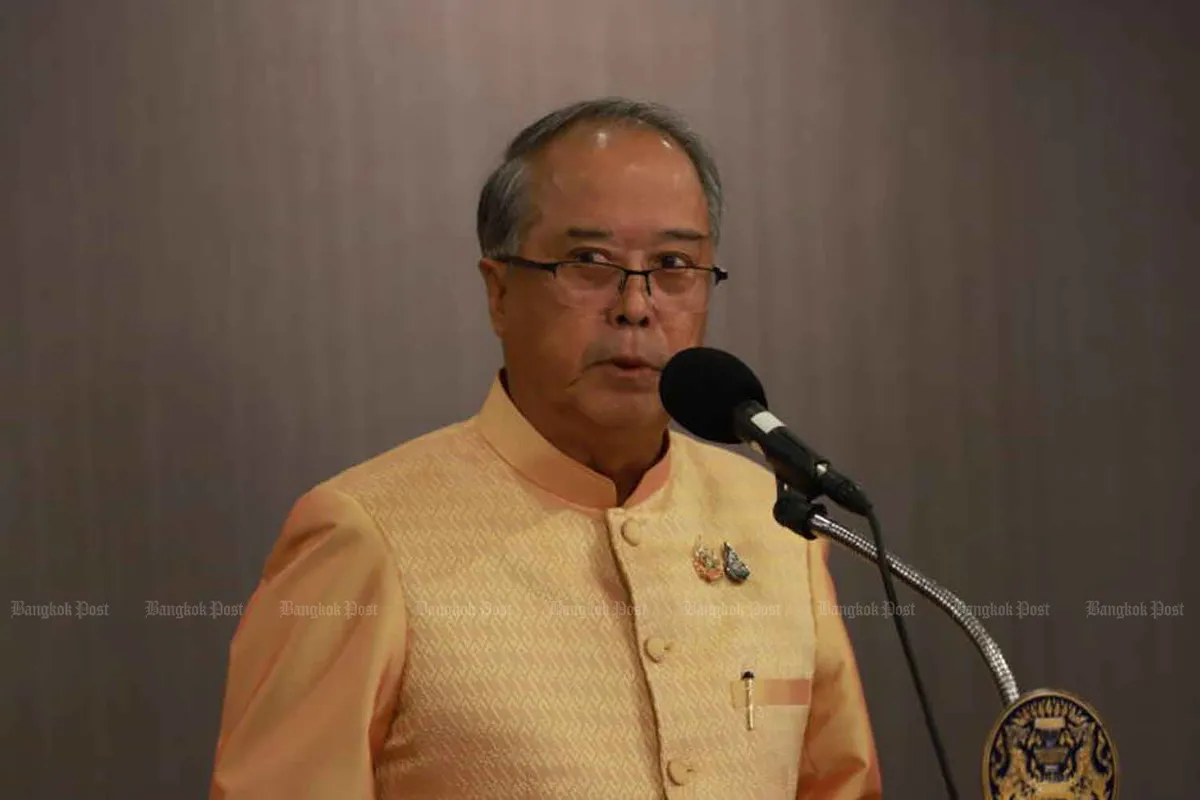
Key lawmakers advance constitutional amendment proposal
A significant push for constitutional reform is gaining traction, with a proposed amendment to Section 256 of the nation’s charter securing substantial backing from Members of Parliament. The initiative, spearheaded by Mr. Chousak, has garnered support from 189 MPs, comfortably exceeding the constitutional requirement of one-fifth of the House.
Diverse Parliamentary Coalition Forms Behind Reform Effort
The signatories represent a broad spectrum of political parties, demonstrating a cross-party commitment to revising the constitution. Key supporters include 72 MPs from the Pheu Thai Party, 30 from the Bhumjaithai Party, 36 from the People’s Party, 26 from the Klatham Party, 18 from the Democrat Party, five from the Prachachat Party, and two from the United Thai Nation Party.
Proposed New Constitution Drafting Process Outlined
The proposed amendment outlines a multi-stage process for drafting a new constitution. Under this plan, voters would initially elect 300 candidates at the provincial level. From this pool, parliament would then select 100 members for a Constitution Drafting Assembly (CDA). An additional 52 experts, drawn from various sectors including government, the judiciary, academia, civil society, business, and professional organizations, would also participate in the drafting.
Committees Established for Drafting and Public Input
Further enhancing the drafting process, the bill proposes the establishment of a Constitution Drafting Committee, composed of CDA members and appointed experts. A parallel Public Participation Committee is also envisioned, tasked with gathering public input and comprising representatives from the CDA and media organizations.
Parliamentary Review and Amendment Procedures Detailed
Once a draft constitution is finalized, it will be presented to parliament for deliberation. While lawmakers will have the opportunity to propose amendments, any attempt to override a rejection of proposed changes by the CDA would necessitate a two-thirds majority vote in parliament. The ultimate approval of the new constitution would require a simple majority vote within the parliamentary session.
Core Principles for New Constitution Emphasized
The proposal explicitly mandates that the CDA must adhere to several foundational principles. These include preserving Thailand’s status as a unitary state, maintaining its democratic system with the King as head of state, upholding the rule of law, ensuring equality, establishing robust checks and balances, and promoting decentralization.
Optimism for Advancement to Committee Stage
Mr. Chousak expressed confidence that this bill, alongside other constitutional amendment proposals, will progress to the committee stage for further discussion and refinement. “While there are still some differences from previous proposals, these can be resolved through discussion and mutual understanding,” he stated.
Call for Unity on Initial Reading of Amendment Bills
In related developments, Mr. Parit Wacharasindhu, deputy leader of the People’s Party and a list-MP, urged fellow MPs to support all constitutional amendment bills during their initial reading. He suggested that any disagreements over specific details should be deferred to the committee stage for resolution.
Anticipation of Multiple Amendment Bills in Upcoming Session
Mr. Parit indicated that a total of five or six amendment bills are anticipated to be submitted prior to a joint parliamentary session tentatively scheduled for July 7-8, signaling a busy period for legislative debate on constitutional matters.
