

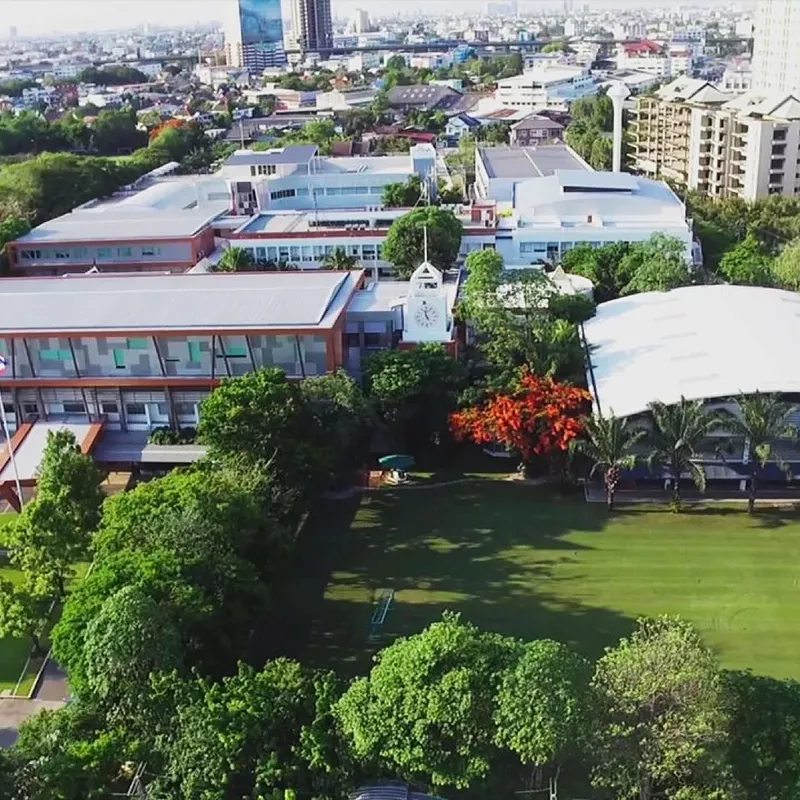
International School Enrollment Soars in Thailand
Thailand has witnessed a dramatic surge in the number of international schools, expanding from approximately 100 in 2014 to 275 today. This growth is mirrored by a substantial increase in student enrollment, climbing from under 50,000 to nearly 93,000 during the same period. This expansion is particularly notable given the backdrop of declining birth rates, a shrinking school-age population, and a domestic economy that has not always been favorable to families footing the tuition bills.
The demand for international education is increasingly driven by Thai families, rather than expatriates. Annual tuition fees at the top ten international schools can range from 905,000 to over a million baht. Families making this significant financial commitment are making a strategic decision, investing not only in educational quality but also in a specific vision for their child’s future. The international school is perceived as more than just an academic institution; it serves as a social signal, a networking opportunity, and an early positioning for a child’s global engagement. Enrollment is often viewed as a symbol of status and international integration, with parents seeing it as an investment in future opportunities and social prestige.
Shaping a New Generation of Thai Identity
This trend raises pertinent questions about how Thai identity is transmitted across generations. Children educated in English, following international curricula, and interacting with a diverse, multinational student body, are experiencing their youth in Thailand differently than their parents did. While most international school students maintain a strong sense of Thai identity, the nuances of this identity are shaped by different cultural references, social circles, and a distinct relationship with the public sphere compared to previous generations.
Concerns regarding the quality of Thailand’s public education system are a significant factor driving this shift. Issues such as overcrowded classrooms, a reliance on rote learning, and underperformance in international assessments compared to regional peers are well-documented. Parents opting for international schools are often responding pragmatically to the offerings and limitations of the Thai education system.
Access and Exclusivity in the Education Boom
The rapid growth of the international school sector highlights a broader question about equitable access to the version of Thai society that graduates of these institutions will inhabit. While the sector’s resilience and increasing local demand suggest more Thai families are finding ways to enroll their children, access remains closely tied to income and geographic location. Enrollment is concentrated in Bangkok and a few major cities, with fee structures that effectively exclude the majority of the population. The inherent advantages of international education, such as peer networks, alumni connections, and fluency in global professional culture, tend to reinforce existing advantages, benefiting a segment of Thai society that was already well-positioned.
Thailand has been actively asserting its global presence in various sectors, including food, fashion, and culture. The international school boom can be seen as another manifestation of this confidence, preparing a generation to navigate the world fluidly. The crucial question moving forward is what these globally-minded graduates will bring back to Thailand, and whether their contributions will benefit the nation beyond its most mobile citizens.
