

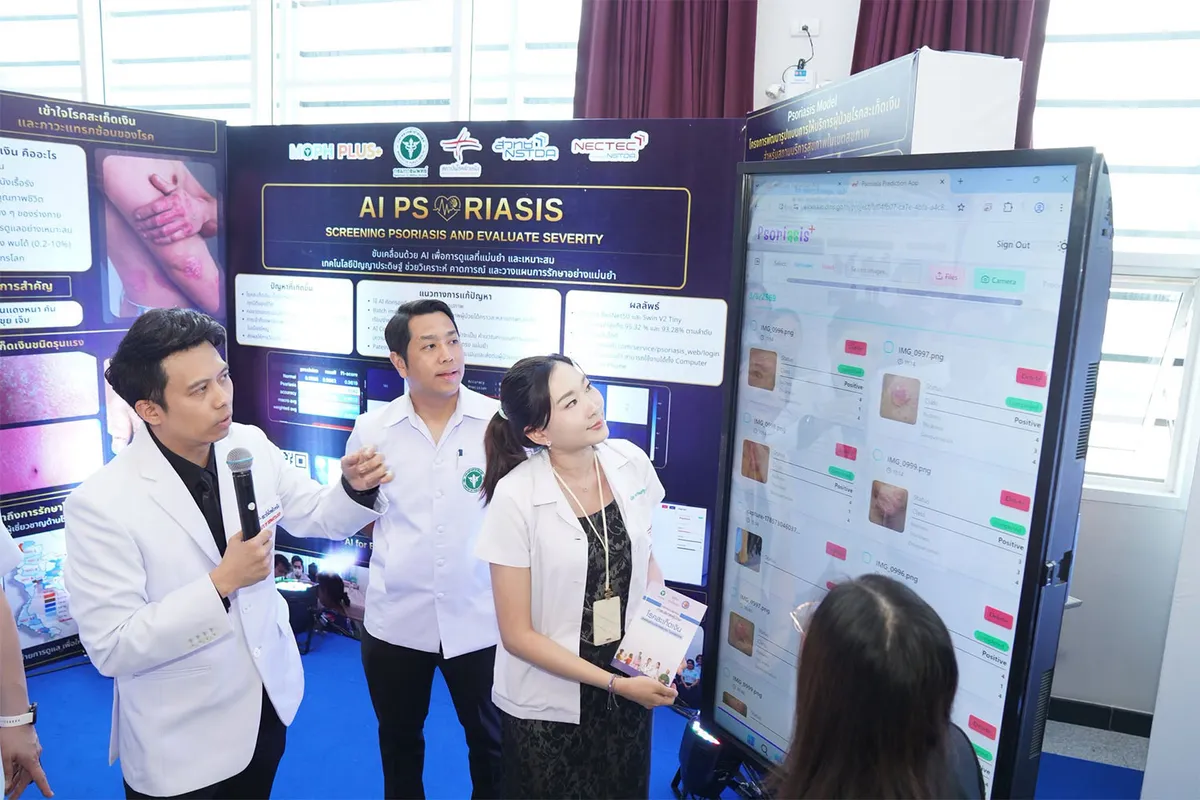
A new artificial intelligence tool designed to screen for psoriasis is set to enhance public healthcare services by leveraging digital technology for faster and more accessible assessments. This initiative, announced Tuesday by deputy government spokeswoman Ploythalay Laksameesaengjan, aligns with the government’s broader strategy to bolster public health infrastructure through technological advancements.
Revolutionizing Psoriasis Detection with AI
The AI Psoriasis system, developed by the Institute of Dermatology under the Department of Medical Services, represents a significant step forward in dermatological diagnostics. It employs sophisticated artificial intelligence algorithms to analyze photographs of skin lesions, meticulously evaluating key indicators such as redness, thickness, and scaling characteristic of psoriasis. The primary objective is to standardize and accelerate the diagnostic process, particularly benefiting regions that face a shortage of specialized dermatologists.
This innovative approach aims to democratize access to expert-level screening, bringing crucial health assessments closer to patients, regardless of their geographical location. By enabling quicker identification of the condition, the system facilitates more timely referrals to specialists, potentially improving patient outcomes and reducing the burden on individuals who would otherwise need to travel long distances for consultations.
Accuracy and Validation of the AI Tool
Initial testing of the AI Psoriasis system using a dedicated research dataset demonstrated remarkable accuracy, achieving up to a 95% success rate in identifying psoriasis. While these results are highly promising, developers acknowledge the necessity for further validation. Comprehensive real-world testing across diverse patient populations and varied clinical settings is planned to ensure the tool’s robustness and reliability in everyday healthcare scenarios.
The development team is committed to refining the AI’s performance, ensuring it can accurately assess a wide spectrum of skin tones and lesion presentations. This ongoing validation process is critical for building trust and ensuring equitable access to the technology’s benefits.
Implementation and Future Potential
The initial rollout of the AI Psoriasis system will be strategically implemented in healthcare facilities that are already engaged in collaborative projects with the Institute of Dermatology. Eligibility for participation will depend on the facility’s readiness, including the availability of trained personnel, robust data management systems, and established referral pathways for specialist care. This phased approach ensures that the system is integrated effectively and can provide maximum benefit to patients and healthcare providers.
Ms. Ploythalay highlighted the broader implications of this project, stating that the system is expected to significantly reduce patient travel time and associated costs. Furthermore, it is envisioned as a foundational model for the development of similar AI-powered diagnostic support tools for a range of other skin conditions. This opens up exciting possibilities for expanding the application of AI in dermatology and improving the efficiency and reach of skin health services nationwide.
Broader Impact on Public Healthcare
The introduction of the AI Psoriasis screening tool is more than just a technological upgrade; it represents a fundamental shift towards a more proactive and accessible public healthcare system. By embedding advanced diagnostic capabilities within primary care settings, the government aims to create a more efficient healthcare continuum. This includes:
- Early Detection: Enabling earlier identification of psoriasis, which can lead to more effective management and prevention of complications.
- Reduced Healthcare Costs: Potentially lowering overall healthcare expenditures by streamlining the diagnostic process and reducing the need for expensive specialist consultations for initial screening.
- Improved Patient Experience: Offering greater convenience and reducing the anxiety associated with long waiting times and travel for medical appointments.
- Support for Healthcare Professionals: Providing a valuable tool to assist healthcare workers, especially in underserved areas, by offering consistent and rapid preliminary assessments.
The success of this AI initiative could pave the way for similar digital health solutions, transforming how various diseases are screened and managed within the public health sector. It underscores a commitment to harnessing innovation to deliver comprehensive, convenient, and high-quality healthcare services to all citizens.
Conclusion
The AI Psoriasis system marks a significant advancement in leveraging artificial intelligence to enhance public health services. By improving the speed, accuracy, and accessibility of psoriasis screening, this technology promises to benefit patients and healthcare providers alike. Its phased implementation and ongoing validation underscore a careful and strategic approach to integrating digital tools into the healthcare landscape, with the potential to serve as a blueprint for future AI applications in diagnosing and managing other dermatological conditions.
