

The Federal Reserve has opted to maintain its benchmark interest rate at its current level, a decision widely anticipated by financial markets. Officials cited ongoing concerns about inflation, particularly driven by energy prices in the short term.
New Fed Chief Abstains from Rate Outlook
In a notable departure from recent practice, the new Federal Reserve chief declined to offer his own projections for future interest rate movements. This comes as the central bank’s latest Summary of Economic Projections (SEP) revealed a divided outlook among policymakers, with a significant portion anticipating a rate hike later this year.
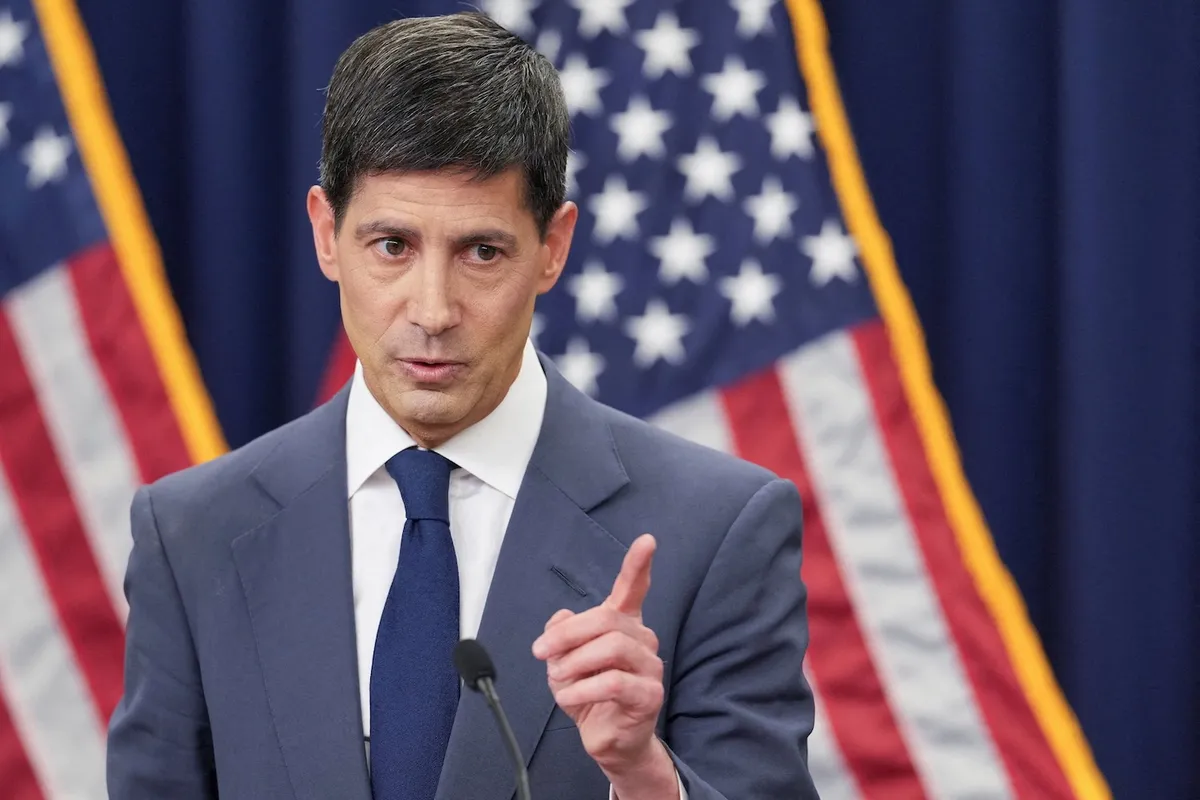
During a press conference following the monetary policy meeting, the Fed chief stated, “It’s been the practice of this committee for participants to submit these projections, and I have encouraged my colleagues to continue to do so.” He elaborated on his personal decision, saying, “I however refrained from offering any projections of my own, consistent with my long-held views on the SEP, at least as it is currently structured.” This stance aligns with his established perspective on the utility of the quarterly economic outlook report.
President Expresses Confidence in Fed Leadership
President Donald Trump, when questioned about the Federal Open Market Committee’s projections indicating nearly half of its members believe a rate increase will be necessary this year, conveyed his confidence in the current Fed leadership. “It’s all right. Whatever,” Trump remarked when asked about the decision to keep interest rates steady. He had previously been a vocal critic of his predecessor, Jerome Powell, often advocating for lower borrowing costs to stimulate the economy and housing market.
However, on this occasion, Trump offered a different sentiment. “It could happen,” he responded when asked about the possibility of a rate hike. “It’s hard to believe. It just keeps the country down and it’s so, it’s so, unusual. But we have a very good guy over there right now so I’m guided by what he wants.”
Fed to Review Communication Strategies
The Fed chief also announced the formation of a task force comprising Fed staff and external experts to scrutinize the central bank’s communication practices. A key focus of this review will be the “dot plot,” a projection tool the Fed has published quarterly since 2012 to offer the public insights into its potential future monetary policy direction.
He indicated that a revised communication framework could be in place by year-end. The task force is part of broader reform efforts across four other key areas within the Fed.
Challenges and Effectiveness of Forward Guidance
Policymakers themselves acknowledge that the dot plot has limitations, such as not fully illustrating how individual forecasts for labor market conditions and inflation influence their rate path expectations. Nevertheless, the tool is seen as part of a broader trend toward increased transparency, which advocates believe has enhanced public and investor understanding of the central bank’s thinking and thereby improved the effectiveness of monetary policy.
The current Fed chief has long voiced reservations about such forward guidance, arguing that it can unduly constrain policymakers by committing them to a specific rate trajectory without adequate flexibility to respond to evolving economic data.
Divergent Views on Future Rate Path
The released projections reveal a notable division among Fed officials regarding the future direction of interest rates. Half of the participants who submitted projections anticipate a need to raise the policy rate this year. Among those expecting higher rates, six out of the nine believe more than a single quarter-point hike will be required.
Conversely, eight of the Fed chief’s colleagues believe that maintaining interest rates within the current range of 3.50% to 3.75% will be sufficient to bring inflation back down to the Fed’s 2% target. One policymaker, however, suggested that a rate cut might be necessary.
These projections highlight a significant shift in the central bank’s internal dialogue. The discussion has moved from a primary focus on how long to maintain current rates before considering cuts, to a growing concern that rate increases may be needed to prevent inflationary pressures from higher energy costs from becoming more entrenched in the broader economy.
Global oil prices have seen a substantial decline recently, following announcements of a potential de-escalation in geopolitical tensions and the reopening of key shipping routes. However, the speed of recovery for shipping and exports remains uncertain, particularly given the damage sustained by energy infrastructure during recent conflicts. Inflation has consistently remained above the Fed’s 2% objective for over five years.
