

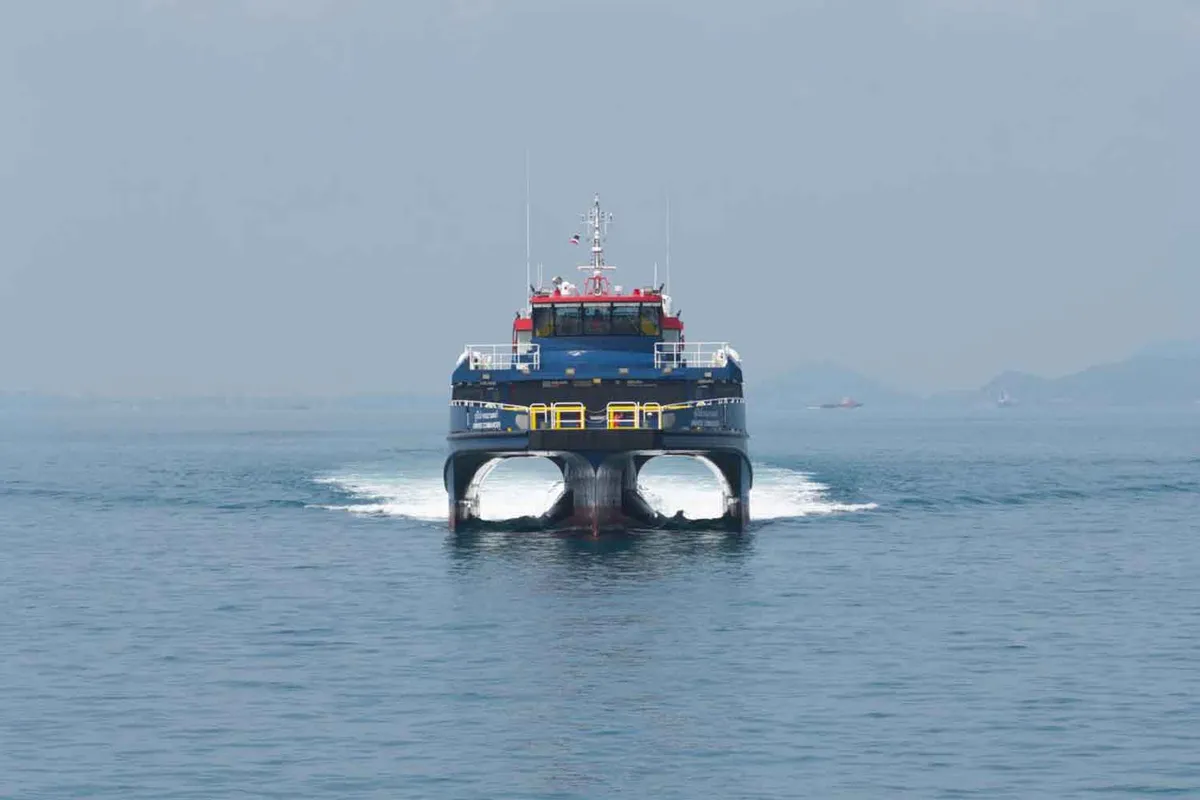
Chevron Thailand is enhancing its upstream energy capabilities with the introduction of a new high-speed trimaran vessel and an Integrated Operations Center (IOC). These advancements aim to improve the transportation of oil and gas workers and optimize offshore operations, contributing to Thailand’s long-term energy security. The company emphasizes the critical role of innovative technology in managing mature offshore assets and maintaining domestic energy supplies amidst operational challenges.
High-Speed Trimaran Enhances Worker Transport
The newly launched 90-seat trimaran vessel represents a significant upgrade in transporting personnel between onshore facilities and offshore platforms. Traditional single-hull crew boats often struggle with rough seas, especially during Thailand’s monsoon season, leading to crew fatigue and operational delays. The trimaran’s distinctive three-hull structure is designed to rise partially above the water at high speeds, significantly reducing vessel roll and improving stability.
This advanced design leads to several key benefits:
- Reduced Transit Times: The trimaran can cut journey times by up to 30%, ensuring workers reach their destinations more quickly.
- Minimized Fatigue: The smoother ride in challenging sea conditions helps reduce fatigue among the offshore workforce, who typically work demanding three-week rotations.
- Improved Reliability: Enhanced wave tolerance and robust safety features make the vessel particularly well-suited for the often severe conditions in the Gulf of Thailand, especially during the monsoon months from October to December.
- Cost-Effective Alternative: The trimaran offers a high-capacity, more economical alternative to helicopter transport, which typically carries fewer passengers at a substantially higher cost per trip.
“Our primary mission is to create energy security for Thailand,” stated Mr. Chatit Huayhongtong, who highlighted the company’s commitment to leveraging technology. “As field potential naturally diminishes over decades of production, bringing in innovative technologies to manage operating costs, enhance safety, and maintain economic viability across our operations is essential.”
Integrated Operations Center Optimizes Offshore Production
Complementing the new vessel, Chevron Thailand has also deployed its Integrated Operations Center (IOC). This digital hub serves as a central nervous system for offshore operations, consolidating real-time data streams, platform monitoring, and operational controls into a single, efficient system. The IOC is designed to optimize mature offshore natural gas operations in the Gulf of Thailand.
The implementation of the IOC addresses the critical need for efficiency and cost reduction in managing aging offshore assets, often referred to as brownfield sites. Key advantages of the IOC include:
- Reduced Unplanned Downtime: By centralizing data and enhancing monitoring capabilities, the IOC allows for proactive identification and resolution of potential issues, minimizing unexpected shutdowns.
- Streamlined Decision-Making: Real-time data and integrated controls empower operational teams to make faster, more informed decisions, improving overall efficiency.
- Optimized Staffing: The IOC helps minimize the need for a large permanent staff presence on remote rigs by enabling remote monitoring and control, thereby enhancing safety and reducing logistical overhead.
Strategic Importance for Thailand’s Energy Sector
Chevron Thailand plays a vital role in the nation’s energy landscape, currently operating three major offshore production platforms: Benjamas, North Pailin, and South Pailin. Collectively, these facilities are responsible for approximately 20% of Thailand’s total natural gas supply. The company’s ongoing investments in technology, such as the high-speed trimaran and the IOC, underscore its commitment to sustaining domestic energy production.
The focus on technological adoption is crucial as the energy industry navigates the complexities of maintaining production from fields that have been operational for many years. By reducing production costs and maximizing efficiency, Chevron aims to ensure the continued economic viability of its operations and contribute to the stability of Thailand’s energy resources. The strategic integration of advanced transport solutions and digital operational management signifies a forward-looking approach to energy production in the region.
Conclusion
The introduction of the high-speed trimaran and the Integrated Operations Center by Chevron Thailand marks a significant step in bolstering the nation’s energy infrastructure. These innovations directly address the challenges of offshore operations, from ensuring the safe and efficient transport of a vital workforce to optimizing the complex processes involved in natural gas production. By embracing cutting-edge technology, Chevron is reinforcing its commitment to energy security and operational excellence in the Gulf of Thailand, ensuring the sustained contribution of its offshore assets to the country’s energy needs.
