

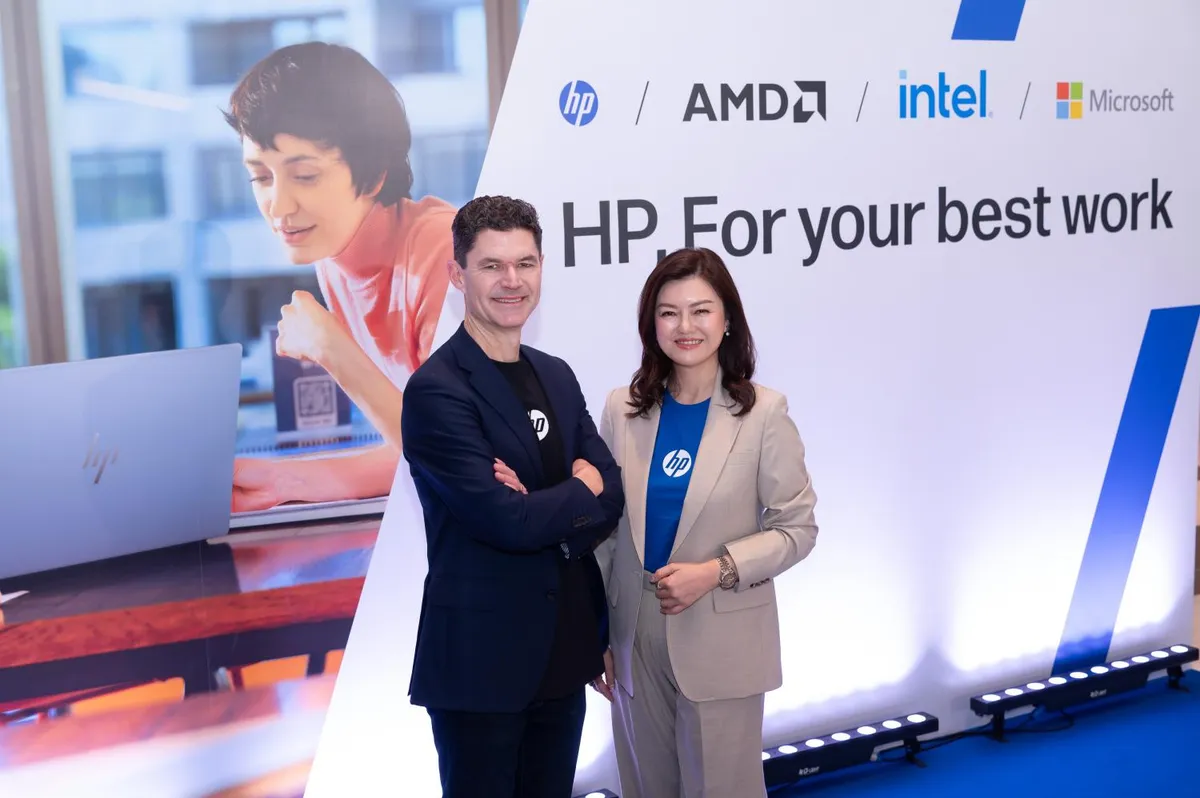
HP Prioritizes On-Device AI, Eyes Thailand for Manufacturing Prowess
The technology giant HP is positioning Thailand as a significant market for artificial intelligence (AI) development and a crucial global manufacturing base. The company is focusing on ‘edge AI,’ a strategy that involves running AI models directly on hardware devices rather than relying solely on cloud servers.
According to Mike Boyle, senior vice-president and managing director for HP Greater Asia, this strategic shift is driven by the inherent challenges of cloud computing, including high costs, latency issues, and data security concerns. “HP’s strategy is focused on enabling AI at the edge of local devices rather than relying entirely on the cloud,” Boyle stated. He elaborated that as businesses scale their AI usage, the economics are evolving. The increasing demands of power consumption, token usage, and latency make it impractical for every AI task to be processed in the cloud. This makes edge AI increasingly vital, particularly for enterprises requiring faster responses, enhanced data control, and reduced operational expenses.
AI Integration Across HP’s Product Line
This move towards edge AI aligns with a significant surge in AI PC adoption. In the second quarter, AI-enabled models constituted 44% of HP’s global PC shipments, a notable increase from over 35% in the preceding quarter. The company is also embedding AI more deeply into its workplace device systems. A prime example is HP IQ, an upcoming on-device personal assistant for notebooks. Designed to operate locally, even with intermittent cloud access, HP IQ aims to streamline task management, bolster data protection, and facilitate seamless connections with nearby devices like printers and meeting-room systems.
Furthermore, HP is promoting its HP Workforce Experience Platform, an AI-driven solution for IT departments. This device-agnostic console analyzes employee usage and device performance data to assist companies in matching employees with appropriate hardware, optimizing spending, boosting productivity, and managing device refresh cycles more efficiently.
Security as a Core Component of Edge AI
Security remains a paramount aspect of HP’s edge AI strategy. Boyle highlighted that HP’s PCs, printers, and conferencing devices incorporate hardware-enforced protection mechanisms. These features are engineered to detect potential attacks, isolate compromised devices, and enable recovery from a trusted firmware state.
HP has also introduced NearSense, a spatial connectivity technology. This innovation allows nearby HP, Android, and meeting-room devices to discover and connect with each other without requiring cloud access or manual pairing. “HP is focusing on integrating all of its devices and experiences seamlessly under one unified ecosystem to better serve the end-user,” Boyle remarked.
Thailand’s Leading Role in AI Adoption
Boyle underscored Thailand’s importance to HP, citing the country’s digital economy growth at an impressive 7.5% annually, surpassing overall GDP growth. The nation has witnessed rapid uptake of AI tools within the workplace. Notably, Thailand is emerging as a global leader in agentic AI adoption. The 2025 Microsoft Work Trend Index indicates that 68% of Thai organizations are already implementing AI agents, representing the highest adoption rate among 31 surveyed countries. The same survey also revealed that 90% of Thai business leaders anticipate using AI agents as ‘digital team members’ alongside human employees within the next 12 to 18 months.
Thailand as a Strategic Manufacturing Hub
Emphasizing Thailand’s critical role as a global supply hub, Boyle stated, “HP has a very long and successful manufacturing footprint in Thailand. We’ve been manufacturing here since 1998, nearly 300 million HP printers have been produced in Thailand and shipped globally.” He described Thailand as a strategic supply hub not only for Asia but for the entire world. He also noted that approximately 65% of the components in HP products are sourced locally.
Varanit Athijaratroj, managing director of HP Thailand, confirmed the company’s recent expansion in the country, which includes adding laser printer manufacturing to its existing inkjet operations. She added that local production provides HP with a distinct advantage in serving the Thai market while simultaneously contributing to the broader national economy.
