

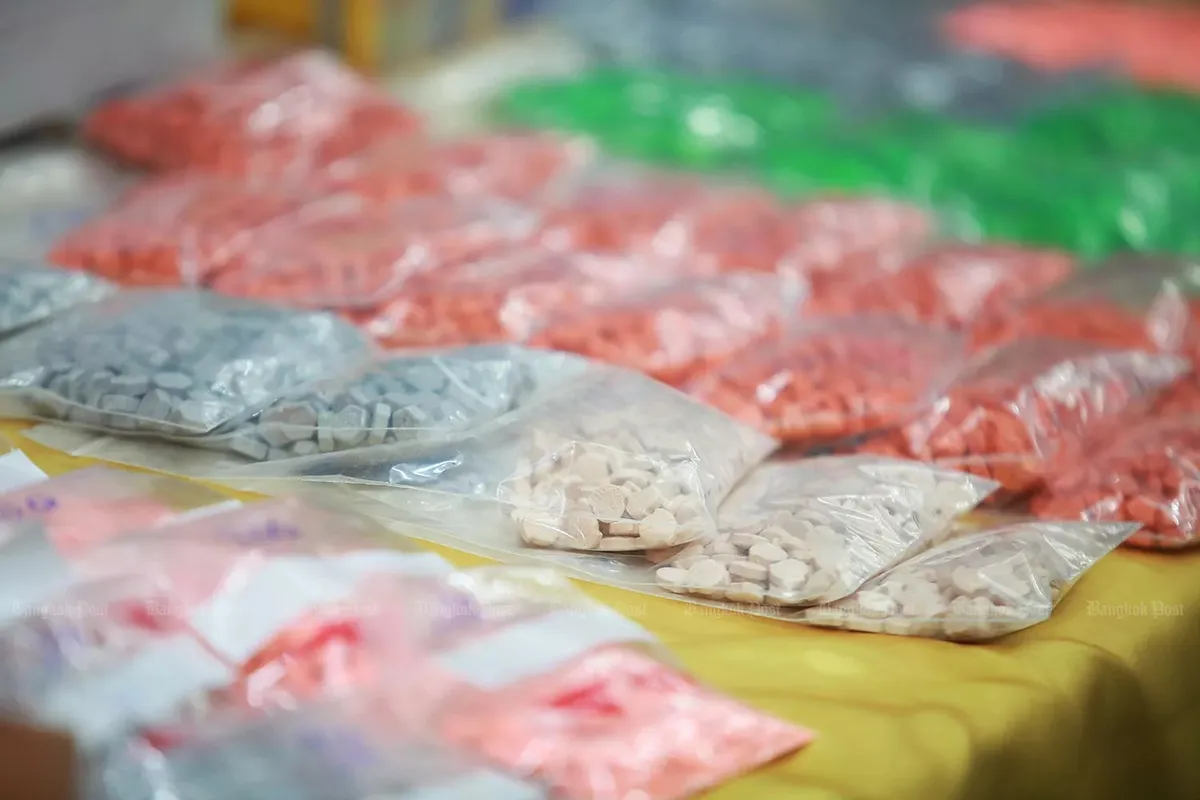
A senior police officer has been apprehended in connection with a significant drug trafficking operation, marking a critical development in the ongoing “War on Drugs” policy. The arrest, which occurred last week, is part of a broader initiative targeting state officials implicated in supporting or facilitating drug networks. The operation specifically focused on provinces in northern and northeastern Thailand, aiming to dismantle organized crime elements that have infiltrated public service.
Investigation Uncovers Alleged Official Complicity
The investigation that led to the officer’s arrest began in May of the previous year following a substantial seizure of 529 kilograms of ketamine in Chiang Rai province. This discovery served as a crucial starting point, prompting authorities to delve deeper into the potential involvement of individuals within the government apparatus. Three months after the initial seizure, immigration officials successfully apprehended one of the alleged key figures in the drug ring as they attempted to enter Thailand.
Building on these successes, investigators zeroed in on the police lieutenant colonel. On June 22, the officer was taken into custody in Loei province. Authorities have presented allegations that the officer misused their position by leaking sensitive government information to the drug network. It is further alleged that this information was used to help suspects evade law enforcement and prosecution, thereby undermining the integrity of the justice system.
Confession and Further Discoveries
Initial reports indicate that the arrested officer confessed to the charges leveled against them. A subsequent search of the officer’s official workspace yielded further evidence, with authorities discovering 75 methamphetamine pills concealed within a desk drawer. This discovery suggests a direct link between the officer and illicit substances, beyond the alleged facilitation of trafficking activities.
Broader Network Under Scrutiny
The operation did not conclude with the arrest of the police lieutenant colonel. The day following the officer’s apprehension, law enforcement officials in Loei province arrested another individual. This second suspect is reportedly involved in managing financial transactions for the network, specifically handling money transfers and disbursing payments for transportation logistics related to drug smuggling. This arrest underscores the multi-faceted nature of the criminal enterprise and the efforts to dismantle it at various operational levels.
Background of the “War on Drugs” Policy
The current crackdown is being conducted under the framework of Prime Minister Anutin Charnvirakul’s “War on Drugs” policy. This policy emphasizes a zero-tolerance approach towards drug trafficking and aims to eradicate its presence within the country. A significant component of this strategy involves scrutinizing and taking action against any public officials found to be complicit, either directly or indirectly, with drug syndicates. The policy seeks to restore public trust by ensuring that those sworn to uphold the law are not undermining it.
Implications and Future Actions
The arrest of a senior police officer highlights the persistent challenge of combating drug trafficking, particularly when it involves individuals who are meant to be part of the solution. This incident is expected to trigger further internal reviews within law enforcement agencies to reinforce vetting processes and accountability measures. Authorities have stated their commitment to continuing these operations, ensuring that no one, regardless of their position, is above the law when it comes to combating the drug menace.
The comprehensive nature of the investigation, stemming from a large-scale seizure and leading to the alleged involvement of a law enforcement official, demonstrates a determined effort to root out corruption and dismantle drug networks from within. The focus remains on bringing all individuals involved in the trafficking chain to justice and preventing the infiltration of criminal elements into public institutions.
