

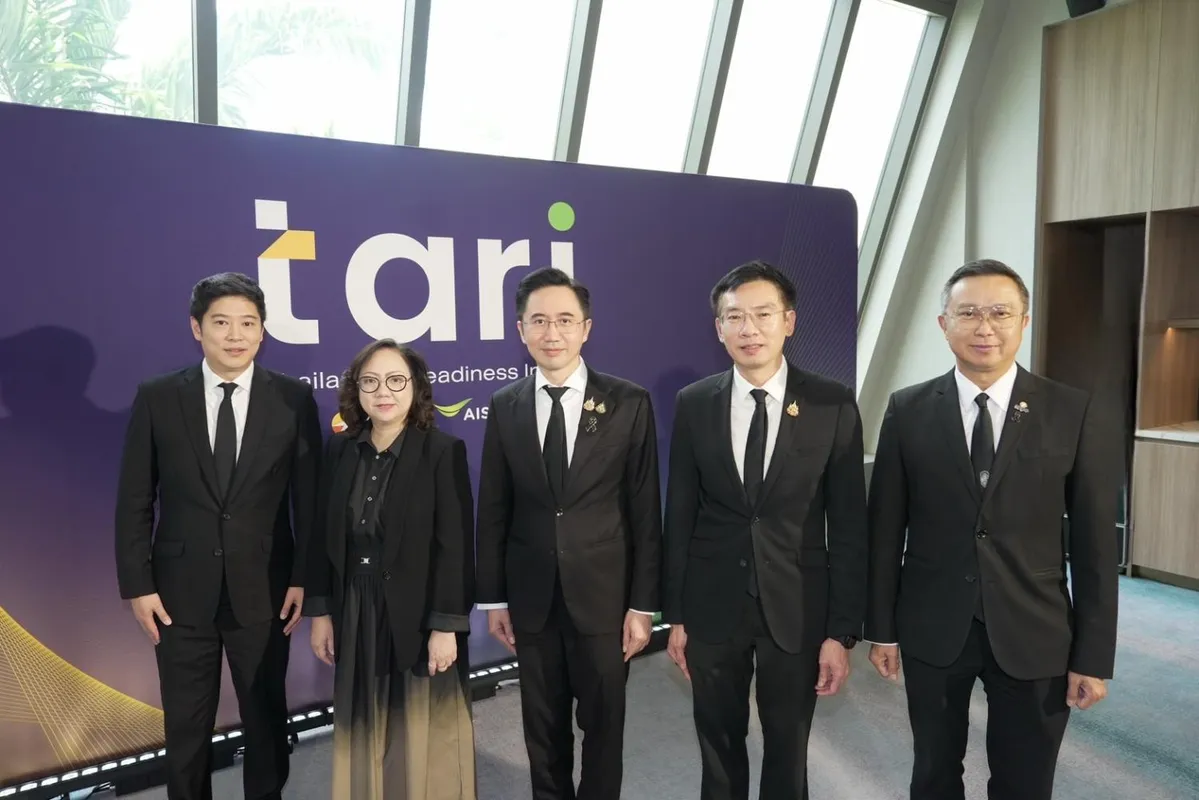
A new partnership has been launched in Thailand with the goal of helping organizations assess their artificial intelligence (AI) readiness and enhance their competitiveness in the rapidly evolving AI landscape. The initiative, known as the Thailand AI Readiness Index (TARI), aims to provide a standardized framework for businesses to understand their current capabilities and identify areas for improvement. Findings from the initial assessments are expected to be released in December, with participating organizations receiving an AI Capability Report by 2027, akin to an AI Capability Assessment certificate.
Thailand’s Strategic Push into AI
The initiative aligns with Thailand’s broader ambition to establish itself as a cost-effective hub for technology and data centers. Minister of Higher Education, Science, Research and Innovation (MHESI), Yodchanan Wongsawat, emphasized AI’s transformative power, stating, “AI is no longer just a technology; it is a strategic force shaping national development across the economy, industry, innovation and the workforce.” He highlighted that the effective adoption of AI by Thai organizations is crucial for bolstering the nation’s long-term competitive edge.
Minister Yodchanan, who also sits on the National AI Committee, explained that TARI will offer a clear roadmap for assessing AI readiness. This will enable Thailand to benchmark its capabilities against regional and global counterparts, pinpoint existing gaps, and subsequently develop targeted policies and support programs. He stressed that AI development must be a unified national effort under the “AI for All” agenda, with MHESI focusing on building foundational strengths in science, technology, talent development, and practical AI applications across key sectors like industry, agriculture, and healthcare.
This strategic push comes at a time when Thailand is navigating significant global disruptions, including intense technological competition, the escalating impacts of climate change, and the demographic shifts associated with an aging society. Addressing these complex challenges will necessitate robust data capabilities, ranging from satellite data for environmental monitoring to genomic data for advancements in precision medicine.
“Thailand cannot rely solely on foreign technology and infrastructure. To build true resilience and innovation, we must develop our own technology structures, including data centres, local hardware capabilities, and secure storage for strategic datasets,” Minister Yodchanan asserted. He further noted that Thailand’s geopolitical neutrality and its strategic location in Southeast Asia position it favorably to become a leading hub for technology and data centers.
Preparing Organizations for the AI Economy
Kantima Lerlertyuttitham, deputy chief executive and chief corporate officer at AIS, described Thailand as being at a “critical milestone in its transition to an AI economy.” She reframed the common concern about AI replacing jobs, suggesting the key question is rather “how we prepare people, organisations, and the nation to use AI to boost productivity and economic growth.”
Lerlertyuttitham pointed out that many organizations do not necessarily lack technology, but rather clarity on their readiness, how to initiate AI adoption, and how to translate AI into tangible business outcomes. Drawing from AIS’s experience in driving AI transformation, she emphasized that successful AI adoption hinges on a deep understanding of readiness across people, skills, data, processes, and culture, rather than solely focusing on technology investments.
Guided by AIS’s vision, the company is collaborating with partners to develop TARI as a universal tool. This tool is designed to assist Thai organizations in evaluating their readiness, identifying deficiencies, and charting a practical course for AI integration. “TARI will be an important mechanism to help Thai organisations and the country move confidently toward the AI economy — where competitiveness is defined by who is better prepared to use it effectively,” Lerlertyuttitham added, underscoring the initiative’s social responsibility aspect and the belief that corporate growth is intrinsically linked to national progress.
Addressing Data Gaps in AI Policy
Surachai Sathitkunarat, president of the National Science, Technology and Innovation Policy Office (NXPO), identified a significant hurdle in AI policy development: the absence of reliable and comprehensive data on the AI readiness of Thai organizations. Current data is often fragmented, making it challenging to conduct a thorough readiness assessment across different industries.
Sathitkunarat stated that TARI will provide a unified assessment framework, offering all sectors a clearer perspective on their AI preparedness. NXPO intends to leverage the aggregated insights from TARI to formulate industry-specific support measures. He assured that strong data governance principles will be applied to foster trust and ensure the responsible utilization of data in policy development.
The AI Capability Report and Assessment Tiers
Chatchai Khunpitiluck, head of AIS Academy, outlined that by 2027, TARI assessments will be conducted biannually. This will coincide with the launch of the “AI Capability Report,” which will serve as a diagnostic tool for organizations to measure their AI readiness. “After completing the assessment, organisations will receive an index score that allows them to benchmark their AI readiness against peers in their industry and the national average,” Khunpitiluck explained.
He also addressed the inherent risks associated with corporate AI adoption, including legal compliance, customer data privacy, and the potential for data leakage. The TARI initiative offers organizations a free AI readiness assessment, a service typically provided at a cost. The resulting index score will act as a practical guide for executives, helping them navigate the complexities of AI adoption, balance risks with potential business benefits, and avoid premature investment in AI tools before establishing foundational elements like AI policy, data readiness, and governance.
The assessment process will be structured into three tiers. The first tier involves “pioneer organizations” led by senior executives from major industries, incorporating in-depth interviews. This will be followed by corporate partners and then community participants, including small and medium-sized enterprises (SMEs). Boriwat Pinpradab, chairman of IRIS Consulting, noted that many organizations are keen to adopt AI but are unsure whether to prioritize people, data, or processes. Some are already implementing AI projects but face difficulties in scaling their impact, underscoring the necessity of a standardized assessment tool.
The TARI assessment evaluates organizational readiness across eight key dimensions: AI strategy and leadership; data management; technology and infrastructure; people and AI skills; governance and risk; AI use cases and business value creation; organizational culture and change management; and AI implementation and realized impact. Over 40 leading organizations have already joined TARI as pioneers. The initiative plans to expand to SMEs and supply chains, targeting 5,000 participants in its first year and 20,000 in the subsequent phase. Organizations interested in participating can register via the official website.
